The I Amsterdam Card gets recommended constantly in travel forums, often without anyone actually running the numbers.
A prepaid pass can create pressure to cram in attractions simply because they are included. A more useful starting point is to plan the visit you actually want, then compare its ticket costs with the card. If the card makes you add unwanted activities, the apparent saving is not meaningful.
The useful comparison begins with a realistic itinerary rather than the biggest possible list of bundled attractions.
What’s Actually Included
The City Card offers different packages. Total Experience includes selected attractions and GVB public transport within its validity window. Explorer includes a selected number of activities but no GVB transport; verify the current offer before buying. Depending on the package, it may also offer discounts at selected restaurants, bike rental shops and additional tours.
The official inclusion list can change. Check the attractions and any conditions for your chosen package: the Rijksmuseum and Stedelijk Museum currently appear among included museums; Heineken Experience is advertised with a discount rather than free admission. The Van Gogh Museum and Anne Frank House are outside both card packages and need separate tickets.
Compare the Current Packages and Durations
| Package | What to check before buying |
|---|---|
| Total Experience | Choose the available duration and confirm the included GVB transport and attractions for your date. |
| Explorer | Choose the number of included activities. This package does not include GVB transport. |
| Separate tickets | Pay only for the venues and journeys you intend to use, including any excluded museums. |
Note that durations run from the moment you first activate the card, not from midnight to midnight — a 48-hour card scanned at 2 PM on day one expires at 2 PM on day three.
Calculate a Realistic Break-Even Point
Compare the live package price against the individual tickets you would otherwise buy. Excluded museums such as the Van Gogh Museum must not be counted as card savings. Any cruise, bicycle rental or transport value should reflect whether you would actually use it.
What makes this particular question harder to answer with a blanket “yes” or “no” is that the card’s value depends entirely on usage patterns that vary enormously between travelers, even ones with superficially similar trips. Two couples might both spend three days in Amsterdam, both stay in similar hotels, and yet one ends up extracting genuine savings from the card while the other would have been better off buying tickets individually — the difference comes down to exactly how many museums they actually visit and how heavily they lean on trams versus walking. This is why I’d rather walk through the actual arithmetic than repeat the generic “it depends on your itinerary” advice that doesn’t help anyone make a decision.
It’s also worth being honest about the psychological appeal of an all-inclusive pass, separate from the pure cost math. Some travelers genuinely prefer the simplicity of one upfront payment and the freedom to walk into any included museum without thinking about individual ticket costs again — and that convenience has real value even when the strict arithmetic comes out roughly even. If that’s you, leaning slightly toward buying the card even in a marginal case is a reasonable call; the goal of this guide is to give you the numbers, not to insist there’s only one correct decision.

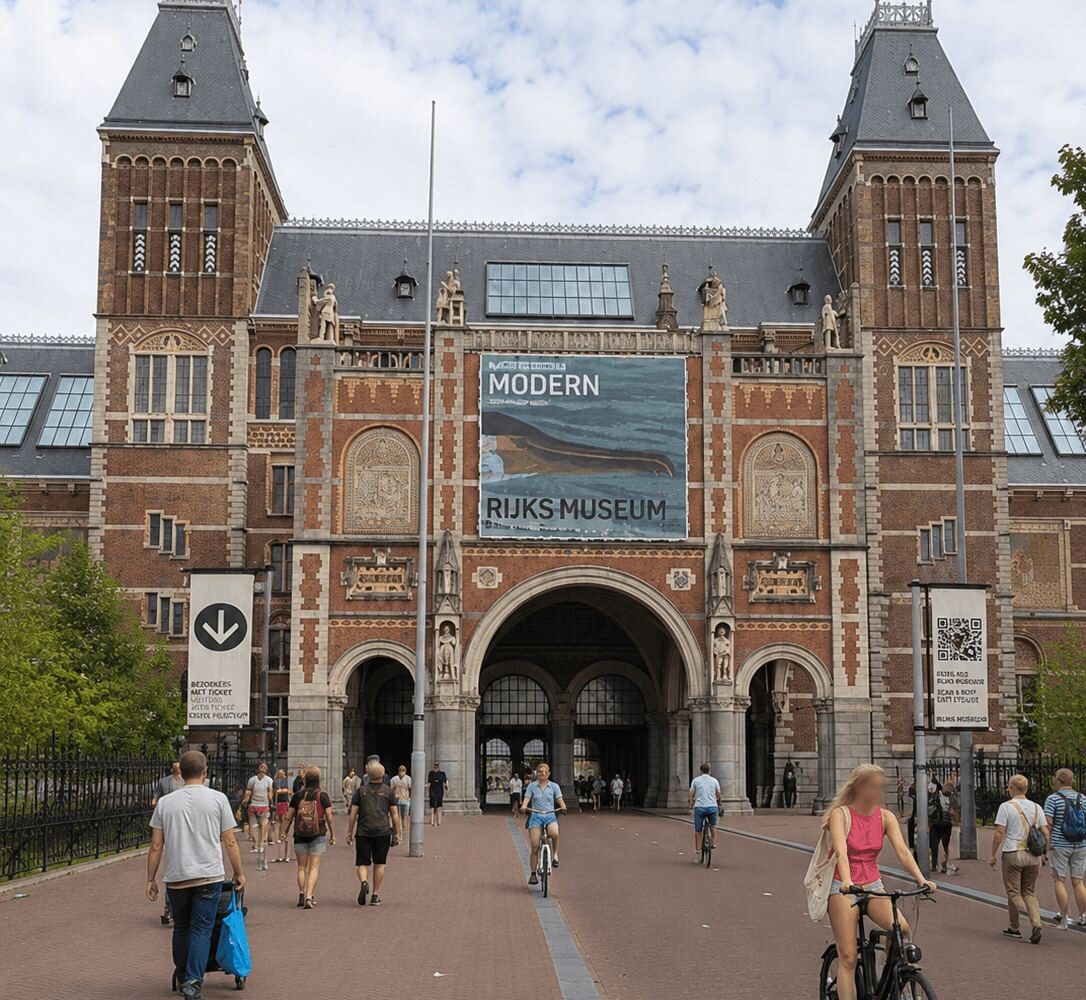
The Rijksmuseum’s cycle-through entrance passage, one of Amsterdam’s most photographed spots.
Who Should Buy It
- Museum-focused first-timers: Planning to hit the Rijksmuseum, and at least one more attraction in 2-3 days. This is the clearest case for the card.
- Travelers without a bike or rental car: If you’re relying on trams and buses to get around rather than walking or cycling everywhere, the unlimited transport adds real value on top of museum savings.
- Longer stays (4+ days) who still want to move fast: The 96 and 120-hour versions spread the fixed cost over more museum visits and more transport days.
Who Should Skip It
- Short, light-sightseeing trips. If your plan is mostly walking the canals, a couple of cafés, and maybe one museum, buying that single ticket separately is cheaper.
- Anyone prioritizing the Anne Frank House above all else. Since it’s excluded entirely, a trip built around that one attraction gets little extra value from the card beyond transport.
- Cyclists. If you’re renting a bike for the trip (a very normal way to see the city), the unlimited transport portion of the card’s value drops significantly, since you won’t be using trams much anyway.

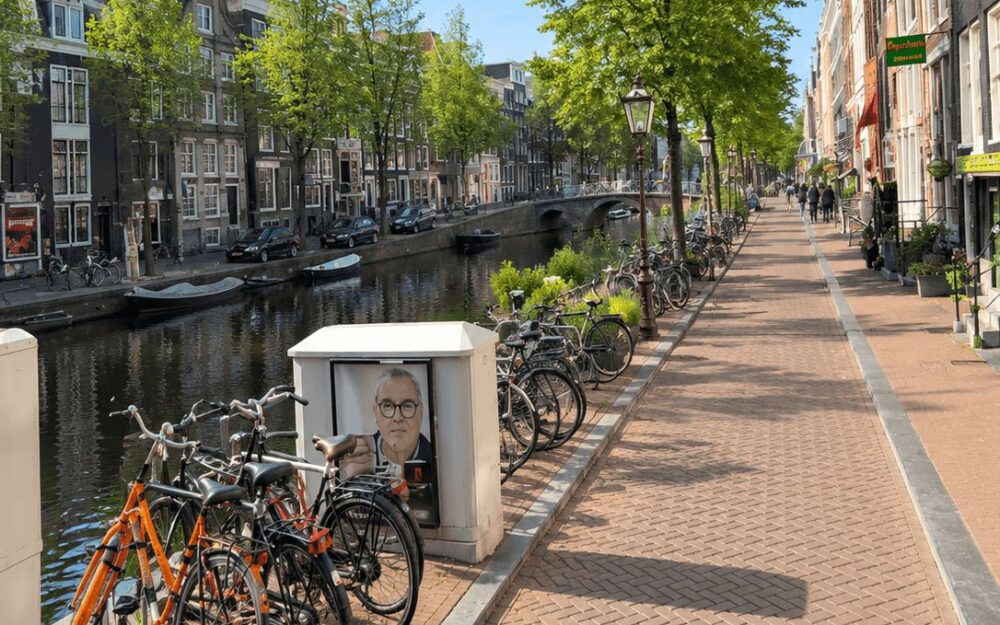
A quiet stretch of one of Amsterdam’s narrow centre streets.
How to Use It Efficiently
Day 1, morning: Start with an attraction confirmed as included in your chosen package. Check the official reservation guidance before visiting; having a card does not by itself guarantee immediate entry. Activate the pass when you are ready to begin using its benefits.
Day 1, afternoon: Use the included canal cruise — a relaxed way to see the city from the water and worth doing earlier in your trip rather than saving it for last.
Day 1, evening: Use GVB transport to reach a second neighbourhood for dinner, taking advantage of the unlimited rides rather than walking everything.
Day 2: Fit in a second or third included museum and use the discount partners (selected tours, bike rental, restaurants) to extract additional value before the card expires.
Step-by-Step: Buying and Activating the Card
- Buy online or at an I Amsterdam Card outlet. Buying online in advance avoids a queue and lets you start the clock exactly when you want.
- Download the official app. This is where you’ll find the current included-attractions list, book museum time slots, and check your remaining validity window.
- Activate at first use. The card (physical or digital) activates the moment you tap it at your first museum or transport gate — not at the moment of purchase.
- Book timed slots for major museums immediately after activating. The card covers entry cost, not queue priority, so reserving a specific time still matters at the Rijksmuseum and Van Gogh Museum.
- Track your validity window. Since durations are hour-based rather than calendar-day based, note your exact expiry time so you don’t get caught trying to use it just after it lapses.

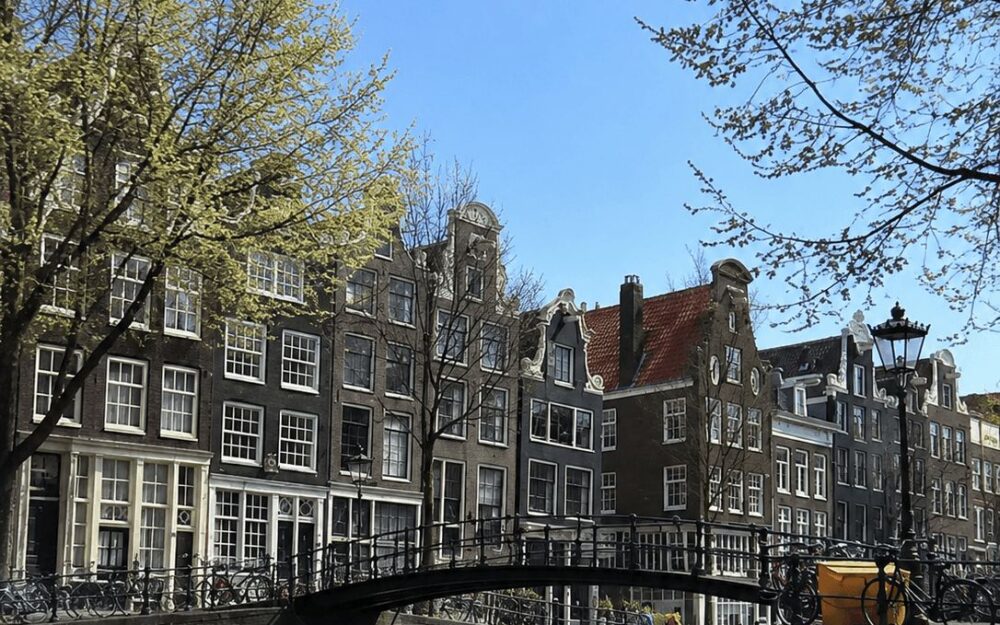
The same canal street, several months later, under a rare Amsterdam snowfall.
Card Versus Separate Tickets: Use Your Own Itinerary
Example: list two museums you have confirmed are included, one participating canal cruise and your intended GVB journeys. Look up the current admission and transport costs on the day you book. Compare their combined cost with the current Total Experience price for your preferred validity window. For Explorer, omit public-transport savings altogether. If your main priorities are the Anne Frank House and Van Gogh Museum, budget for both tickets separately.
In this specific combination, buying separately is actually marginally cheaper — which illustrates why the card isn’t automatically the better deal. The moment you add a third museum, a discount-partner restaurant meal, or extra transport days, the math flips in the card’s favour. This is exactly why running your own numbers based on your real plan matters more than following generic advice either way.
Common Mistakes When Deciding
- Buying the card assuming it covers everything. The Anne Frank House, Van Gogh Museum and other attractions outside the current included list are not included — always check the current list before assuming a specific venue is covered.
- Not booking timed slots. Cardholders still need to reserve entry times at the busiest museums; skipping this step can mean long waits despite already having paid.
- Buying a longer duration than needed. A 96 or 120-hour card only pays off if you’re genuinely using museums and transport across that whole window — a slower-paced trip with rest days doesn’t extract full value from a longer card.
- Ignoring the discount partners. Many cardholders use only the free museum entries and skip the smaller restaurant, tour and shop discounts, which is the main source of additional value beyond the core math above.
Calculate the Value Using Attractions You Will Actually Visit
Write down your intended attractions first, then look up their admission prices and whether your chosen City Card package includes them on your travel dates. The official offer includes a Total Experience option with GVB transport and an Explorer option offering a selected number of activities without GVB transport. These are not financially interchangeable. The Van Gogh Museum and Anne Frank House are not included in either option; add their separate ticket costs to your trip budget rather than counting them as savings from the card. The airport train and regional trains are also outside the card’s GVB transport benefit.
For a meaningful comparison, add only the individual admissions that you would genuinely buy without a card. If the card covers an attraction that you would skip otherwise, treating its full walk-up price as a saving exaggerates the result. Compare that sum with the live price of the precise package and duration you plan to purchase. Then consider how many timed reservations you can realistically fit into the same day, how much time the journeys will take and whether your preferred museums are actually available. A rushed third museum is not necessarily a benefit.
Before You Activate: A Three-Part Check
First, open the official City Card attraction list and check your selected sites. Second, book required time slots using the current official instructions; a time-slot reservation need not activate the card. Third, decide when to start its validity window, allowing enough time to use the included activities without turning your city break into a race. If your travel plan changes, revisit the numbers before activating. For the separate airport journey, see Schiphol to Amsterdam, and for GVB tickets see our local transport guide.
Planning check: Official City Card FAQ and exclusions and current package options. Information in this guide can change; check official schedules and admission details for your travel date.
Practical Questions Before You Go
Is the I Amsterdam Card worth it for a short trip?
For a 1-2 day trip, it’s worth it only if you plan to visit at least two major paid museums plus use public transport, since the card bundles unlimited GVB transport with free or discounted entry. For a trip centered on just one museum, buying tickets separately is usually cheaper.
Does the I Amsterdam Card include the Anne Frank House?
No, the Anne Frank House is not included in the I Amsterdam Card and must always be booked separately, well in advance, regardless of which card or pass you hold.
What is included in the I Amsterdam Card?
In the Total Experience package, selected museums and attractions, an eligible canal cruise and GVB transport can be included; the Explorer package instead offers a chosen number of activities without GVB transport. Check the current conditions for each option.
How many days does the I Amsterdam Card last?
Total Experience is offered for hour-based validity periods. Check the precise activation and expiry rules for the particular package you purchase; Explorer has its own terms.
Can I book museum time slots in advance with the card?
Yes, and you generally should. Owning the card doesn’t guarantee skip-the-line access at every venue — For participating venues with reservation requirements, reserve a specific entry time through the official I Amsterdam Card app or the museum’s own booking system once you’ve purchased the card.
Final Recommendation
Whatever you decide, save the card-related sightseeing for your time inside Amsterdam itself — it doesn’t extend to day trips like Zaanse Schans or Volendam and Marken, which run on separate regional transport tickets.
Plan Your Visit
🎟️ Official I Amsterdam Card: iamsterdam.com
🖼️ Rijksmuseum tickets: rijksmuseum.nl
🎨 Van Gogh Museum tickets: vangoghmuseum.nl
🚂 Train & transit tickets: ns.nl
🏨 Compare accommodation prices: Booking.com
🗺️ Organised day trips & tours: GetYourGuide
🌍 Spanish-language tours & activities: Civitatis
Sources: iamsterdam.com | rijksmuseum.nl | vangoghmuseum.nl | gvb.nl | Personal observation — Noord-Holland | Details can change; check the linked official sources before booking