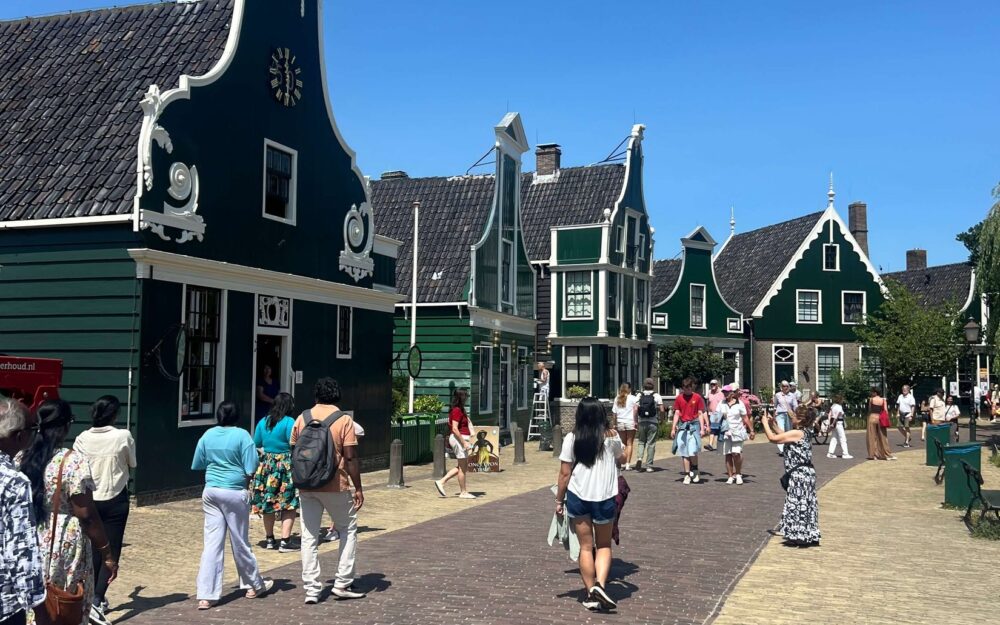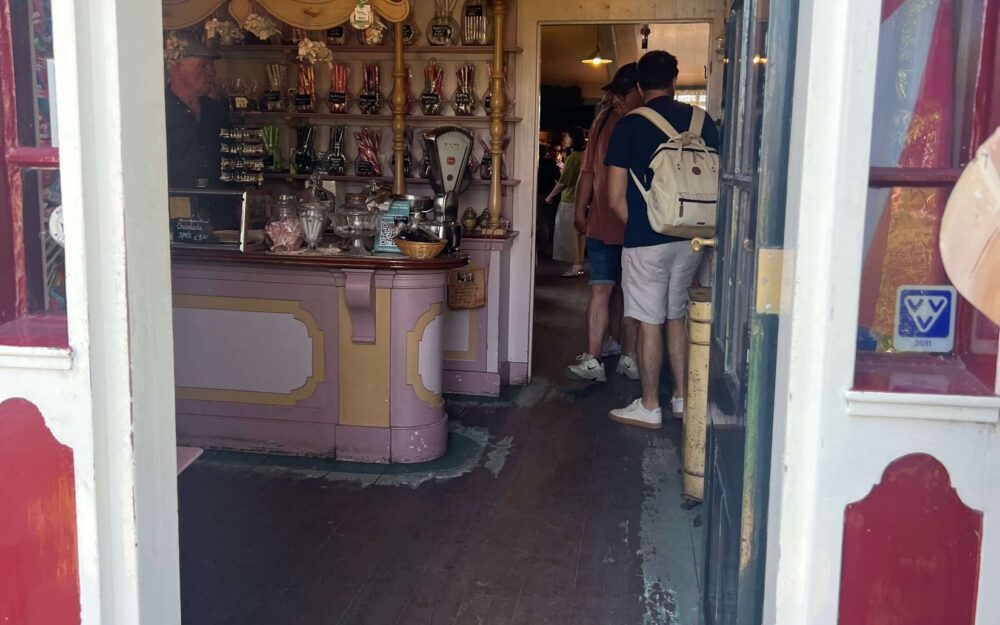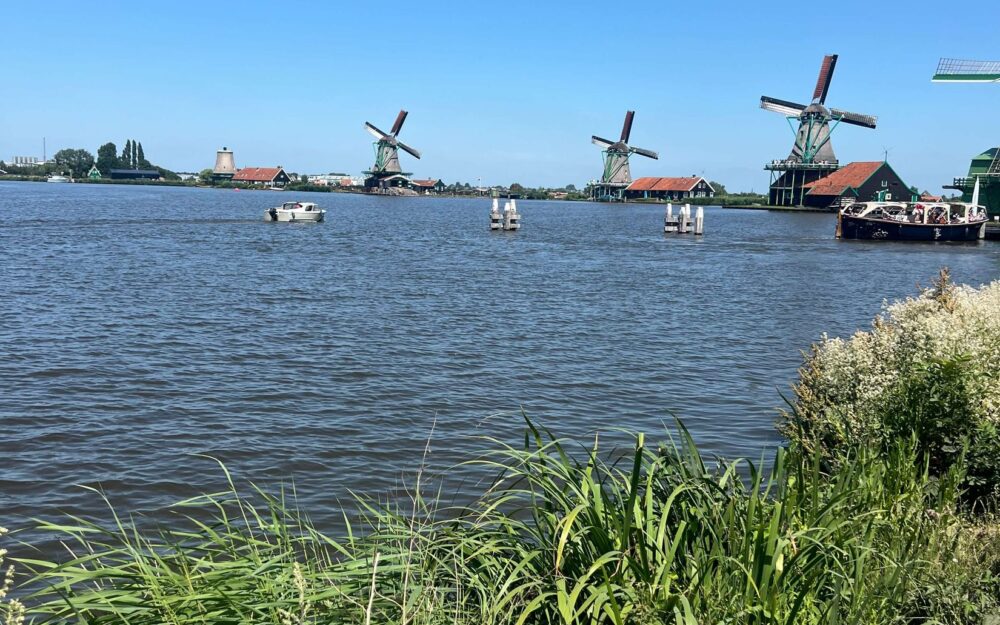

How long do you need at Zaanse Schans? The answer depends on a distinction many itineraries ignore: seeing windmills is quick; experiencing working windmills is not. You can photograph the famous river view in a short visit, but tickets, stairs, demonstrations, lunch, children and the museum expand the day naturally.
I live nearby and have done quick walks, family visits and longer days with guests. Three to four hours is the reliable middle. It gives you enough room to enter one mill, watch wooden shoes being made, taste cheese and walk without turning every delay into a problem.
Zaanse Schans Visit Times Compared
| Time on site | What fits comfortably | Best for | Main sacrifice |
|---|---|---|---|
| 90 minutes | Outdoor highlights and fast photographs | Very tight schedules | No reliable interior time |
| 2 hours | Windmill path plus one short workshop | Combination day trips | Little margin for queues or lunch |
| 3–4 hours | One mill, clogs, cheese and relaxed walking | Most first-time visitors | Zaans Museum may still feel rushed |
| 5–6 hours | Multiple mills, museum, lunch and Zaandijk | Families and industrial-history visitors | Consumes most of a day-trip window |
| Full day | Deep museum visit, several interiors, cycling or a regional extension | Slow travel and repeat visitors | Unnecessary for a highlights-only visit |
Can You Visit Zaanse Schans in 90 Minutes?
Yes, but call it a highlights walk rather than a complete visit. Go directly to the river path, photograph the main windmill line, pass the historic green buildings and choose one quick stop only if the timing is perfect.
Ninety minutes does not reliably include buying a ticket, waiting, climbing a working mill, listening to a demonstration and returning to your transport. If a tour promises a rich cultural experience within a short stop, inspect how much of that time is actually free exploration.
A short visit works best early, when walking is quick, or as part of a day with Volendam or another destination. It works poorly at the busiest time when every doorway has a group.
A 90-minute priority order
- Julianabrug or another broad windmill viewpoint
- Riverside windmill path
- Wooden shoe workshop if a demonstration is starting
- Cheese farm only if it fits without a queue
- Return before the schedule becomes stressful
Use the transport comparison to calculate door-to-door time and the tickets guide to choose which paid entrances merit a place on your schedule.
For a half-day, keep one unscheduled block. You might use it for a demonstration that begins later than expected, a coffee stop, or a short walk over the Julianabrug. If nothing delays you, that time becomes a bonus rather than a scheduling failure. Families should count the time needed to fold a stroller, manage windmill stairs or make a snack stop, particularly if two adults must take turns inside an attraction.
For a two-hour stay on site, make one strong choice: either tour a mill interior or spend longer in the central craft-and-museum area. A visitor who stops for photographs at every turn cannot assume the same schedule as someone walking directly between two fixed destinations. When a ticketed interior is busy, the right response may be to skip it and enjoy the riverside path rather than compress the rest of the day.
The most useful number is not the time printed next to a train journey; it is the moment you must be back at the station, coach or car. Work backwards by allowing time for the walk from the windmills, a restroom stop, and a missed connection or slow-moving group. Only then divide your remaining on-site minutes between the outdoor route and the attractions you hope to enter. The station walk is a real part of the visit, not a negligible transfer.
Build Your Schedule Backwards from Your Departure
What Fits into Two Hours?
Two hours is the minimum I would deliberately plan. It gives you an outdoor route plus one meaningful extra. Choose either a working windmill or the central craft stops. Trying to do both can work on a quiet day but leaves no resilience.
0:00–0:25 — Arrive, orient yourself and walk toward the river.
0:25–1:10 — Enter one preselected windmill, or use this block for clogs and cheese.
1:10–1:40 — Walk the windmill line and take photographs.
1:40–2:00 — Return to your transport with margin.
If choosing a mill, read the Zaanse Schans windmill guide first. Deciding at home saves wandering between ticket doors.
Why Three to Four Hours Is Best
A half-day length changes the emotional pace. You can pause when a mill is working, wait for the next clog demonstration and eat without constantly checking the time. You still need priorities, but the schedule has room for ordinary reality.
For a first visit, I would divide the time into four blocks:
- 45–60 minutes: outdoor route and photographs;
- 45–75 minutes: one working windmill;
- 45–60 minutes: wooden shoes, cheese and small historic buildings;
- 45–60 minutes: food, rest and travel margin.
This is enough variety without the feeling that every attraction must be completed. Follow the detailed Zaanse Schans day trip from Amsterdam if you want the sequence rather than only the time calculation.
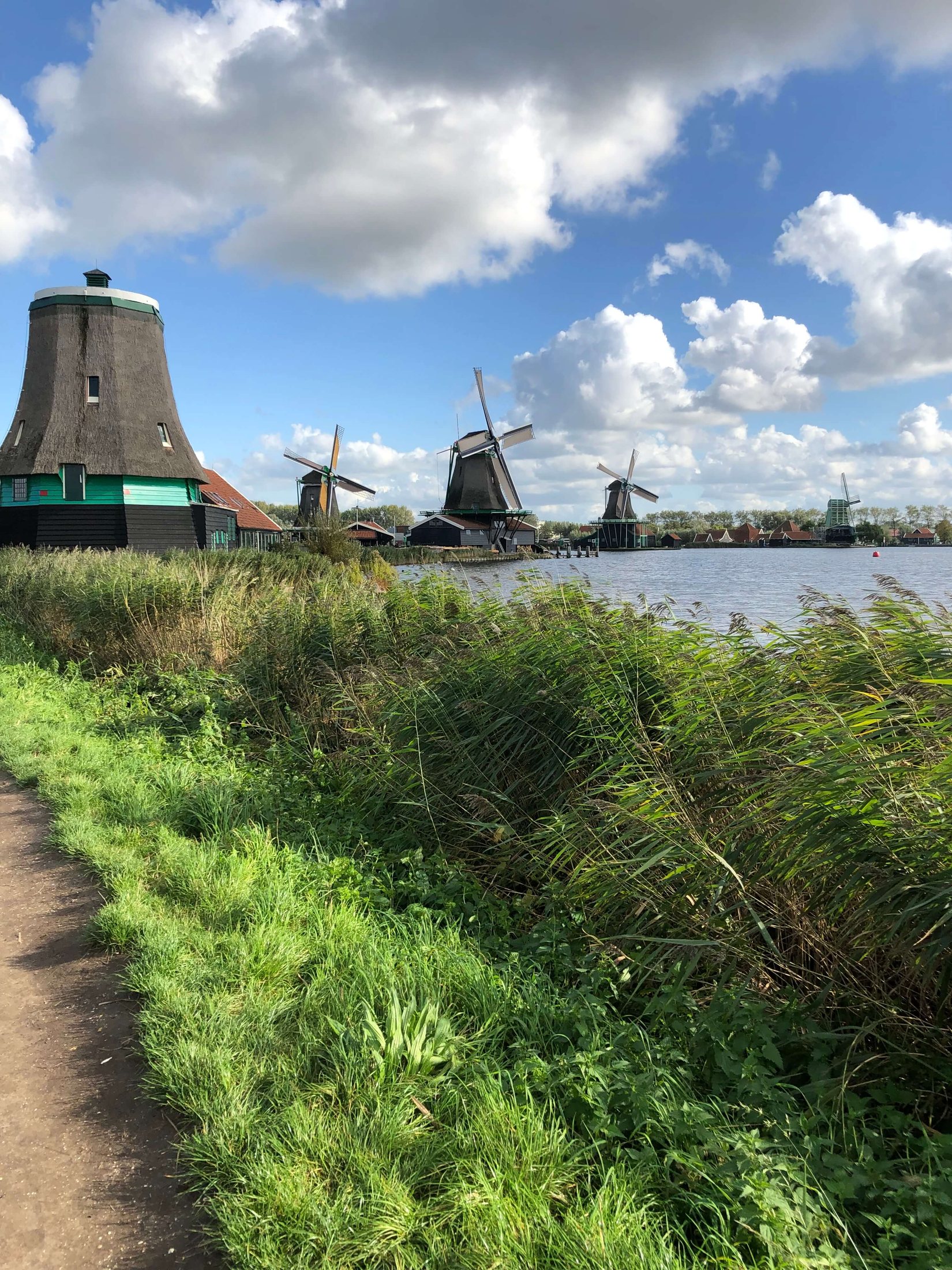
A three-to-four-hour visit leaves enough time to stop along the river instead of treating the windmill line as a corridor.
When Five to Six Hours Makes Sense
Plan five or six hours if the Zaans Museum is a priority, not an optional afterthought. The museum and Verkade Experience deserve a proper visit. Add two windmill interiors, lunch and the walk through Zaandijk, and the day expands naturally.
A long visit also suits industrial-history enthusiasts who want to compare a sawmill, paint mill and oil mill. Those interiors are not repetitions when you understand the processes, but moving between them and reading the information requires time.
Families can spend extra time differently: fewer attractions and longer pauses for food, watching boats or waiting for a demonstration. That time is a normal part of the experience, not a delay that needs to be recovered by rushing through the next attraction.
How Long Does Each Attraction Take?
| Stop | Fast visit | Comfortable visit |
|---|---|---|
| Outdoor windmill path | 30 minutes | 60–90 minutes with photographs |
| One working windmill | 30–40 minutes | 45–75 minutes with queue and climbing |
| Wooden shoe workshop | 20 minutes | 30–45 minutes |
| Cheese farm | 15 minutes | 30–45 minutes with tasting and shopping |
| Zaans Museum | 60 minutes | 90–150 minutes |
| Lunch | 30 minutes | 60–75 minutes |
| Zaandijk and bridge walk | 20 minutes | 45–60 minutes |
These are planning ranges, not promises. Opening conditions, queues, weather and individual interest change them.
Add Travel Time from Amsterdam
“Four hours at Zaanse Schans” does not mean a four-hour absence from your Amsterdam hotel. Add time to reach the departure station, wait, travel, walk from Zaandijk Zaanse Schans and complete the return.
For a comfortable half-day, protect a larger block in your schedule rather than placing a timed Amsterdam museum immediately before or after. Use our Amsterdam to Zaanse Schans transport guide to calculate the complete journey.
How Crowds Change the Timing
Crowds do not merely make photographs busier. They slow ticket counters, demonstrations, narrow interiors, food service and group movement. A two-hour itinerary that works early may fail at midday.
Arriving before the largest organised groups helps the outdoor route. However, arriving too early can mean individual attractions are not open. Decide which matters more: empty scenery or immediate interior access. Late afternoon offers another useful compromise when many day tours are leaving.
Add 30–60 minutes during busy periods if you intend to enter popular attractions. Do not use all that margin for another stop; keep some for the return journey.
How Long with Children?
Allow at least four hours for a family visit if you want more than an outdoor walk. Children move unpredictably. They may rush through a historic display and then spend fifteen minutes watching fish beneath a bridge. That is not failed sightseeing; it is how family travel works.
Choose three anchors:
- one visual demonstration, such as wooden shoes;
- one food or tasting stop;
- one major attraction, such as a mill or the Verkade Experience.
Everything else is optional. See Zaanse Schans with kids for a family route, stroller limitations and rest planning.
How Weather Changes Your Visit Length
Rain can shorten outdoor walking but lengthen indoor stops because everyone chooses the same shelter. Strong wind makes the river path feel colder and may affect operations. Heat can make exposed walking tiring, especially for children and older visitors.
On a wet day, plan alternation: outdoor path, indoor mill, outdoor crossing, museum or food. Do not compress the whole visit automatically. Our rain guide provides an indoor-outdoor sequence.
Is a Full Day Too Long?
For the average highlights visitor, yes. Zaanse Schans itself does not require an entire day merely because it is famous. A full day makes sense when you add Zaandijk, cycling, detailed museum time, several mills or another Zaan-region stop.
Do not stay eight hours simply to justify the journey from Amsterdam. A focused half-day followed by a relaxed afternoon elsewhere is often better. Conversely, do not combine so many places that the windmills become a forty-minute photograph stop.
Can You Combine Zaanse Schans with Volendam?
Yes. Keep Zaanse Schans to a disciplined morning of roughly three hours on site, then continue. A car or organised tour simplifies the regional connection. Public transport is possible but requires live route planning.
Do not use the five-to-six-hour Zaanse Schans plan on a day that also includes Volendam and Marken. Choose depth or combination, then build the timing around that decision.
Can You Combine Zaanse Schans with Amsterdam Sightseeing?
Yes. A morning at Zaanse Schans and late afternoon or evening in Amsterdam is realistic. Leave a gap before any timed museum ticket, canal cruise or restaurant reservation. Transport disruptions and a good windmill visit both have a habit of using the margin you thought you did not need.
Common Timing Mistakes
- Counting only train time. Add station access and the walk.
- Planning every attraction. Choose one or two paid interiors.
- Ignoring opening differences. Each mill or museum may operate differently.
- Scheduling lunch in twenty minutes. Busy service takes longer.
- Leaving no return margin. The final walk matters after a long visit.
- Using an adult pace for children. Add flexibility instead of attractions.
How Much Time Do Photographers Need?
Photography expands the visit more than most planning tables suggest. A person taking one phone photograph can cross the main path quickly. A photographer waiting for sails to move into a clean position, people to leave a bridge or light to reach the river may spend an hour before entering anything.
Allow at least three hours for an outdoor-focused photography visit and longer if you also want interior machinery. Begin with the Julianabrug for the broad context, then change distance along the riverside rather than repeating one composition. Wind, cloud and boat traffic continually alter reflections.
Do not place a strict return directly after the best light. If the weather finally improves during your final ten minutes, you will either miss the photograph or miss the train. Our Zaanse Schans photo-spots guide helps prioritise locations.
How Much Buffer Time Should You Add?
Add thirty minutes to a normal independent visit and at least an hour when travelling with young children, relying on a specific demonstration or visiting during a peak period. Buffer is not unused time. It covers toilets, queues, wrong turns, a raised bridge, food service and the simple possibility that one mill is more interesting than expected.
If the buffer remains unused, spend it in Zaandijk, take a slower bridge walk or return to Amsterdam earlier. That is a much better outcome than designing an itinerary that fails as soon as ordinary travel happens.
Frequently Asked Questions
Is two hours enough for Zaanse Schans?
Yes for an outdoor highlights visit and one quick stop. It is not enough for a relaxed museum, meal and several windmill interiors.
Is Zaanse Schans a half-day trip?
For most visitors, yes. Three to four hours on site plus transport from Amsterdam fills a comfortable half-day.
How long should families stay?
Allow at least four hours when including demonstrations, food and one major attraction. Add more time for the Zaans Museum.
Can you visit in the evening?
Public outdoor routes may remain accessible beyond attraction hours, but interiors, shops and museums close according to their own schedules. Check current information.
How early should you arrive?
Arrive early for quieter paths, but compare your arrival with individual opening times if entering a mill is essential.
Final Recommendation
Reserve a half-day and aim for three to four hours on site. Enter one working windmill, add the wooden shoe workshop and cheese farm, then choose lunch or the museum according to your interests. That is the reliable first visit.
If you only have two hours, accept the shorter version instead of rushing a four-hour checklist. If you have six hours, use the extra time for depth rather than accumulating shops. The right duration is the one that protects the experience you came for.
Build the Rest of Your Plan
Complete destination guide: Zaanse Schans travel guide
Step-by-step schedule: Zaanse Schans day trip from Amsterdam
Current visitor hours: official Zaanse Schans website
Sources: official Zaanse Schans visitor information · Zaans Museum · Personal observation from repeated local visits. Attraction hours and access can change.