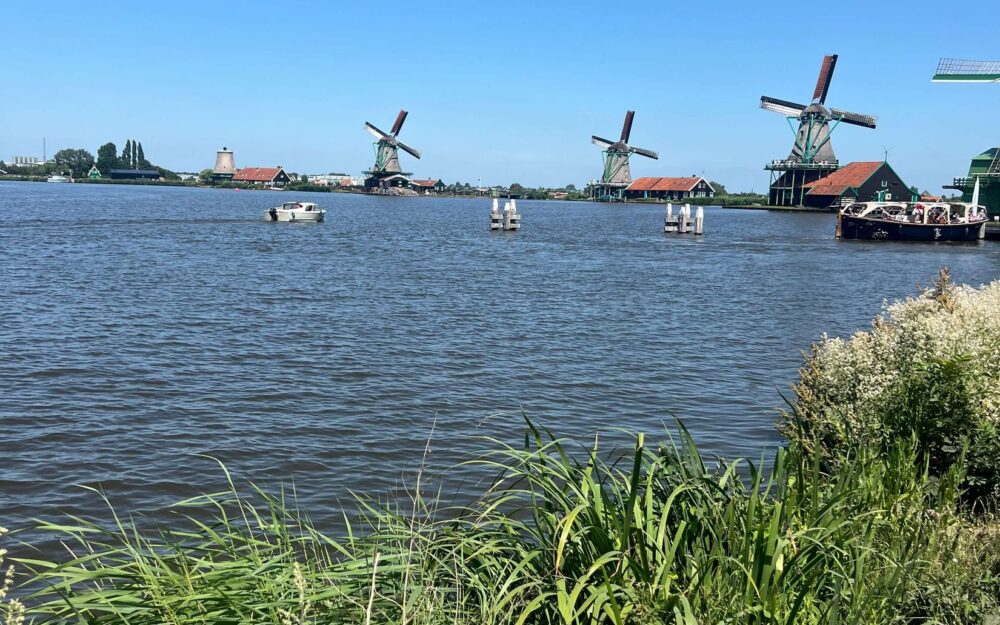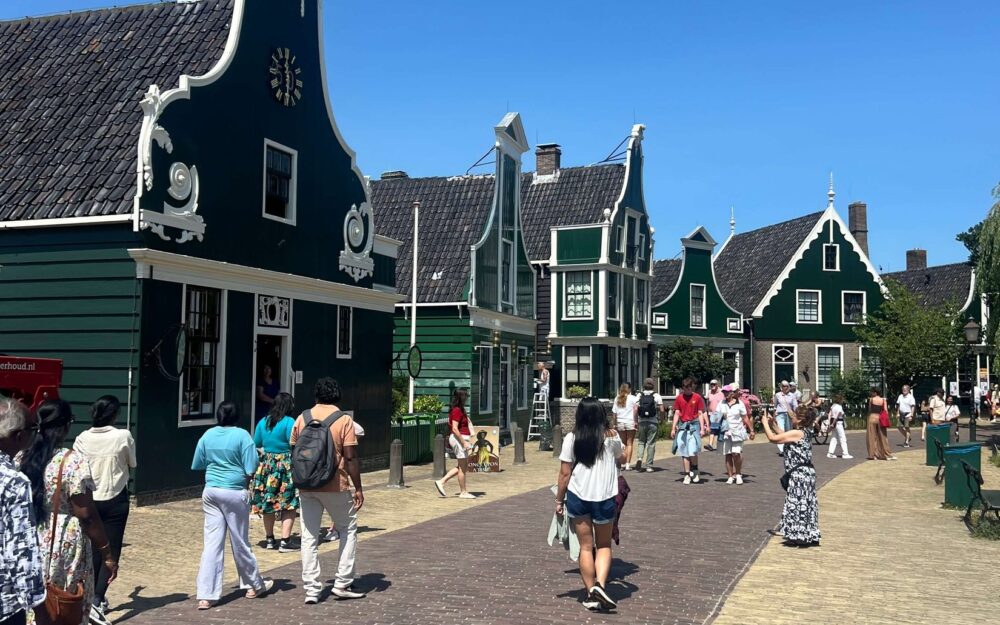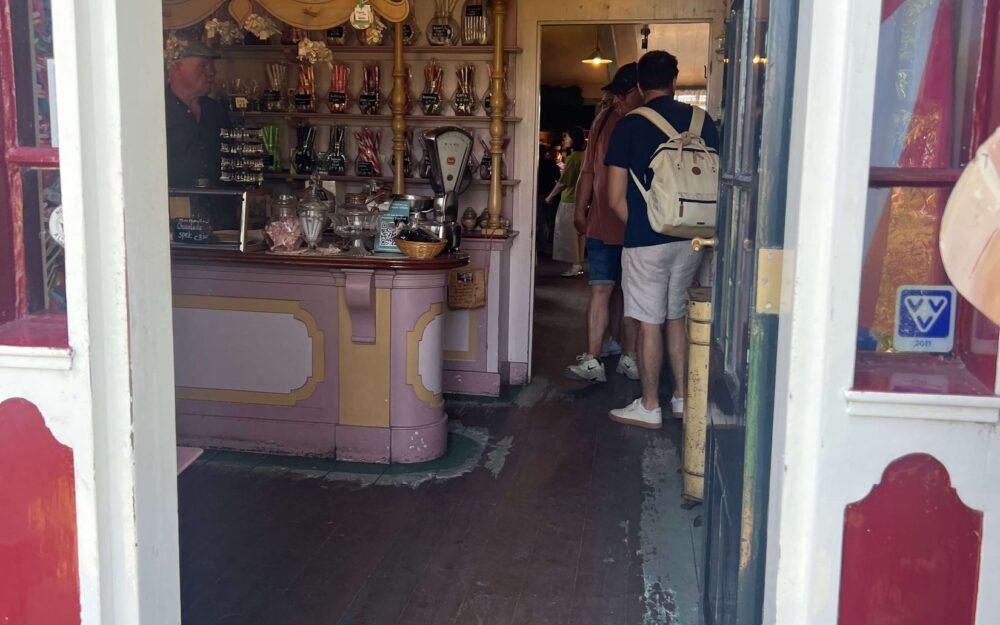

The Zaanse Schans windmills look like a neat line of postcard scenery, but historically they were factories. Wind did not merely turn sails for decoration. It powered saw blades, crushing stones, oil presses, pumps and grinding equipment. The Zaan region used this energy on an industrial scale, and that is what makes the village more interesting than a collection of attractive old buildings.
I live nearby and have learned that the best windmill depends on the visitor. A photographer may be satisfied walking the riverbank. A child may care more about the shaking floor and turning gears than the product being made. Someone interested in Dutch maritime history will get more from a sawmill than a paint mill. This guide compares the principal windmills so you can make that choice before joining the nearest queue.
Zaanse Schans Windmills Compared
| Windmill | Traditional function | Why visit? | Typical fit |
|---|---|---|---|
| De Kat | Paint and pigment mill | Colour, grinding stones, strong visual process and elevated exterior deck | Best first interior for many visitors |
| Het Jonge Schaap | Sawmill | Shows how wind power transformed timber production and shipbuilding | Engineering and maritime-history visitors |
| De Zoeker | Oil mill | Heavy pressing machinery and a strong sense of industrial work | Visitors wanting traditional production |
| De Bonte Hen | Oil mill | Historic oil-making equipment in a classic riverside setting | Industrial-history enthusiasts |
| De Huisman | Spice and mustard mill | Grinding process and accessible product connection | Food-minded visitors and shorter stops |
| De Gekroonde Poelenburg | Paltrok sawmill | Distinctive low-sided design and excellent exterior photographs | Architecture and photography |
| De Os | Former oil mill | Important historic survivor even without functioning sails | Context while walking the full line |
De Kat: The Paint Mill
De Kat is the windmill I usually recommend when a visitor wants one interior that immediately feels different from looking at sails outside. The mill processes pigments and other materials using large grinding stones. Colour appears in the workspace in a way that makes the product easier to understand than a machine producing something invisible.
The interior is noisy and physical. Timber vibrates, machinery moves close enough to command attention and the upper platform brings the sails into an entirely different scale. From the river path, a sail looks elegant. From the mill’s exterior deck, it feels like a large piece of industrial equipment passing through the wind.
This is also why De Kat is not ideal for everyone. The stairs are steep, the building is active and anyone uneasy with heights or moving machinery should not feel pressured to climb. The ground-level experience still gives you more context than an exterior photograph.
Who should choose De Kat?
- First-time visitors entering only one mill
- Photographers who want both interior detail and an elevated view
- Families with older children comfortable on steep stairs
- Visitors interested in art materials, pigments and traditional production
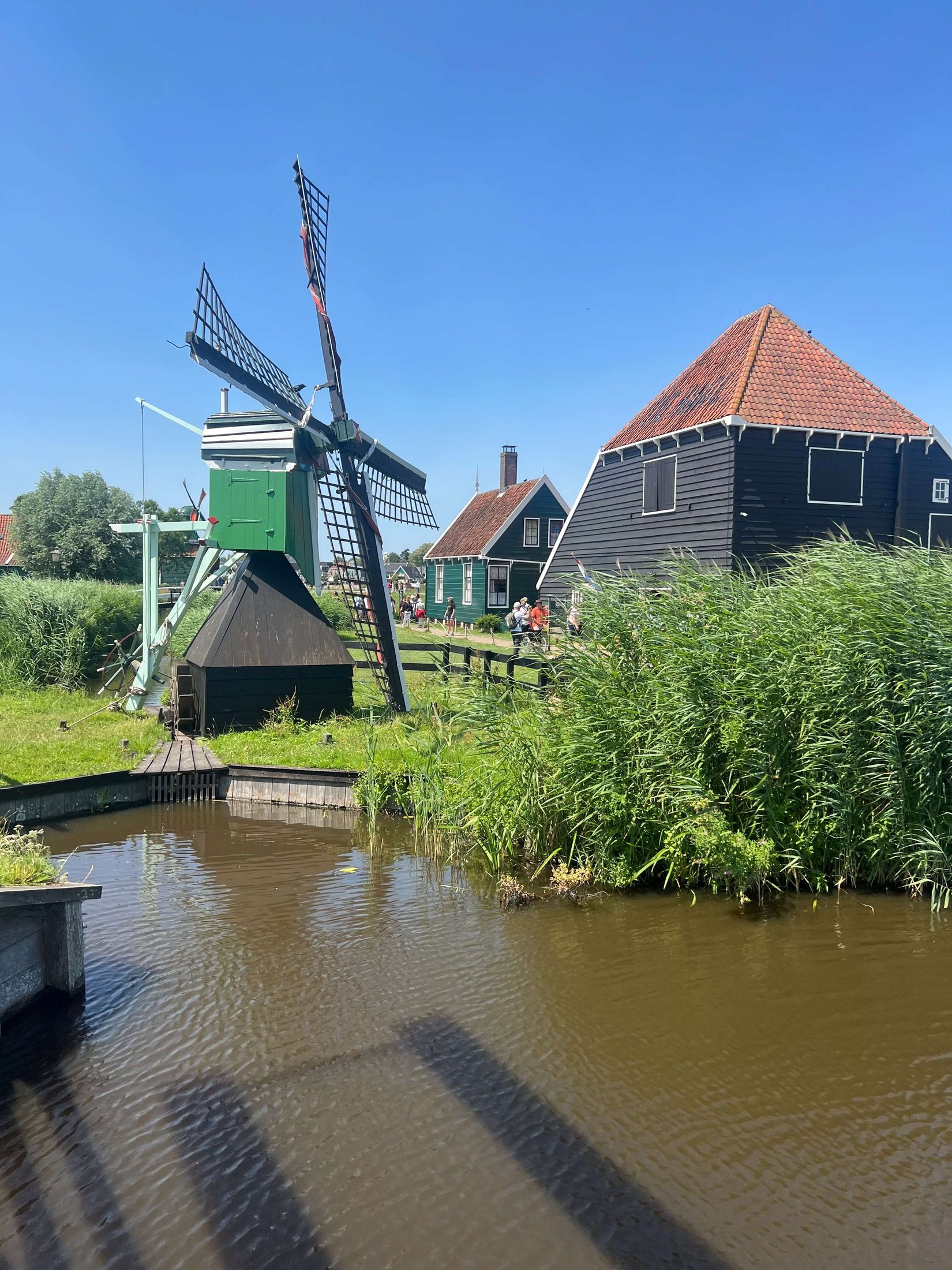
From the path, the mills look calm; inside, the sound and vibration reveal their industrial purpose.
Het Jonge Schaap: The Sawmill
Het Jonge Schaap explains one of the most important connections in Dutch history: wind power, timber and ships. Mechanised sawing made it possible to process wood much faster than hand sawing alone. In a trading region dependent on boats, houses, warehouses and continual construction, that mattered enormously.
The sawmill is a strong choice for visitors who like understanding how things work. Instead of seeing a finished product in a display case, you see the logic connecting the sails to the saw frame. The movement is repetitive, practical and surprisingly hypnotic.
Children who enjoy machines may prefer it to a traditional museum. However, do not promise a perfectly timed cutting demonstration. Working mills depend on operating conditions, staffing and maintenance. Treat active production as a bonus rather than a guaranteed performance at a precise minute.
Who should choose Het Jonge Schaap?
- Engineering-minded visitors
- Anyone interested in Dutch ships and maritime trade
- Children fascinated by large moving machinery
- Visitors who want an industrial story rather than only a view
De Zoeker and De Bonte Hen: Oil Mills
Oil mills demonstrate a production process that is less familiar to most modern visitors. Seeds and other raw materials were crushed and pressed to extract oil. The machinery has weight: stamps, presses, beams and turning parts occupy the building in a way that makes “wind-powered factory” feel accurate rather than romantic.
If you have already visited De Kat, an oil mill offers a more useful second interior than another attraction repeating the same sort of display. It lets you compare how identical energy from the wind could drive a completely different process.
The atmosphere can also be more important than a long explanation. Smell, wood, dark machinery and the rhythm of the mechanism communicate labour directly. Visitors who enjoy traditional crafts, food production or industrial archaeology should put an oil mill high on their list.
De Huisman: Spice and Mustard
De Huisman connects wind-powered grinding with products people still recognise immediately. Spices and mustard provide an easy bridge between historical machinery and an ordinary kitchen. That makes it a useful stop for visitors who are less interested in saw frames or pigment stones.
Because it sits within the central visitor flow, it can be combined naturally with the nearby workshops and shops. It is not necessarily the single most dramatic windmill interior, but it fits well into a shorter visit or a food-focused route.
De Gekroonde Poelenburg: The Distinctive Paltrok Mill
De Gekroonde Poelenburg is immediately recognisable because its shape differs from the taller mills many visitors imagine. It is a paltrok sawmill, a design in which much of the structure turns to face the wind. The open-looking lower form exposes more of the relationship between building and machinery.
Even when you do not enter, it deserves attention from the path. Photograph it from more than one angle and notice how its form changes against the water and neighbouring mills. It helps prevent the windmill row from becoming seven interchangeable silhouettes.
De Os: A Windmill Without Sails
Visitors sometimes pass De Os without realising why it belongs in the story. Its missing sails make it less obvious as a photo subject, but that absence is useful. Preservation is rarely a clean process in which every historic structure survives unchanged and continues working forever. De Os shows another stage in the industrial landscape.
Include it when walking the full line, but do not build a first visit around it. Think of it as context that makes the complete route more honest.
For photography, a long lens from across the River Zaan can compress several windmills into one scene, whereas the waterside path makes their different shapes easier to recognise. Neither picture explains the manufacturing process by itself. If you want a visit that is more than a photograph, pair one exterior viewpoint with one interior demonstration and allow time to read its interpretive displays. The photo-spots guide addresses compositions; this guide concentrates on the working machinery.
When you compare mills, distinguish between three questions: what was the mill built to manufacture, what machinery can the visitor inspect, and whether people with limited mobility can reach the main viewing areas. Narrow ladders and moving equipment matter more to some visitors than the fame of a particular building. A child who dislikes loud machinery may enjoy watching the sails from outside rather than entering a crowded interior. Discuss that preference before joining a queue.
A windmill interior is not simply a viewing platform. Its value lies in connecting a visible product to the power of the wind: timber being sawn at Het Jonge Schaap, pigments and grinding processes at De Kat, or the machinery associated with oil production at one of the oil mills. Ask at the entrance which stages are operating that day. Wind, staffing, preservation work and safety requirements affect what a visitor can see; a mill with still sails can still tell a valuable industrial story.
What You Actually See Inside a Working Mill
Which Windmill Is Best for Children?
For children who enjoy noise and movement, De Kat or Het Jonge Schaap can be memorable. For very young children, the main difficulty is not boredom but stairs and supervision. Windmills were built as working industrial structures, not modern family attractions. Narrow passages, steep timber steps and active mechanisms demand close attention.
For a family visit, plan one windmill interior rather than automatically buying admission to several. The rest of the route can include the wooden shoe workshop, cheese displays and an outdoor pause. That balance leaves the machinery as a memorable highlight without making the day depend on children enjoying repeated steep staircases.
A stroller cannot be treated as if it will fit everywhere. Be prepared for one adult to wait outside or choose a ground-level experience. Read the full Zaanse Schans with kids guide before building a family itinerary.
Accessibility and Safety Inside the Windmills
Historic windmills have unavoidable physical constraints. Expect uneven thresholds, narrow interiors, low beams and steep ladders or stairs. Accessibility varies, and a broad statement that “the windmills are accessible” would be misleading. Contact the individual attraction if step-free access or another specific accommodation will determine your visit.
Wear shoes with reliable grip. Keep loose items secure on exterior decks, particularly in strong wind. Follow staff instructions and do not reach beyond barriers for a photograph. The machinery looks slow from a distance but transfers considerable force.
How Much Time Should You Allow?
Allow approximately 45 to 75 minutes for one windmill when you include walking, reading, buying a ticket, climbing and pausing outside. A quick exterior stop may take only ten minutes. Two interiors can comfortably occupy two hours if there are queues or you ask questions.
This is why a three-to-four-hour general visit should normally contain one or two mills, not five. See how long you need at Zaanse Schans for complete schedules, or use the day-trip itinerary from Amsterdam to place the mill visit in the right part of the morning.
Windmill Tickets and the Zaanse Schans Card
Do not assume one purchase includes every building indefinitely. Individual windmills, museums and combination products can have separate conditions. The Zaanse Schans Card may be useful when your plan includes multiple paid attractions, but a visitor entering only one mill may prefer an individual ticket.
Check current inclusions and prices on the official websites before travelling. Our Zaanse Schans tickets and Card guide explains the decision without relying on an old price printed permanently in an article.
Best Places to Photograph the Windmills
The Julianabrug
The bridge between Zaandijk and Zaanse Schans provides the broad establishing view. It works particularly well when arriving by train because you see the windmill line before entering the site.
The riverside path
Walk beyond the first obvious stopping point. Spacing between the mills changes, and later viewpoints give cleaner compositions with fewer visitors in the frame.
Across the River Zaan
The opposite bank places water in the foreground and shows the mills as an industrial landscape rather than isolated objects. Light direction matters, so a viewpoint that works in the morning may feel flat later.
From an exterior mill deck
If access and conditions permit, an elevated deck creates close views of sails and broad views along the river. Keep equipment secure and prioritise safety over the widest angle.
Our dedicated Zaanse Schans photo-spots guide includes the bridge, meadow, river and timing options in more detail.
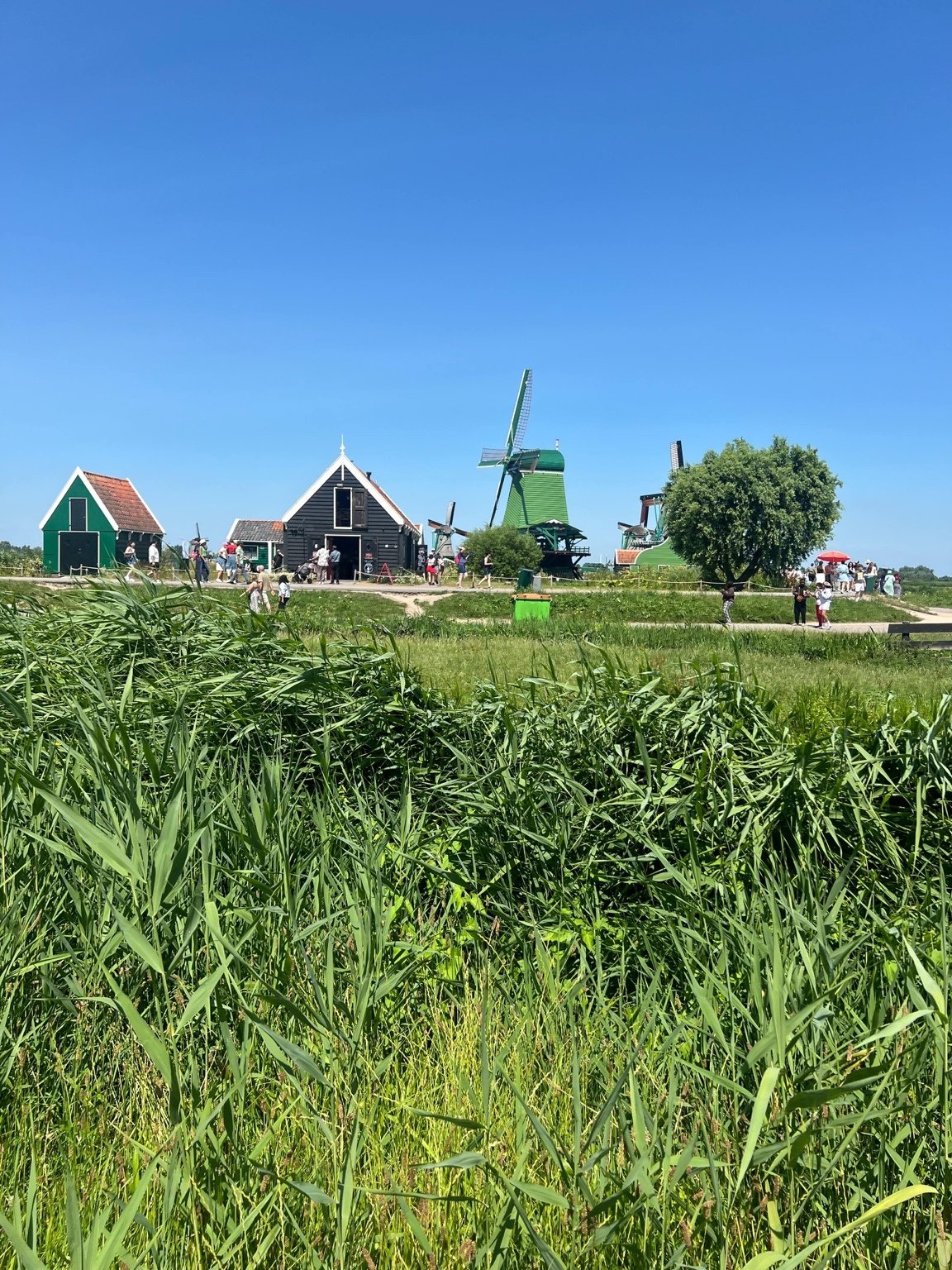
Changing your position matters more than photographing every windmill from the same crowded path.
Zaanse Schans or Kinderdijk for Windmills?
Zaanse Schans offers greater variety in compact working industries and is easier to combine with Amsterdam. Kinderdijk presents a more expansive water-management landscape. Neither is simply “better.” Choose Zaanse Schans for accessible industrial variety, crafts and a half-day structure; choose Kinderdijk for scale, waterways and a landscape-led visit.
Our detailed Zaanse Schans vs Kinderdijk comparison covers transport, crowds, children, photography and time.
A Practical One- or Two-Mill Strategy
If entering one: Walk the exterior route first, choose De Kat or Het Jonge Schaap according to your interests, then visit the craft workshops.
If entering two: Pair different industries—paint plus sawing, or sawing plus oil—rather than repeating a similar experience.
If entering none: Read the outdoor information, photograph the different mill forms and cross the Julianabrug for the broader landscape. The visit still works, but you will miss the sound and force of the machinery.
Frequently Asked Questions
How many windmills are at Zaanse Schans?
The exact number visitors count depends on the boundary and whether smaller mill structures are included. More useful than chasing one number is checking which principal working mills are open on your date.
Can you go inside the Zaanse Schans windmills?
Several windmills normally offer interior visits, often with individual tickets or qualifying passes. Opening days and access vary, so check the current list before departure.
Which is the most famous windmill?
De Kat is among the best known because of its paint and pigment production and its strong visitor experience. The sawmills are equally important to the industrial story of the Zaan region.
Do the windmills still work?
Several operate as working heritage mills, subject to wind, maintenance, staffing and safety conditions. They are not guaranteed to perform identically every day.
Are windmill interiors included in general entry?
Do not assume so. Check current individual tickets and Card inclusions. Outdoor access and interior admission are separate planning questions.
Final Recommendation
Choose one windmill before you arrive, then allow yourself to change the decision when you see what is operating. My default first-visit combination is De Kat for a strong sensory introduction and Het Jonge Schaap when there is time for a second industry. The real goal is not collecting windmill names. It is understanding how the same wind that moves the sails became a practical source of industrial power.
Check Current Windmill Information
Official Zaanse Schans visitor information: dezaanseschans.nl
Heritage mill information: Vereniging De Zaansche Molen
Full visit planning: Zaanse Schans travel guide
Sources: official Zaanse Schans visitor information · Vereniging De Zaansche Molen · Zaans Museum · Personal observation in the Zaan region. Operating conditions and visitor access can change.