
Zaanse Schans is easy to visit without a tour, which makes choosing a tour more complicated rather than less. You are not paying because independent travel is impossible. You are paying for one or more useful benefits: direct transport, historical explanation, reserved organisation, a smaller group or the ability to combine several Dutch destinations in one day.
I live in Zaanstad and regularly see how different tours use the village. Some give visitors enough time to enter a working mill and understand the industrial landscape. Others arrive, move through the same three photo stops and leave before independent visitors have finished a pancake. Both may advertise a “complete Zaanse Schans experience.” The itinerary details reveal the difference.
This comparison helps you choose among half-day coach tours, small groups, private guides, bicycle trips, boat experiences and combination tours from Amsterdam. It also explains when the train is the better purchase.
Zaanse Schans Tour Types Compared
| Tour type | Best for | Main advantage | Main drawback |
|---|---|---|---|
| Half-day coach | First-time visitors with limited planning time | Simple transport and a predictable return | Large group and fixed pace |
| Small-group tour | Visitors wanting explanation and some flexibility | Easier questions and less waiting for a large coach | Higher price than a standard bus |
| Private tour | Families, mobility needs and special interests | Custom pace and pickup options | Highest total price |
| Bike tour | Active travellers comfortable in traffic | Landscape and journey become part of the experience | Weather and cycling confidence matter |
| Boat or river-focused tour | Visitors prioritising scenery | Different perspective on the mills and River Zaan | May include less time inside attractions |
| Combination tour | Travellers determined to see several icons in one day | Efficient logistics across multiple places | Shorter, more rushed stop at each destination |
| Independent train trip | Most couples and solo travellers | Full control over arrival, departure and priorities | No live guide and more self-planning |
Independent visitors should also make a genuine cost comparison. Add the price of your chosen train or bus, any paid interiors, and the cost of a guide only if you want one. Do not compare a bare rail fare with a tour that includes tickets and narration as though they were identical products. Our transport guide explains the independent journey, while the windmill guide helps decide whether a guided mill interior is something you would use.
If a tour includes Marken or Volendam, check the order of stops and how much unscheduled time remains after transfer and lunch. For a traveller interested primarily in industrial history, a combination tour may be less satisfying than a longer single-destination visit. Conversely, someone travelling with limited mobility might value a vehicle-based day that reduces transfers. Ask the operator about wheelchair access to the vehicle and attractions separately; an accessible minibus cannot make historic mill staircases accessible.
Before comparing prices, convert every tour listing into the same six facts: total trip duration, time actually spent at Zaanse Schans, the departure and return locations, the maximum group size, included paid attraction entrances, and cancellation or weather terms. A six-hour trip that includes two other towns may offer less windmill time than a three-hour standalone excursion. “Windmill visit” can mean anything from a photo stop to admission inside an operating mill; the precise wording matters.
A Booking Checklist That Makes Tour Listings Comparable
When a Zaanse Schans Tour Is Worth Paying For
You want the industrial history explained
The site is visually easy to understand but historically layered. A good guide explains why the Zaan region became industrial, how wind powered different processes and why sawmills mattered to shipbuilding. Without that context, visitors can leave with excellent photographs and only a vague idea that “Dutch people used many windmills.”
Check whether the tour uses a knowledgeable guide throughout or provides commentary only on the bus. A live explanation beside the machinery is more valuable than a generic introduction before the group is released for free time.
You dislike coordinating regional transport
Independent train travel is straightforward, but not every visitor wants to compare timetables, station walks and transfers during a short Amsterdam stay. A tour can turn the morning into one pickup and one return. This is particularly useful for larger families, travellers with limited energy or anyone combining destinations that are awkward to connect by public transport.
You want Zaanse Schans plus another destination
Volendam, Marken, Edam, Keukenhof and Giethoorn appear frequently in combination products. The convenience is real: a coach handles the distances and parking. The trade-off is time. Read the schedule carefully and calculate actual hours at Zaanse Schans after pickup, driving, other stops and the return journey are removed.
You need a private pace
A private tour can be worthwhile for a family with young children, a multigenerational group or a visitor with a specific interest such as industrial heritage or photography. The value is not luxury for its own sake. It is the ability to pause, skip an unsuitable staircase or change the route without waiting for forty other people.
When You Should Visit Independently
Take the train independently if your priority is arriving early, staying late or spending a long time inside the mills and museum. Organised groups operate on a fixed timetable. Even an excellent guide cannot offer unlimited time when the coach must reach Volendam for lunch.
Independent travel is also better for photographers who want to respond to light, families who need unpredictable breaks and repeat visitors who already understand the main history. Our Amsterdam to Zaanse Schans guide compares train, bus, car and bicycle routes.
Half-Day Coach Tours from Amsterdam
Standard coach tours are the easiest products to find. They generally depart from a central meeting point, drive directly to the Zaan region, guide the group through several headline attractions and return within part of a day.
The main advantage is efficiency. The price can be reasonable when transport and organisation are considered together. The disadvantages are group size, waiting for boarding and a schedule designed around the average visitor. If you want to spend forty minutes asking questions inside one mill, the rest of the group may already be moving toward the cheese farm.
Check these details before booking
- Exact duration from departure to return
- Estimated time physically at Zaanse Schans
- Maximum group size
- Language of live commentary
- Whether a windmill interior is included
- Whether the Zaans Museum is included or only passed
- Cancellation terms
- Accessibility of the coach and planned attractions
Small-Group Zaanse Schans Tours
Small groups usually cost more but solve several frustrations of the coach format. Boarding is faster, the guide can answer individual questions and moving through narrow historic spaces is easier. A group of eight does not block a workshop in the way a group of fifty can.
Do not assume “small group” always means the same maximum. Read the operator’s definition. Also check the vehicle: a minivan may be efficient but less comfortable for a tall traveller or someone who needs easy entry.
This is the format I would choose for an older relative who wants context but does not want a private-tour price. It also works for travellers who enjoy asking questions and would feel anonymous on a large coach.
Private Tours
A private tour should provide more than a private vehicle following the standard coach script. Before booking, ask whether the itinerary can be adjusted. Can you arrive earlier? Spend longer at a sawmill? Skip the commercial shop stops? Cross the Julianabrug into Zaandijk? Accommodate a stroller or limited mobility?
Private pricing becomes more reasonable when divided across a family or small group. It remains expensive compared with train tickets, so identify the flexibility you are buying. If the itinerary is rigid and attraction entries remain extra, the label “private” may not deliver enough value.
Zaanse Schans Bike Tours
Cycling changes the experience because the route itself becomes part of the day. You see residential neighbourhoods, waterways and the transition out of Amsterdam rather than appearing directly at the visitor entrance. For confident cyclists, this provides context no coach can match.
Weather is the obvious risk. Wind and rain have a larger effect on a long bicycle route than on a five-minute walk from a coach. Ask about distance, e-bike availability, helmet policy, luggage storage and what happens in unsafe weather. Dutch cycle infrastructure is excellent, but busy intersections and unfamiliar traffic rules still require attention.
A shorter local bike tour beginning near Zaandam or Zaanse Schans can offer the landscape without committing to the entire ride from central Amsterdam. Compare this with independent rental in our complete Zaanse Schans travel guide.
Boat and River Tours
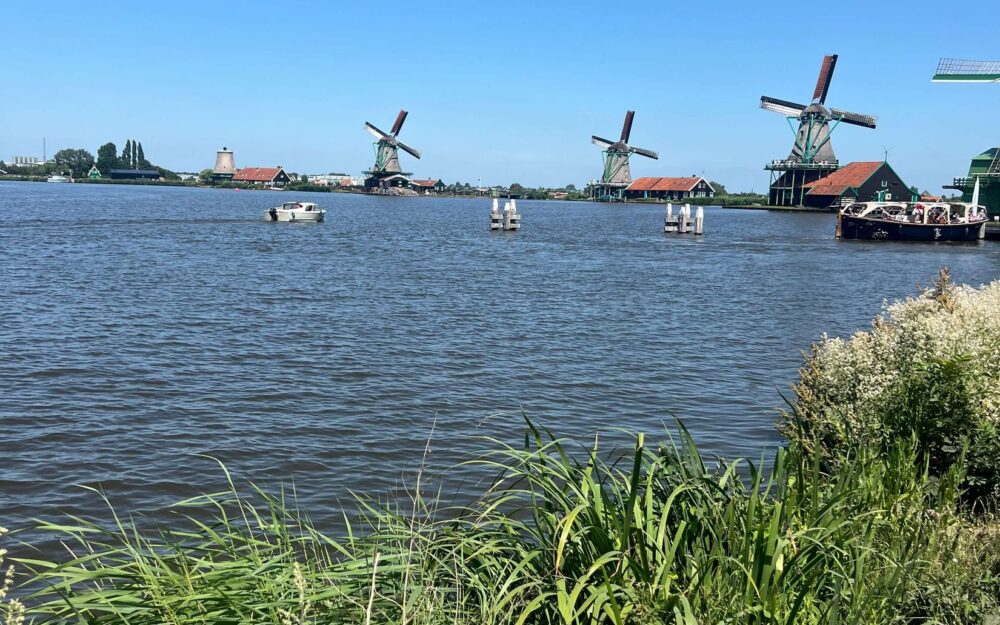
The River Zaan is central to the industrial story. Raw materials and finished goods moved by water, while mills stood where they could use wind and connect to transport. Seeing the windmills from low on the river gives them a different scale and separates the silhouette from the busy footpath.
Boat products vary widely. Some are short local cruises; others combine road transport with a boat component. Check how much time is actually spent on the water and whether poor weather changes the itinerary. A river view is a worthwhile addition, but it should not be advertised as a complete substitute for entering a mill if industrial history is your priority.
Zaanse Schans, Volendam and Marken Tours
This is a logical combination for visitors wanting a broad “traditional Netherlands” day. Zaanse Schans provides wind-powered industry; Volendam offers a busy harbourfront; Marken presents a smaller historic island-village setting. A coach or organised route solves the regional transport between them.
The danger is a collection of short stops. Look for a schedule that gives Zaanse Schans at least enough time for the outdoor line and one meaningful attraction. If the itinerary promises windmills, cheese, wooden shoes, two fishing villages, a boat, lunch and shopping within a surprisingly short day, something will be compressed.
Zaanse Schans and Keukenhof Tours
This seasonal combination is visually strong: windmills and spring flowers in one day. It also involves two popular attractions with timed access, traffic and crowds. A tour removes coordination, but the product should state Keukenhof entry conditions clearly and allow enough garden time.
Spring demand can make these tours sell out. Book only after checking the cancellation policy and the actual seasonal dates. Tulip bloom is influenced by weather; no responsible operator can guarantee one precise outdoor-field peak months in advance.
Zaanse Schans and Giethoorn Tours
Giethoorn is much farther from Amsterdam than Zaanse Schans. Combining both creates a long travel day. It suits visitors with very limited days who value seeing two famous villages more than exploring either slowly.
Check total driving time and whether a boat in Giethoorn is included. For many travellers, separate days produce a better experience. A low headline price cannot create more hours.
How to Read “Included” Correctly
Tour listings often use broad phrases such as “windmill visit,” “cheese experience” or “wooden shoe factory.” These can mean different things:
- Stopping outside a windmill for photographs
- Entering a mill with the admission price included
- Entering only if guests buy their own ticket
- Watching a short demonstration
- Receiving free time near the attraction without guided entry
Open the full inclusion list and recent reviews. If a specific interior matters, ask the operator directly. Wind and maintenance can still affect working demonstrations, even when entry is planned.
Group Size Matters More Than the Vehicle Photograph
A polished minibus photograph does not tell you whether the tour merges several bookings, how many people follow one guide or whether multiple vehicles arrive together. Look for a stated maximum. Smaller groups move through ticket counters and workshops more efficiently and are less likely to spend the morning waiting for one missing passenger.
Large coaches are not inherently bad. They can deliver excellent value and reliable logistics. The mistake is paying a premium price while expecting small-group attention from a high-capacity product.
Accessibility and Families
Ask two separate accessibility questions: can you use the transport, and can you use the attractions? A modern coach may be manageable while a historic windmill interior is not. Strollers can travel through much of the outdoor site but cannot be carried comfortably up narrow mill stairs.
Families should look for flexible free time, toilets at sensible intervals and a schedule appropriate for the youngest person in the group. A short clog demonstration and time to eat may be easier to manage than an uninterrupted series of detailed historical lectures.
Booking Platforms versus Direct Operators
Large booking platforms make comparison and cancellation terms easier to scan. Direct operators may provide more detailed answers and sometimes offer a clearer itinerary. Compare the final price, inclusions and support conditions on both. Do not assume one channel is always cheaper.
If this site uses an affiliate link, the commercial relationship should never determine which tour is ranked first. The right product depends on group size, pace, transport and interests. Always read the provider’s current terms before payment.
A Simple Decision Guide
Choose independent train travel if you want the earliest arrival, full control and the lowest organisational overhead.
Choose a half-day coach if you want simple transport and a concise introduction.
Choose a small group if questions and historical explanation matter.
Choose a private tour for flexibility, mobility considerations or a family-specific pace.
Choose a combination tour only when seeing several places is more important than depth.
Choose a bike tour when the route and landscape are part of what you want to experience.
Frequently Asked Questions
Do you need a tour for Zaanse Schans?
No. The site is easy to reach and explore independently. A tour adds transport, context or combination logistics rather than basic access.
How long should a Zaanse Schans tour last?
A focused half-day product is enough for the main village. Full-day tours make sense when adding other destinations. Check time on site rather than total advertised duration.
Are windmill tickets included?
Sometimes, but not automatically. Read the inclusions. “See the windmills” does not necessarily mean paid interior admission.
Is a private tour worth it?
It can be for families, special interests and travellers needing a flexible pace. It is poor value if the itinerary cannot be customised and most entries remain extra.
What is the best tour for children?
A short small-group or private tour with hands-on stops and flexible breaks usually works better than a long coach combination day.
Final Recommendation
Start by asking what problem the tour solves. If it solves none, take the train. If it replaces difficult regional transfers, provides a guide you genuinely want to hear or allows your family to move at the right pace, it can be money well spent.
My preferred paid format is a small group with enough time for one working windmill and some independent wandering. My preferred overall method remains independent travel for visitors who are comfortable planning the route. Zaanse Schans rewards control over timing, and no tour should take that away without giving you something equally valuable in return.
Compare Current Options
Official visitor information: Zaanse Schans
Independent train planning: NS and 9292
Tour marketplaces: GetYourGuide and Viator
Editorial note: tour schedules, inclusions and prices change frequently. Verify the operator’s current itinerary, accessibility, cancellation policy and attraction entries before booking.