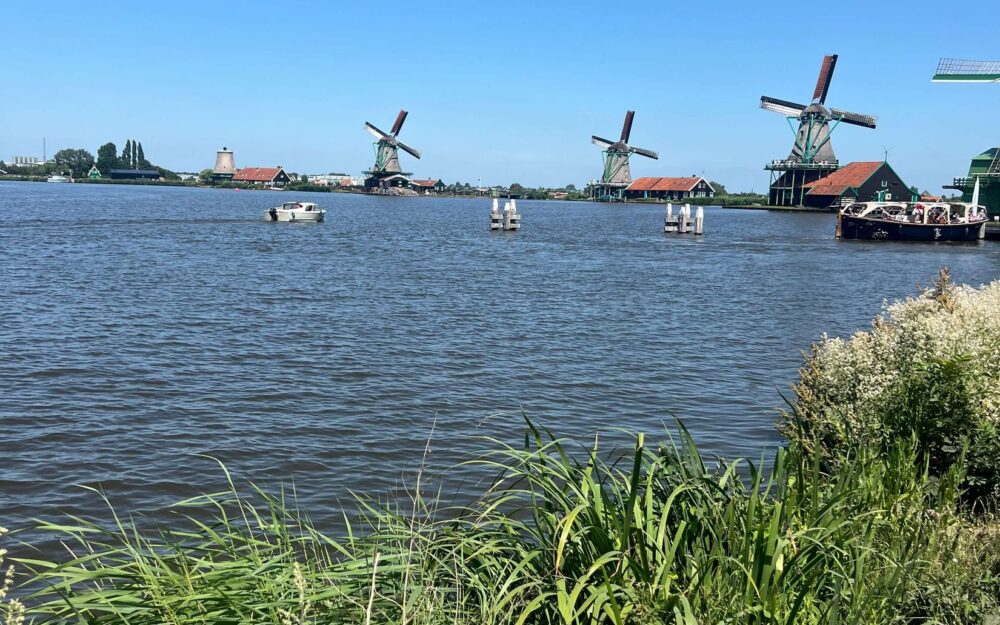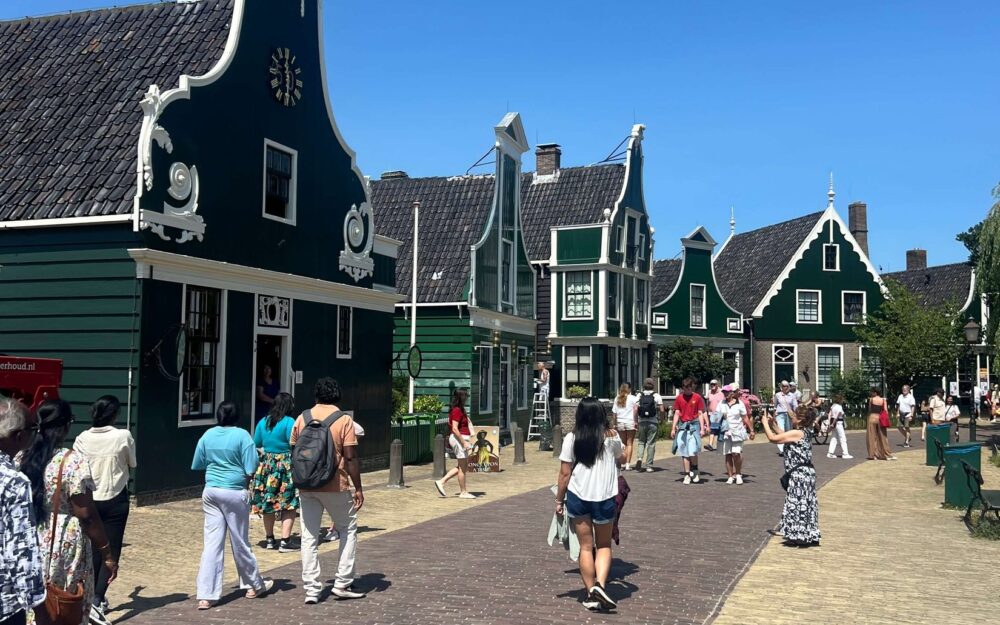

Zaanse Schans vs Kinderdijk is a useful comparison only when you understand that the sites preserve different Dutch stories. Zaanse Schans is rooted in wind-powered industry along the River Zaan: sawing, oil pressing, pigments, spices and production. Kinderdijk is rooted in water management: a coordinated landscape of mills, waterways and polders.
I live near Zaanse Schans, so I know its practical strengths and weaknesses closely. It is compact, varied and extremely easy to fit into an Amsterdam itinerary. It can also feel commercial and crowded. Kinderdijk requires a larger commitment from Amsterdam but rewards visitors who want open landscape and water-engineering history.
Zaanse Schans vs Kinderdijk: Quick Comparison
| Factor | Zaanse Schans | Kinderdijk |
|---|---|---|
| Main story | Wind-powered industry and Zaan-region heritage | Historic Dutch water management |
| Setting | Compact heritage village beside the River Zaan | Broad polder and waterway landscape |
| From Amsterdam | Easy half-day by train, bus, car or tour | Longer journey, usually better as a dedicated day |
| UNESCO status | Not a UNESCO World Heritage property | UNESCO World Heritage property |
| Other attractions | Clogs, cheese, Zaans Museum, shops and several mill industries | Visitor facilities, museum mills, boat and cycle-oriented landscape experiences |
| Families | More short hands-on stops | Better for children who enjoy walking, cycling and open space |
| Photography | Close details, village architecture and river views | Wide windmill lines, waterways and polder compositions |
| Time needed | Three to four hours for most visitors | Allow a substantial half or full day plus longer travel |
The Biggest Difference: Industry versus Water
Zaanse Schans windmills demonstrate how wind powered production. A sawmill processes timber. A paint mill grinds pigments. Oil mills crush and press materials. The site makes sense as part of the early industrial Zaan region.
Kinderdijk’s mills belong to a water-management system. The landscape shows how Dutch communities controlled water levels and made low land usable. The visual repetition of mills across channels is part of one coordinated environment.
If you ask only “Where can I see more windmills?” you miss the more important decision: which story interests you?
Zaanse Schans: Strengths
Easy from Amsterdam
Zaanse Schans is straightforward to reach from Amsterdam and fits naturally into a half-day. The train approach through Zaandijk is particularly effective because the windmill line appears from the Julianabrug.
Variety in a compact area
Working mills, wooden shoes, cheese, historic buildings and the Zaans Museum sit close together. Visitors with different interests can each find a useful stop without travelling across a large site.
Strong for families
Short demonstrations and tastings hold attention. A family can change the order easily, leave an unsuitable mill staircase and move to an outdoor path.
Close-up windmill experience
You can see machinery, climb where access permits and stand close to sails and timber. The industrial process is tangible.
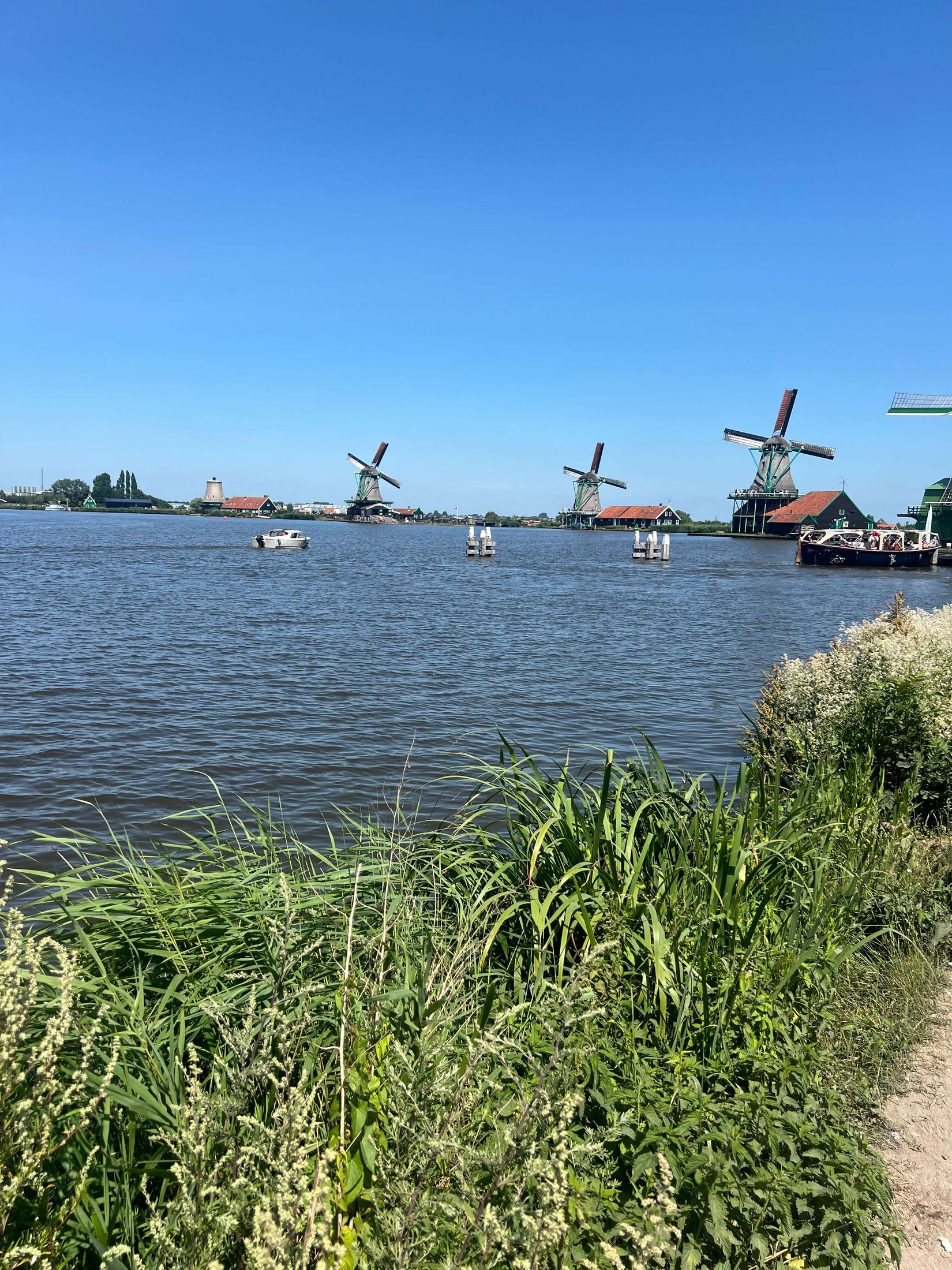
Zaanse Schans combines working mill interiors with a compact river-village setting.
Zaanse Schans: Weaknesses
Commercial visitor flow
Popular shops and group routes can make the central area feel tourist-oriented. Visit early, late or in a quieter season and cross into Zaandijk for contrast.
Compact crowds
The same convenience that makes the site easy also concentrates visitors. A large group affects a narrow workshop more than it affects an open polder route.
Not one untouched village
Historic buildings were preserved and brought together. That does not make them fake, but visitors seeking an ordinary rural village should understand the curated character.
Kinderdijk: Strengths
Landscape scale
Kinderdijk’s power comes from seeing mills relate to water, dikes and one another. The experience unfolds across distance rather than inside one compact cluster.
UNESCO water-management significance
The World Heritage recognition reflects the wider system and historical relationship between people and water. Visitors collecting UNESCO sites or interested in engineering should prioritise it.
Walking and cycling
The site rewards moving through the landscape. A bicycle or longer walk creates changing views and a stronger understanding of scale.
Wide photography
Waterways and repeated mills create classic broad compositions. Light, weather and season affect the landscape strongly.
Kinderdijk: Weaknesses
Longer from Amsterdam
Kinderdijk generally requires more travel and connection planning from Amsterdam. Search the live route through Rotterdam and regional transport for your date.
Less attraction variety in a compact loop
Visitors wanting clogs, cheese, shops and multiple short indoor diversions may find Zaanse Schans easier. Kinderdijk’s strength is the coherent landscape, not a dense menu of Dutch-themed stops.
Weather exposure
A long open walk or cycle is more affected by wind, rain and heat. Prepare accordingly.
Which Is Better from Amsterdam?
Zaanse Schans is the practical winner for a short Amsterdam stay. It requires less travel and can be completed before or after another city activity. See our Amsterdam to Zaanse Schans guide.
Kinderdijk is worth the longer journey when the UNESCO landscape is a trip priority, not merely another item squeezed between Amsterdam museums.
Which Is Better with Children?
Zaanse Schans suits younger children because the day can alternate among machines, food, workshops and outdoor space. A four-year-old does not need to appreciate the entire industrial history to enjoy clogs or cheese.
Kinderdijk can be excellent for active older children who enjoy cycling, boats, open routes and a large landscape. The right answer depends more on attention and energy than age alone.
For preschool and early-primary ages, I would choose Zaanse Schans and follow the family guide.
Which Is Better for Photographers?
Choose Zaanse Schans for close machinery, green wooden architecture, reflections beside the Zaan and varied compact viewpoints. The Julianabrug provides a broad overview, while the riverside path gives detail.
Choose Kinderdijk for wide environmental photographs, repeated mill silhouettes and the geometry of waterways. It is more naturally suited to a landscape series.
Serious photographers may want both on separate days because the visual goals differ.
Which Has the Better Windmill Interiors?
Zaanse Schans offers a particularly varied industrial comparison because different mills perform different production tasks. Entering a paint mill and sawmill provides two distinct processes.
Kinderdijk’s museum-mill experience connects more directly to the lives and water-management work associated with the site. Check current access and opening on the official website.
Which Is Less Touristy?
Both are internationally famous and receive large numbers of visitors. Kinderdijk’s scale can distribute people across a larger landscape, while Zaanse Schans concentrates them around a compact central route.
At Zaanse Schans, timing changes the atmosphere dramatically. Early outdoor walking, later afternoon and winter visits feel different from a summer coach wave. Kinderdijk also benefits from early or late timing, especially for photography.
Which Feels More Authentic?
“Authentic” is not a useful synonym for “without visitors.” Zaanse Schans contains real historic buildings and working heritage machinery, but it presents them in a deliberately preserved, visitor-oriented ensemble. Kinderdijk preserves a functioning water-management landscape with residents and tourism operating alongside one another.
Kinderdijk may feel less like a museum village because the landscape is broader. Zaanse Schans can feel more immediately educational because different industries and demonstrations sit close together. Neither should be judged as fake simply because access is organised.
Which Is Better for Cycling?
Kinderdijk is the stronger choice when cycling through an open windmill landscape is the central goal. Distance spreads visitors and provides changing relationships among mills, water and fields.
Zaanse Schans works well as part of a longer Zaan-region ride and offers bicycle access from Amsterdam or nearby towns. The experience combines urban edges, industrial heritage and river scenery rather than remaining entirely within one open polder.
Where Should You Stay?
Amsterdam is the convenient base for Zaanse Schans, although Zaandam and the Zaan region make an early or late visit easier. Staying locally also allows you to see the area after many day groups leave.
Rotterdam is the natural city base for Kinderdijk transport and gives the destination enough time without consuming a large Amsterdam return journey. If Kinderdijk is a major priority, building it around Rotterdam is more efficient than treating every Dutch attraction as an Amsterdam day trip.
What If You Have Already Visited One?
Visit the other rather than assuming you have already “done Dutch windmills.” After Zaanse Schans, Kinderdijk adds water management, scale and landscape. After Kinderdijk, Zaanse Schans adds machinery, industrial variety and compact craft stops.
The second site becomes more interesting when you compare the purposes of the mills rather than counting them.
Which Is Cheaper?
Do not compare only headline entry. Calculate:
- Transport from your accommodation
- Individual interiors or passes
- Bike, boat or tour products
- Parking if driving
- Food
- The value of a full day versus half-day
Current prices change. Use the official sites for both destinations.
Which Is Better in Bad Weather?
Zaanse Schans has more compact indoor alternatives: museum, workshops, shops and mill interiors. Movement between them still requires outdoor walking.
Kinderdijk’s landscape-led strengths are more exposed to wind and rain. A poor forecast does not make it impossible, but it changes the value of a long walk or cycle.
Which Is Better in Winter?
Zaanse Schans offers a quiet winter atmosphere with potential indoor anchors, though opening schedules require checking. Kinderdijk can feel stark and impressive but demands good clothing and daylight planning.
Read Zaanse Schans in winter for December, January and February guidance.
How Much Time Do You Need?
Allow three to four hours at Zaanse Schans for a first visit. Two hours is a fast highlights route; five or six hours adds the museum and multiple mills.
Kinderdijk deserves a substantial visit beyond the travel time. The landscape benefits from walking or cycling rather than one hurried viewpoint.
Can You Visit Both in One Day?
Technically possible with a car and an aggressive schedule, but rarely sensible from Amsterdam. The sites are not adjacent, and the transfer removes time from the very experiences that make them different.
Use separate days. If you only have one, choose according to the decision guide below.
Decision Guide
First Netherlands visit with limited time: Zaanse Schans.
UNESCO sites are a priority: Kinderdijk.
Young children: Zaanse Schans.
Water-management or engineering interest: Kinderdijk.
Wind-powered industrial machinery: Zaanse Schans.
Wide landscape photography: Kinderdijk.
Half-day from Amsterdam: Zaanse Schans.
Dedicated windmill day with cycling: Kinderdijk.
Frequently Asked Questions
Is Zaanse Schans or Kinderdijk better?
Zaanse Schans is better for convenience, families and varied industrial attractions. Kinderdijk is better for UNESCO water-management history and a broad windmill landscape.
Which has more windmills?
Kinderdijk is famous for its larger coordinated group. At Zaanse Schans, the more useful distinction is the variety of working industrial functions.
Is Zaanse Schans a UNESCO site?
No. Kinderdijk is UNESCO-listed. Zaanse Schans preserves important regional heritage but does not share that designation.
Can you enter windmills at both?
Both may offer selected interior experiences. Check current individual access and opening information before travelling.
Which is easier without a car?
Zaanse Schans is generally easier from Amsterdam. Kinderdijk requires more regional planning but remains accessible through public-transport combinations.
Final Recommendation
Choose Zaanse Schans if you want a compact, varied half-day and the chance to see wind power used for production. Choose Kinderdijk if the relationship between mills, water and landscape is the reason for your trip.
Whichever you choose, verify the specific interior access and transport shortly before departure rather than building the day around an old timetable.
For most first-time Amsterdam visitors, Zaanse Schans is the practical answer. For someone who has already seen it or who builds a trip around UNESCO water engineering, Kinderdijk is worth the extra time. Visiting both on separate days reveals why Dutch windmills cannot be reduced to one postcard.
Plan Either Visit
Zaanse Schans visitor information: dezaanseschans.nl
Kinderdijk visitor information: kinderdijk.nl
UNESCO listing: UNESCO World Heritage Centre
Netherlands train planning: NS
Sources: official Zaanse Schans information · official Kinderdijk visitor information · UNESCO World Heritage Centre · NS. Verify live transport, tickets and opening conditions before travelling.
Check the heritage designation, not only the pictures
The Kinderdijk-Elshout mill network is a UNESCO World Heritage property associated with water management; the working industrial mills and historic buildings at Zaanse Schans tell a different story about production and local heritage. The differences affect how you allocate time: at Kinderdijk the wider landscape and the relationship between water levels, pumping and mills matter, while at Zaanse Schans visitors may focus on individual workshops and mills within a more compact area. Neither experience is interchangeable with the other merely because both feature windmills.
Before travelling, verify official transport and interior-access rules for the exact day. A visitor may be able to admire a landscape without buying every optional admission, but a booked mill interior, boat or guided activity follows its own conditions. If you have only one short half-day from Amsterdam, compare the total transfer time and how much walking your group wants to do. See our Zaanse Schans route before allocating a full day to both places.