Dutch weather doesn’t ask permission, and a fair number of Zaanse Schans day trips happen under at least some rain.
My most memorable rainy visit was with a friend from Sydney who had timed her whole trip around the tulips and got three days of grey drizzle instead. We came to Zaanse Schans on day two expecting disappointment. The rain emptied the paths by 10 AM and we had the Julianabrug bridge entirely to ourselves for fifteen minutes — the windmills’ reflections in the wet wooden boardwalk were better than anything I’d shot there in sunshine. She called it the best photo of her whole trip. The weather made it, not despite the weather.
Here’s how to make the most of it rather than treating it as a problem.
What Rain Actually Changes
| Aspect | In the Rain |
|---|---|
| Outdoor paths | Still walkable, can be slick on wooden bridges |
| Windmill exteriors | Fully visible, sails still turn in wind |
| Crowds | Noticeably thinner than on dry days |
| Photography | Different but still interesting — reflections, dramatic skies |
Indoor Shelter Options On-Site
- Windmill interiors — a paid ticket gets you inside and out of the rain, with the bonus of seeing the working machinery.
- Zaans Museum — a substantial indoor stretch covering regional history, plus the Verkade chocolate-wrapping experience.
- Cheese farm — the tasting and shop areas are indoors, offering a comfortable break between outdoor stretches.
- Restaurants and cafés — a sit-down pancake lunch doubles as a dry rest stop.
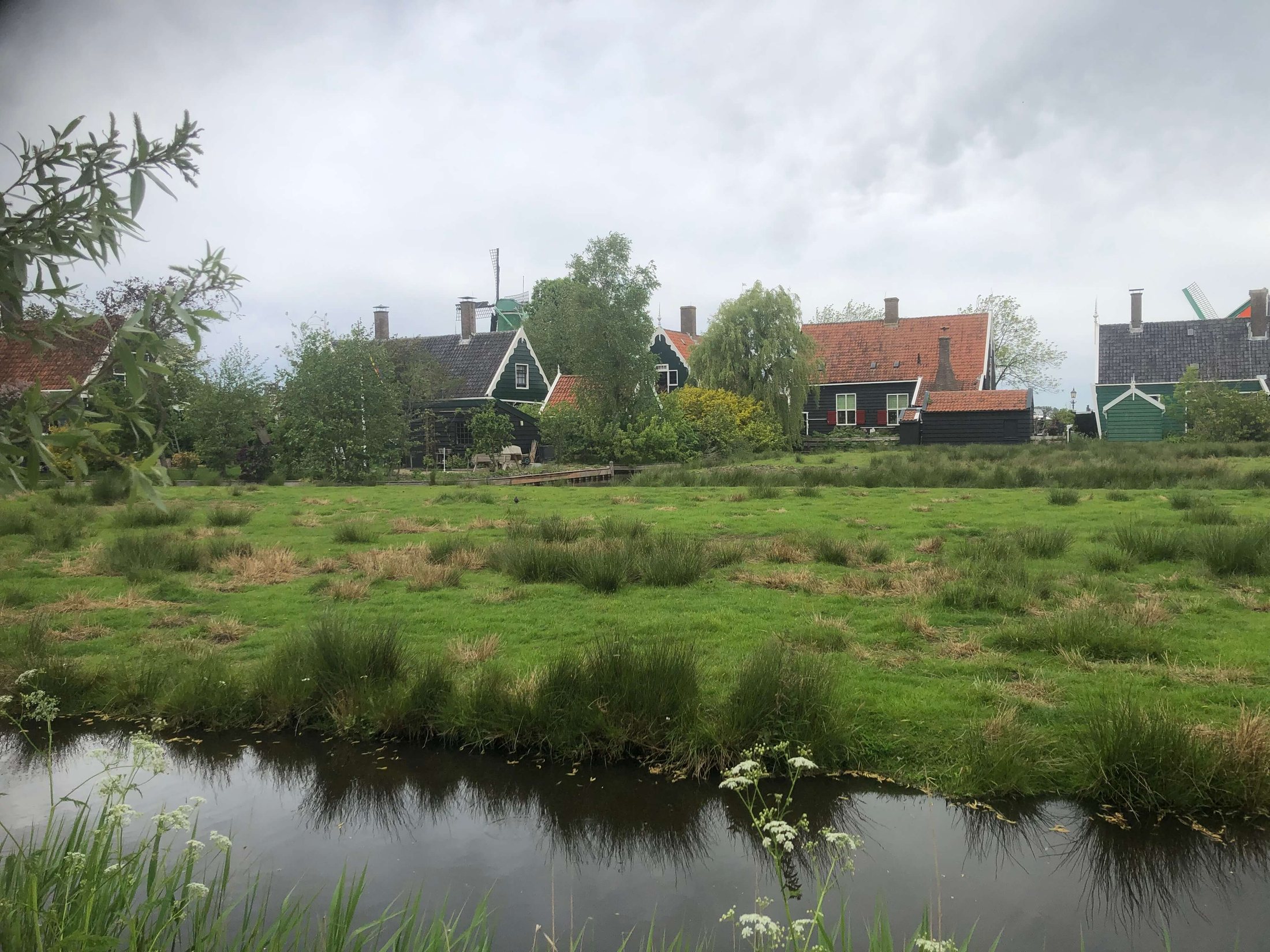
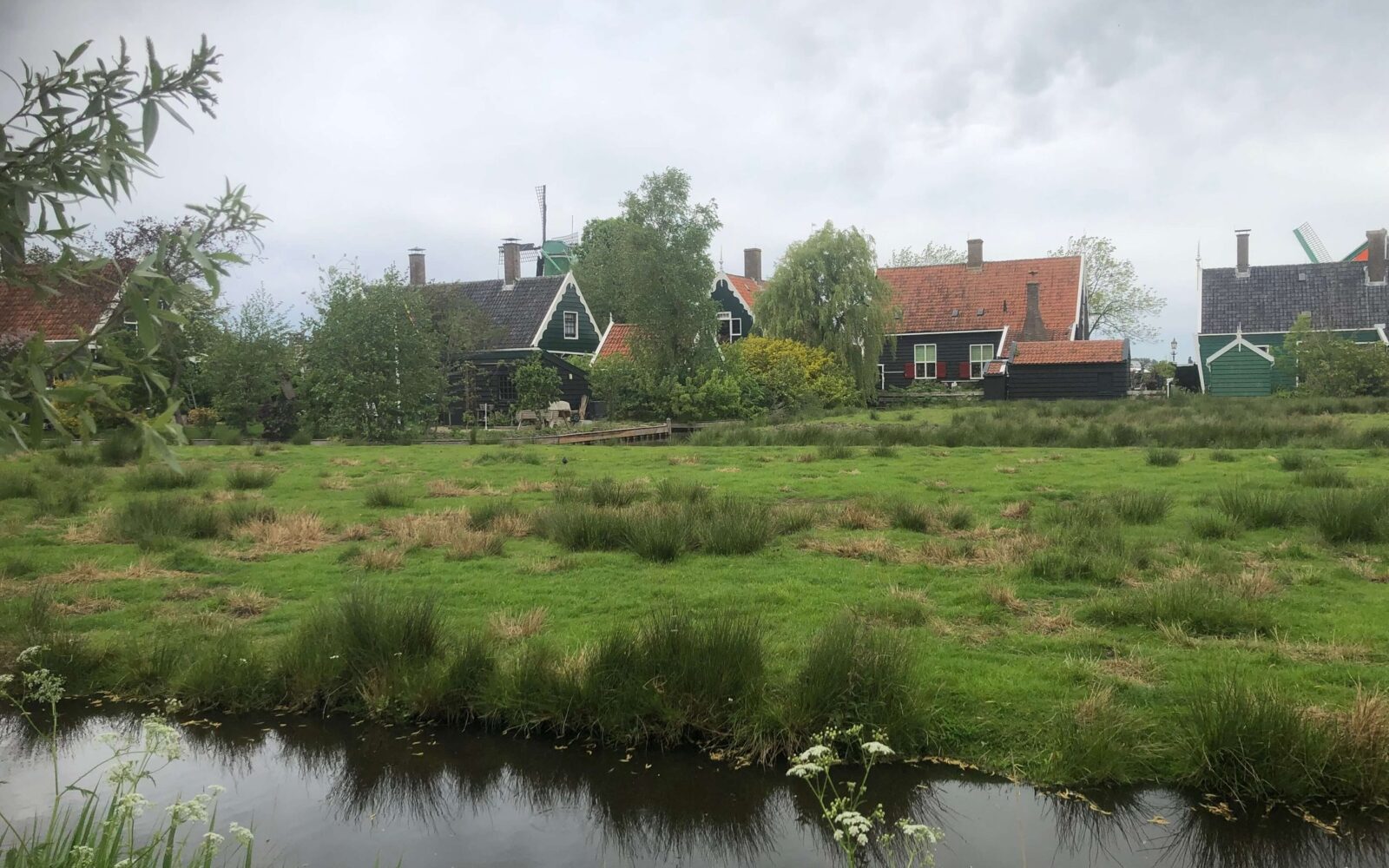
Grey skies and wet grass show what Zaanse Schans can look like in typical Dutch weather.
What to Wear
The Zaans Museum and the Verkade Experience — where you wrap your own chocolate bar on the original machinery — are fully indoor and, in my opinion, more enjoyable than the windmill exteriors for most kids and for any adult who grew up eating Verkade biscuits, which is most Dutch people over 35.
A proper waterproof jacket with a hood outperforms an umbrella here — the open village setting along the water often comes with wind that makes umbrellas impractical. Waterproof shoes matter more than usual too, since some of the wooden paths and bridges can get genuinely slippery when wet.
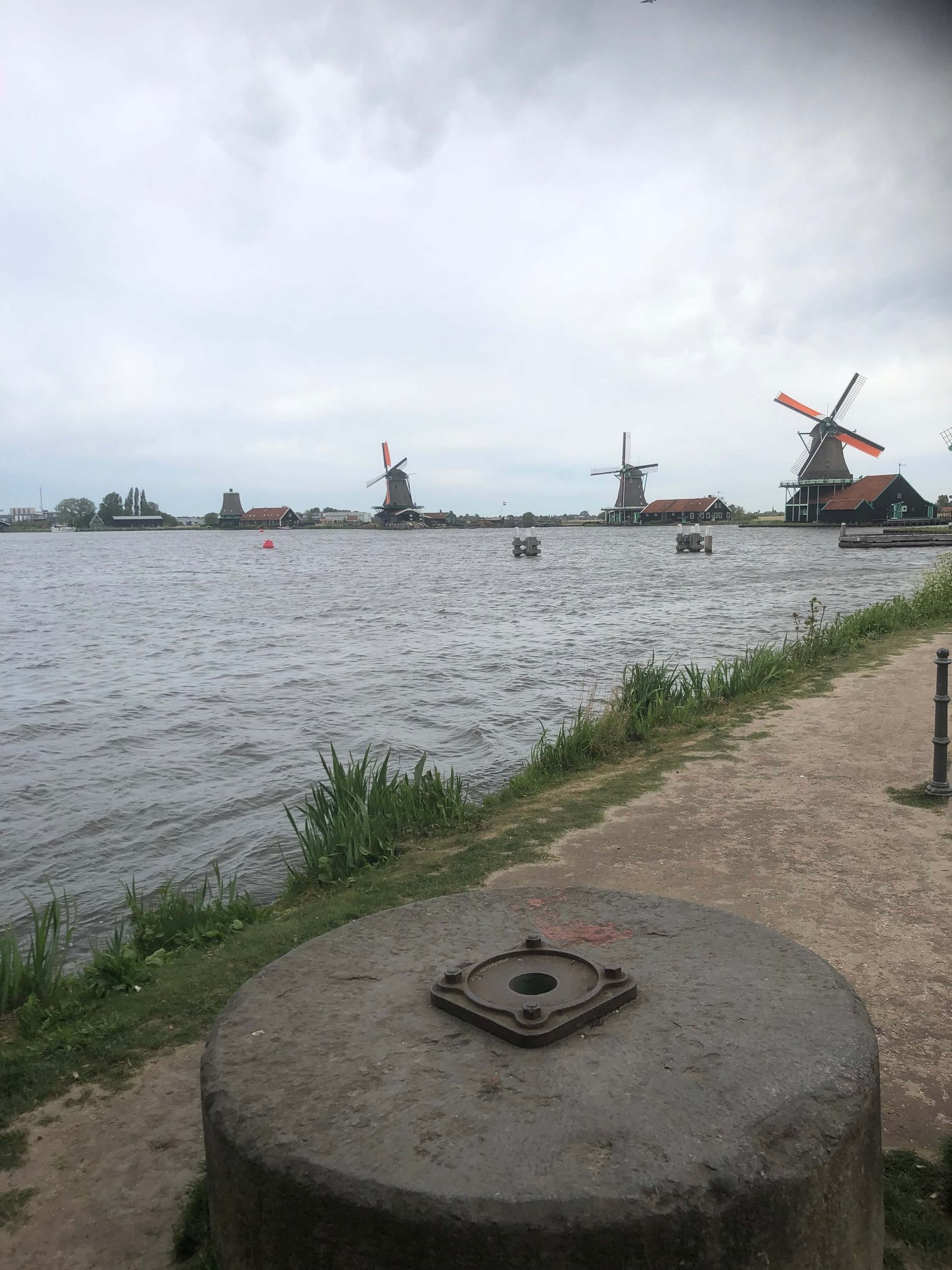
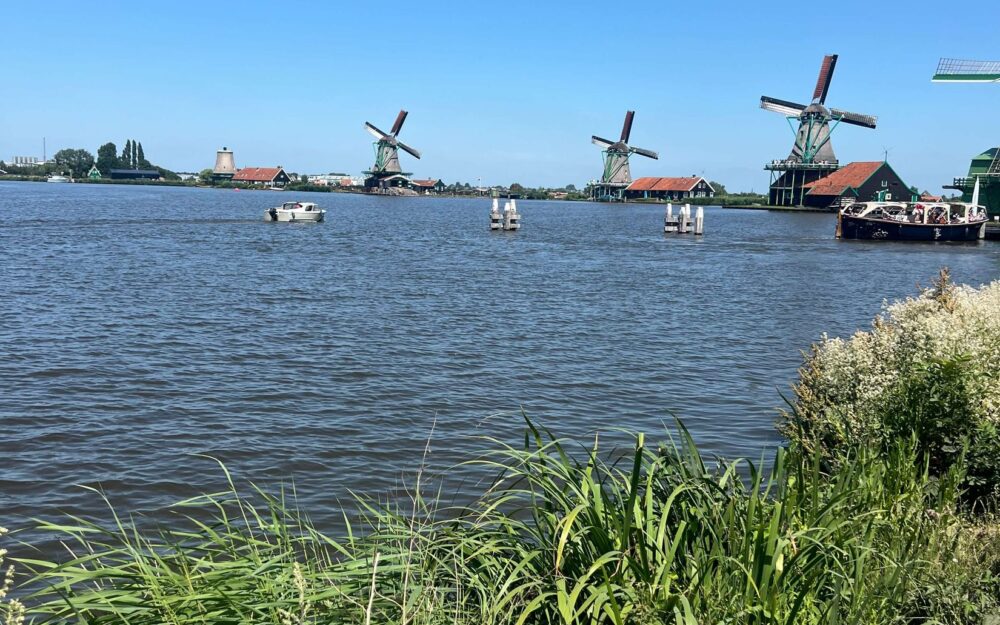
The windmills remain clearly visible across the River Zaan even in cloudy weather.
Photography in the Rain
Counterintuitively, overcast and rainy conditions can produce some striking photos at Zaanse Schans — wet cobblestones and canal surfaces reflect the windmills in ways a flat, sunny day doesn’t, and dramatic grey skies behind the windmill sails have their own appeal. If photography is a priority, don’t write off a rainy visit entirely.
Should You Reschedule?
Light, scattered rain: Push through. This is genuinely manageable with the right gear and barely changes the experience.
Steady, moderate rain: Still worth it if you plan indoor breaks between outdoor stretches.
Heavy rain with strong wind: If your schedule allows flexibility, this is the one scenario where rescheduling genuinely improves the experience — strong wind makes the open, waterside paths uncomfortable rather than just damp.
Choose the right plan for the kind of rain
Light drizzle, persistent rain and strong wind call for different plans. In drizzle, a compact outdoor loop with short indoor stops is usually practical for people who have suitable waterproof layers. In persistent rain, focus on one indoor attraction that is confirmed open, and allow enough time to enjoy it rather than moving continuously between doorways. With strong wind or thunderstorms, postpone exposed bridge and riverside photography and follow official weather warnings. You do not need to prove that your raincoat works by standing on an open dike in unsafe conditions.
Check what ‘indoors’ actually means before leaving Amsterdam. A working windmill can include narrow stairways and machinery, and some workshops have short demonstrations rather than an all-day sheltered visitor hall. The Zaans Museum can support a longer indoor visit, but it requires its own opening-hours and ticket check. A café is useful as a break only when it is open and has room for your group; buying a ticket for one attraction does not give you a guaranteed seat in every other building. Make one confirmed indoor stop the anchor, then add outdoor time if conditions permit.
A realistic two-hour rainy visit
Start by checking rain radar and the train return time while you are still at Amsterdam Centraal. On arrival at Zaandijk Zaanse Schans station, follow the marked pedestrian route at a comfortable pace; the approach is not covered. Begin with a short outdoor view of the mills and riverside, then enter your selected open museum or mill. If the rain eases, complete a smaller loop around the historic buildings. If it intensifies, skip the farthest riverside section and return by the most direct public path. This is deliberately a flexible sequence, not a promise that every attraction will be operating at the hour you arrive.
Travellers arriving by car can choose a similar sequence but should not treat the car park as an indoor waiting area or use nearby residential streets as a shortcut. The visitor car park has its own fee and payment conditions, regardless of how long the rain lasts. The official access information identifies the authorised arrival points; our train-versus-car guide explains how they change your door-to-door route.
Photographing wet windmills without damaging your phone
Rain often deepens the colour of painted timber and makes reflections more noticeable on paving and water. To photograph them, wipe moisture from the lens before each sequence and protect your device between shots. Instead of standing at the edge of a slippery path to improve your angle, move back and use a slightly tighter crop. A polarising filter can change reflections but can also remove the very sheen you want in a rain photograph. Take one wide scene and a few small details such as paint, ropes and window frames; the result tells the weather story better than repeatedly chasing the same view.
Keep your camera away from working machinery and respect barriers inside mills. A tripod is not a right to block a narrow doorway, bridge or residential path. If you have travelled specifically for landscape images, revisit the weather decision after the first indoor stop: a bright interval following a shower may suit outdoor photography, but leaving earlier remains a sensible outcome when your group is cold or uncomfortable. For a full list of viewpoints see our photo-spots guide.
What to pack, and what to leave out
A waterproof outer layer is generally more useful than an umbrella in wind, because it leaves your hands free on steps and narrow bridges. Shoes should grip damp paving and keep your feet reasonably dry during the walk from the station. A small dry bag or zip pouch protects tickets and charging cables. If you travel with a child, carry a spare warm layer and plan where everyone can change it without occupying the entrance to a small shop. You do not need specialist hiking equipment for an ordinary short visit; you do need to recognise when the forecast makes the exposed parts of the route a poor choice.
Finally, do not confuse an outdoor heritage area’s availability with its indoor attractions’ schedules. Check the specific mill, shop or museum before travelling, particularly during winter or on a day of severe weather. The winter guide covers seasonal operating constraints, while the half-day route can be shortened to match the dry periods of your visit.
🙋 Frequently Asked Questions (FAQ)
Should I reschedule my Zaanse Schans visit if it’s raining?
Not necessarily. With proper rain gear, most of the outdoor village remains enjoyable, and the windmill interiors, cheese farm and museum offer indoor shelter between outdoor stretches. Only heavy, sustained rain with strong wind would make rescheduling worthwhile if your schedule allows it.
What should I wear to Zaanse Schans in the rain?
A waterproof jacket with a hood, rather than an umbrella, handles the open, sometimes windy village setting better. Waterproof shoes matter too, since some paths can get muddy or puddled.
Are there indoor things to do at Zaanse Schans?
Yes, windmill interiors, the Zaans Museum, the Verkade chocolate-wrapping experience, and several shops and restaurants all offer indoor shelter, making it possible to structure a rainy visit around mostly covered stops.
Is Zaanse Schans less crowded when it rains?
Yes, noticeably. Rain reliably thins out the tour bus crowds, which can make for a more relaxed, photo-friendly visit despite the weather.
Final Recommendation
If you want a fully indoor backup plan in case the weather turns severe, pair this with our broader Amsterdam rainy-day guide for the city itself.
Plan Your Visit
🎟️ Tickets: dezaanseschans.nl
🍫 Zaans Museum: zaansmuseum.nl
🚂 Train & transit tickets: ns.nl
🏨 Compare accommodation prices: Booking.com
🗺️ Organised day trips & tours: GetYourGuide
🌍 Spanish-language tours & activities: Civitatis
Sources: dezaanseschans.nl | KNMI | Personal observation — Zaanstreek, Noord-Holland | Details can change; check the linked official sources before booking