
A bike is close to essential on Texel, and renting one at the terminal is so routine that it takes about four minutes from arrival to pedalling. What’s worth knowing before you get there:
The rental place at ‘t Horntje opens at the same time as the first ferry arrives. The woman running it in summer has clearly given the “electric or regular?” speech thousands of times, but she still asks which beaches you’re planning and adjusts her recommendation accordingly. I ended up on a regular bike when I’d planned on electric and didn’t miss it — the island is flat enough that the extra weight only matters into a strong headwind.
Where to Rent
| Location | Convenience |
|---|---|
| Ferry terminal (‘t Horntje) | Highest — rent immediately on arrival |
| De Koog and other villages | Good if staying overnight near a specific village |
Which Bike to Choose
Regular Dutch-style bikes work fine for most visitors — sit-up geometry, comfortable saddle, sturdy build. Electric bikes are worth considering if you’re planning a longer loop (20km+) or if any member of your group is not a confident cyclist; the wind on Texel can be deceptively tiring over a full day. I’ve done both and slightly prefer the regular bike for anything under 25km — the sensation of actually earning the distance, slowly, while watching the dune landscape shift, is part of what makes the day satisfying.

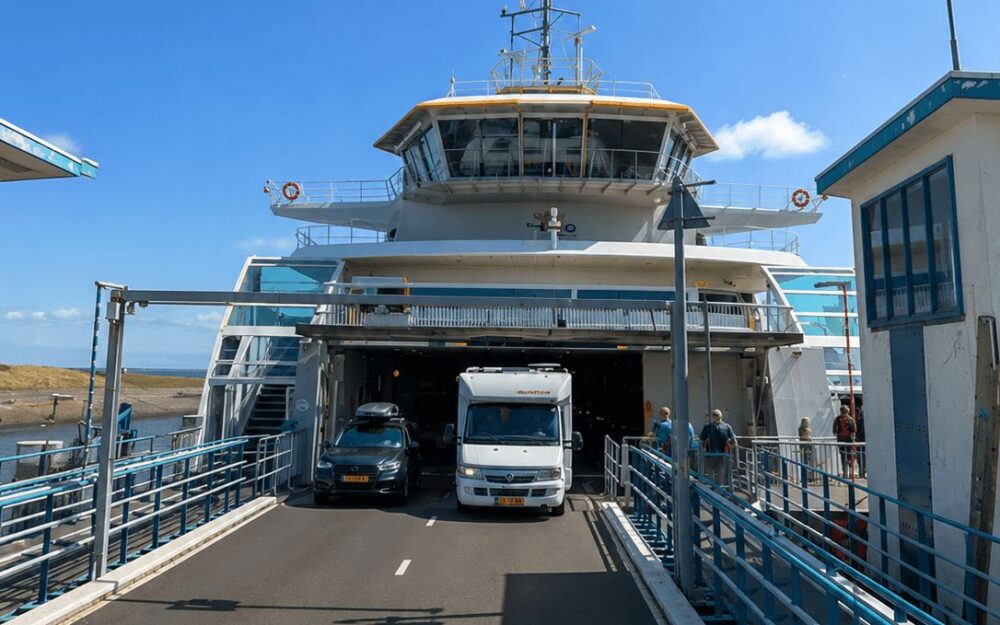
The covered vehicle deck of the TESO ferry, mid-crossing.
Child Seats and Trailers
Standard bikes are available in large numbers and rarely need advance booking outside the busiest summer weekends. Child seats and trailers for younger kids are also widely available, though booking ahead during peak season ensures you get one rather than risking availability on arrival.

A cluster of working and passenger boats sharing the same quay.
The Bike Network
Texel’s bike paths are flat, well-maintained, and largely separated from car traffic. One specific observation: the paths between the ferry terminal and De Koog are excellent. The paths along the dune ridge on the western side are narrower and occasionally shared with pedestrians. The eastern side, through the polder landscape toward De Cocksdorp in the north, sees almost no other cyclists on weekdays and is my favourite stretch on the island — straight, open, with the Waddenzee visible in the distance., making the island genuinely accessible to less confident cyclists in a way busier mainland routes sometimes aren’t. Paths connect the main villages, beaches, and nature areas, covering most of what a typical visitor wants to see.

A wide sandy beach bordering one of the island’s dune-side holiday parks.
Suggested Routes for First-Time Visitors
- Ferry terminal to De Koog — a straightforward route connecting your arrival point to the island’s most developed village and beach access.
- De Koog to a nature reserve — combining beach time with a dune landscape stop in the same day.
- A loop including Ecomare — pairing the seal sanctuary with a broader cycling route covering multiple points of interest.
Costs
Standard bike rental rates are reasonable for a full day — in the range of €12-16 for a regular bike, roughly €25-30 for electric, based on my last visit in June 2026 (check current rates on arrival as these shift annually, with child seats and trailers adding a modest additional fee. For a single day visit, this remains one of the more affordable parts of a Texel trip relative to ferry and train costs.
Start with the pickup location, not the bicycle model
A bike rental is only convenient if you can reach its pickup point after the ferry and return the bicycle before leaving the island. Some visitors plan to collect bikes near the ferry terminal; others prefer travelling to a village and starting their ride there. Those approaches create different route lengths and different return obligations. Confirm the actual address, opening hours, booking terms, deposit and what happens if you arrive later than expected. Ask whether the rental includes a lock, lights, charging equipment for an e-bike and support if the bicycle breaks down. When a shop describes a route as easy, check the distance and surfaces for yourself. A comfortable first island cycle is not the same thing as covering the entire island in one day.
Regular bike, e-bike, child seat or trailer?
A regular bicycle suits travellers who are comfortable riding in the wind and do not mind adjusting their route when conditions change. An e-bike may make headwinds more manageable, but check battery range, charging policy, weight and how assistance is limited. Families need a different conversation: reserve the correct size of child seat, trailer or children’s bicycle, and verify that it fits the child and the adult rider. Do not assume that every shop stocks every configuration. Check the supplier’s guidance on helmets and minimum age, then examine the actual equipment at collection rather than leaving with an unfamiliar setup. Riders with mobility limitations should ask about adapted cycles or consider a public-transport-based itinerary instead of feeling obliged to cycle because the island is known for it.
Make a route from one or two destinations
Choose a village and one beach or nature area you would like to see, then draw a loop that returns to the rental point with time to spare. Look at the total distance, the prevailing wind and how much of the route uses dedicated cycle paths. On a small map, the ferry terminal can appear close to every major beach; the actual ride with children or into a headwind may be much longer than expected. Add a long rest stop, a café you have checked or a short walking trail where bicycles can be parked lawfully. Do not ride through protected nature areas where cycling is restricted, even if a navigation app displays a track. The one-day itinerary offers transport-specific options and avoids claiming that every island highlight fits one bicycle loop.
What to check before accepting the bicycle
Test both brakes, tyre condition, bell, lights if you may be out near dusk, saddle adjustment and the lock. On an e-bike, confirm the assistance modes and ask what to do if the display reports a problem. Record any visible damage in the rental agreement or photograph it with the provider’s permission. Make sure you understand the policy for a puncture, theft, accidental damage and late return. If a child trailer or seat is involved, ask the staff to demonstrate the attachment and restraints. Carry the rental contact details, water and a charged phone. Do not begin a long countryside route with an unfamiliar cycle that already feels uncomfortable: adjust the bike or request an alternative while you are still near the shop.
The return trip matters as much as the ride
Work backwards from the final useful ferry and mainland connection. Leave time to return the bike, complete any inspection, reach the terminal and board without hurrying. An ordinary TESO return ticket does not fix an exact departure, but the rental business may have a strict closing time. If the wind strengthens or a child becomes tired, shorten your route rather than relying on a last-minute sprint to the shop. If you bring your own bike instead, check separate train and ferry rules and fares. Our ferry guide covers the crossing, while Texel with kids helps family groups choose an itinerary with fewer demanding transitions. The best rental is the one that makes the day simpler rather than creating another appointment you spend the whole afternoon watching.
🙋 Frequently Asked Questions (FAQ)
Where can I rent a bike on Texel?
Bike rental is available right at the ferry terminal at ‘t Horntje, as well as in the island’s main villages, making it easy to rent immediately on arrival without prior booking in most cases.
Do I need to book a bike rental in advance on Texel?
For most visitors, no, especially outside peak summer weekends. During the busiest periods, booking ahead guarantees availability, particularly for child seats and trailers.
Are Texel’s bike paths suitable for beginners?
Yes, the island’s bike network is flat, well-maintained and largely separated from car traffic, making it accessible even for less experienced cyclists.
Can I bring my own bike on the ferry to Texel?
Yes, bikes are commonly brought across on the TESO ferry alongside foot passengers, though renting on arrival remains simpler for most visitors who don’t already have a bike with them in Amsterdam.
Final Recommendation
For where to actually cycle to, see our best beaches on Texel guide.
Plan Your Visit
🚲 Bike rental info: texel.net
⛴️ Ferry schedules: teso.nl
🚂 Train & transit tickets: ns.nl
🏨 Compare accommodation prices: Booking.com
🗺️ Organised day trips & tours: GetYourGuide
🌍 Spanish-language tours & activities: Civitatis
Sources: texel.net | teso.nl | Personal observation — Noord-Holland | Details can change; check the linked official sources before booking