
Texel‘s beaches stretch for many kilometres along the island’s western coast. I’ve visited in June, September, and once in January in driving rain that made the whole thing feel like a Turner painting. Each beach has a distinct character that the standard descriptions mostly miss.
At Paal 17, the nearest substantial beach to De Koog, there’s a strandpaviljoen (beach café) that sells the best kroketten I’ve had outside Amsterdam. The owner — a weathered man in his 60s who clearly doesn’t care much for tourists’ opinions — told me it had been his family’s business since 1971. The coffee is terrible. The kroketten are excellent.
Beach Comparison
| Area | Best For | Crowd Level |
|---|---|---|
| De Koog | Families, facilities, easy access | Higher in summer |
| Paal stretches further north/south | Quiet walks, fewer facilities | Lower |
| Windier exposed stretches | Surfing, kitesurfing | Moderate, sport-focused crowd |
De Koog: The Family-Friendly Choice
The beach near De Koog village offers the most developed facilities on the island. What the tourist information doesn’t mention: the path from De Koog village to the beach entrance is a 15-minute walk through the dunes, and those dunes are steep enough that on a hot day you arrive at the sand already slightly tired. Families with strollers should know this in advance — the path is manageable but not trivial. on the island — beach cafés, lifeguard supervision during peak season, and easy access from nearby accommodation. This makes it the natural choice for families or anyone wanting a beach day without extensive logistics planning.

A cluster of working and passenger boats sharing the same quay.
Quieter Stretches
Cycling north from Paal 17 for 20 minutes brings you to stretches where on a September weekday I counted four other people in both directions. The sand is identical. The quiet is not. This is where I’d go first if I was returning to the island rather than visiting for the first time. These suit travelers prioritizing a peaceful walk over convenience and facilities.

The dunes at sunset, with long shadows stretching across the sand.
Beaches for Watersports
Certain exposed stretches of coastline see consistent wind, making them popular with surfers and kitesurfers. If watersports are part of your plan, check with a local rental shop on Texel for the specific beach best suited to current conditions, since this varies by wind direction and season.
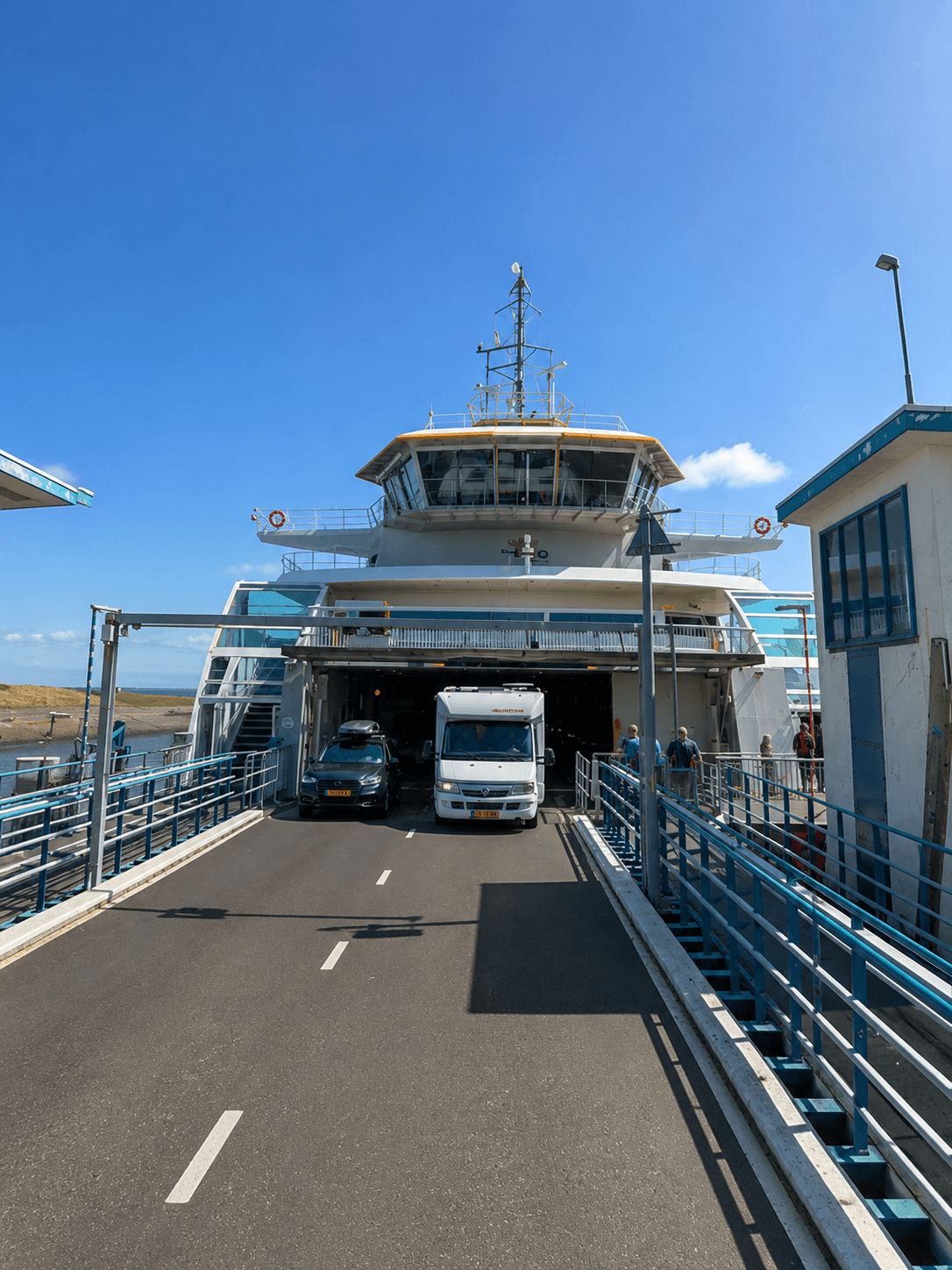
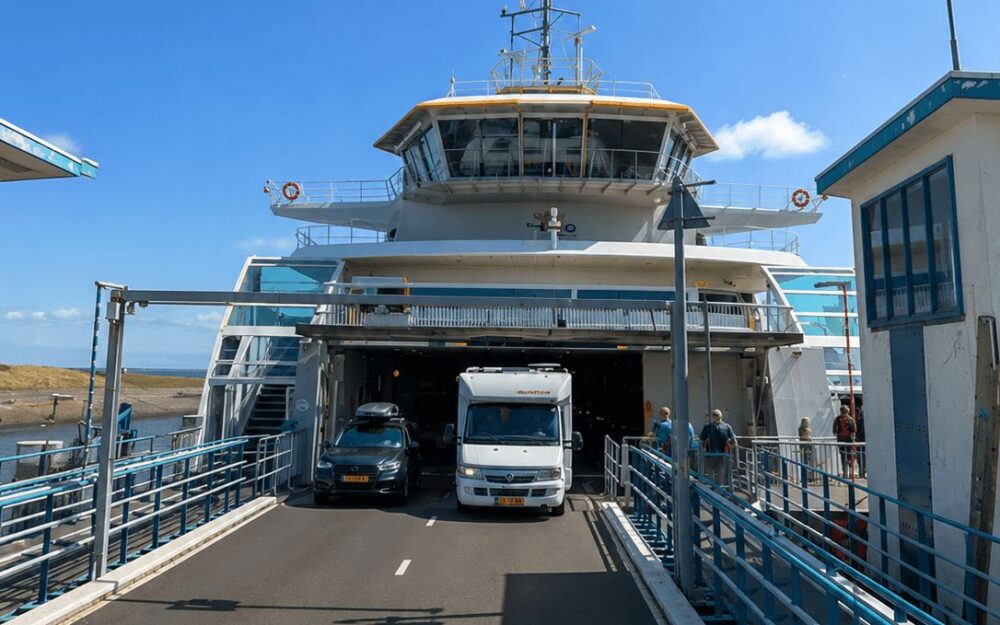
Boarding at the terminal — cars and campervans loading together.
What to Bring
- Windbreak or shelter — this is not a suggestion. I watched an unprepared Dutch family struggle with a standard beach umbrella in a moderate onshore wind for about ten minutes before it collapsed. The wind on Texel’s North Sea coast is consistent and often strong enough to make shade impossible without a proper windbreak.
- Bike — most beach areas are easiest reached by bike rather than on foot from village accommodation.
- Layers — even in summer. I had a t-shirt on cycling to the beach and wearing my fleece within 30 minutes of arriving at the coast. The temperature drop at the dune edge is real and immediate.

A wide sandy beach bordering one of the island’s dune-side holiday parks.
Choose a beach by the day you want, not a single ranking
Texel has different beach experiences: busier access points with nearby food and services, long stretches where the landscape is the main attraction, and areas more suited to active watersports. The most suitable choice depends on whether you want to swim, walk, eat lunch, photograph dunes or spend a few hours with children. Check the current visitor information for the specific beach entrance and do not assume every stretch has lifeguards, toilets, a beach pavilion or step-free access. A place that feels wonderfully remote to an experienced walker can be awkward for someone carrying a buggy or beach equipment. Equally, a serviced beach may be the most enjoyable option when your group wants a warm drink or a quick place to shelter from changing weather.
Swimming safety is different from beach quality
Do not infer that a scenic or popular beach is safe for swimming under all conditions. The North Sea can have currents, strong waves and changing wind conditions. Follow local flag systems, posted warnings and instructions from beach safety personnel, and choose a patrolled area where available if your group intends to swim. Keep children within arm’s reach near the water and establish a clear boundary for play. Walking along the shoreline, paddling and entering deeper water pose different risks. If you are unfamiliar with local conditions, a walk and picnic can be a complete beach day without any swimming. Check weather, tides and local advisories on the day rather than relying on a photograph or a previous visitor’s enthusiastic review.
De Koog and a more serviced beach visit
The vicinity of De Koog may be convenient for travellers who want to combine beach time with village facilities. The decision is less about whether it is the “best” beach and more about whether nearby food, transport connections and a shorter walk from your accommodation matter to you. In high season, popular access points can become busier, and a café’s opening hours do not always match a visitor’s expected lunch time. Check the specific entrance you intend to use and confirm accessibility if someone in your group needs a wheelchair-friendly route. If you are arriving without a car, consider how far you must travel after the ferry before you decide that a more distant beach is the ideal first stop. The Texel transport guide explains the mainland-to-island stages.
Quiet dunes and protected areas require a different approach
For a quieter day, choose a legal public access route through the dunes and spend more time in one stretch of landscape. Do not wander off paths to reach a seemingly empty patch of sand; seasonal restrictions may protect nesting birds and fragile dune vegetation. Keep dogs under control according to local signs, take litter away and avoid disturbing wildlife for photographs. A secluded beach may offer fewer facilities and little shelter. Bring suitable clothing, water and any medication or mobility equipment you need, and decide how you will get back before walking farther. A long, empty coastline is rewarding when you are prepared for it, not when you discover at the end that the nearest practical return route is much farther than expected.
Make beach time fit the rest of your Texel itinerary
If you have just one day on Texel, pair a beach with a nearby village or an attraction that is genuinely close on your selected transport route. Avoid crossing the island repeatedly to collect the names of several beaches. A cycling visitor should assess the return distance and wind direction; a driver should confirm parking and access; a family should plan rest and food stops before anyone becomes cold or tired. Our one-day Texel guide gives separate options for different transport modes, and the family guide explains how to slow the day down. A satisfying beach visit is often a full morning at one location rather than a brief stop at three popular names.
When the beach is the main activity, arrive prepared
Decide whether you need food facilities, restrooms and a short walk from parking or public transport. A remote stretch of coastline can be appealing for an adult hiking group but a poor match for a family carrying towels, toys and a pushchair. Check the current weather and the conditions at your chosen access point, pack a windproof extra layer and take your rubbish away. If the forecast changes, switch from an extended beach visit to a shorter walk rather than pressing on because the beach was the headline activity.
Photography and wildlife watching also require care: stay on signed public access routes and avoid entering protected dunes for an unobstructed picture. Be considerate of other visitors using the narrow paths, and do not approach nesting birds. For someone with limited mobility, check a specific beach’s accessibility information directly rather than assuming that a coastal resort is level and easy throughout.
🙋 Frequently Asked Questions (FAQ)
Which Texel beach is best for families?
Beaches near De Koog tend to be the most family-friendly, offering more facilities, lifeguard supervision in season, and easier access from the village.
Are Texel’s beaches crowded in summer?
The beaches near the main villages, particularly De Koog, see meaningful summer crowds, while quieter, less accessible stretches further from the villages remain noticeably calmer even in peak season.
Is Texel good for surfing?
Yes, parts of Texel’s coastline are popular with surfers and kitesurfers, given consistent wind and open beach exposure, though conditions vary by specific beach and season.
Are Texel’s beaches sandy?
Yes, the island’s western coast consists of long, sandy beaches backed by dune systems, typical of the broader Dutch and Wadden Sea coastline.
Final Recommendation
For families specifically, see our broader Texel with kids guide for additional planning details.
Plan Your Visit
🚲 Bike rental: texel.net
🚂 Train & transit tickets: ns.nl
🏨 Compare accommodation prices: Booking.com
🗺️ Organised day trips & tours: GetYourGuide
🌍 Spanish-language tours & activities: Civitatis
Sources: texel.net | Personal observation — Noord-Holland | Details can change; check the linked official sources before booking