
I visited Texel in January on a grey Tuesday with nothing planned beyond “walk along the coast and see what happens.” What happened was two hours of watching waves in the kind of focused silence that’s almost impossible in a city. I ate a bowl of erwtensoep (pea soup) in the only café in De Cocksdorp that was open, which was run by a man who seemed mildly surprised to see a visitor and said the winter months were “rustig” (quiet) with the satisfied tone of someone who likes it that way.
The beach at Paal 9 in January: the sand was hard-packed, the sky was the exact colour of a freshly sharpened pencil, and the only sounds were wind and guillemots. I was the only person there. It’s a twenty-minute cycle from the ferry in good weather. In that specific silence, the travel investment felt entirely justified.
What Changes in Winter
| Aspect | Winter Reality |
|---|---|
| Ferry service | Operates year-round, occasional storm delays |
| Restaurants & shops | Some seasonal closures, reduced hours |
| Beaches | Open, but cold and windswept |
| Ecomare | Generally open, check current hours |
| Crowds | Significantly lower than summer |
What Locals Love About Winter Texel
Dutch coastal weather has a particular drama in winter that the summer version simply doesn’t have. On a storm-watch day in January, the North Sea sends surf across the sand flats that in summer are just flat water. The dune edges erode visibly during heavy northwest gales. The landscape is working in a way that summer visitors never see. Locals who know the island well often prefer this season specifically for the storm-watching, walking the beaches when the wind is up rather than avoiding it.

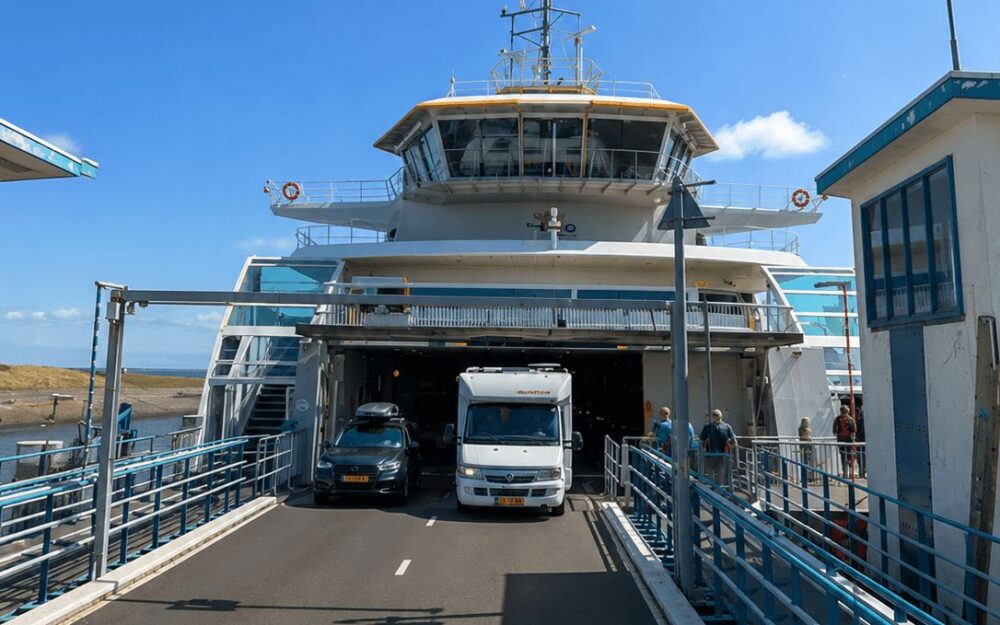
The covered vehicle deck of the TESO ferry, mid-crossing.
What I Found Closed
On my January visit: the larger restaurants in De Koog (4 of the 6 I tried) were shuttered until March. The main tourist information office was closed. Two of the three bike rental places at the terminal were closed, but one was open with a limited selection — enough. Ecomare was open with reduced hours (check ahead). The supermarket in De Koog was open normal hours. The one open café in De Cocksdorp was warm and had good soup. This is enough.

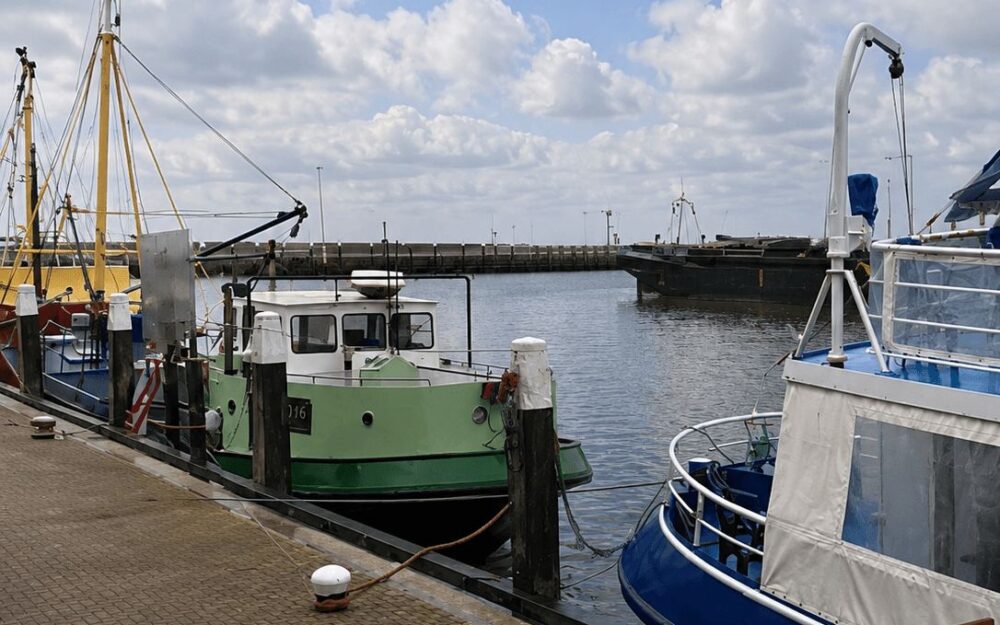
A wide sandy beach bordering one of the island’s dune-side holiday parks.
What’s Limited in Winter More Broadly
- Restaurant and shop hours. Several seasonal businesses geared toward summer tourism close or reduce hours significantly.
- Beach weather. Swimming isn’t realistic, and even walking requires proper winter gear given the wind.
- Daylight hours. As elsewhere in the Netherlands, winter daylight runs short, limiting the practical window for outdoor activities.
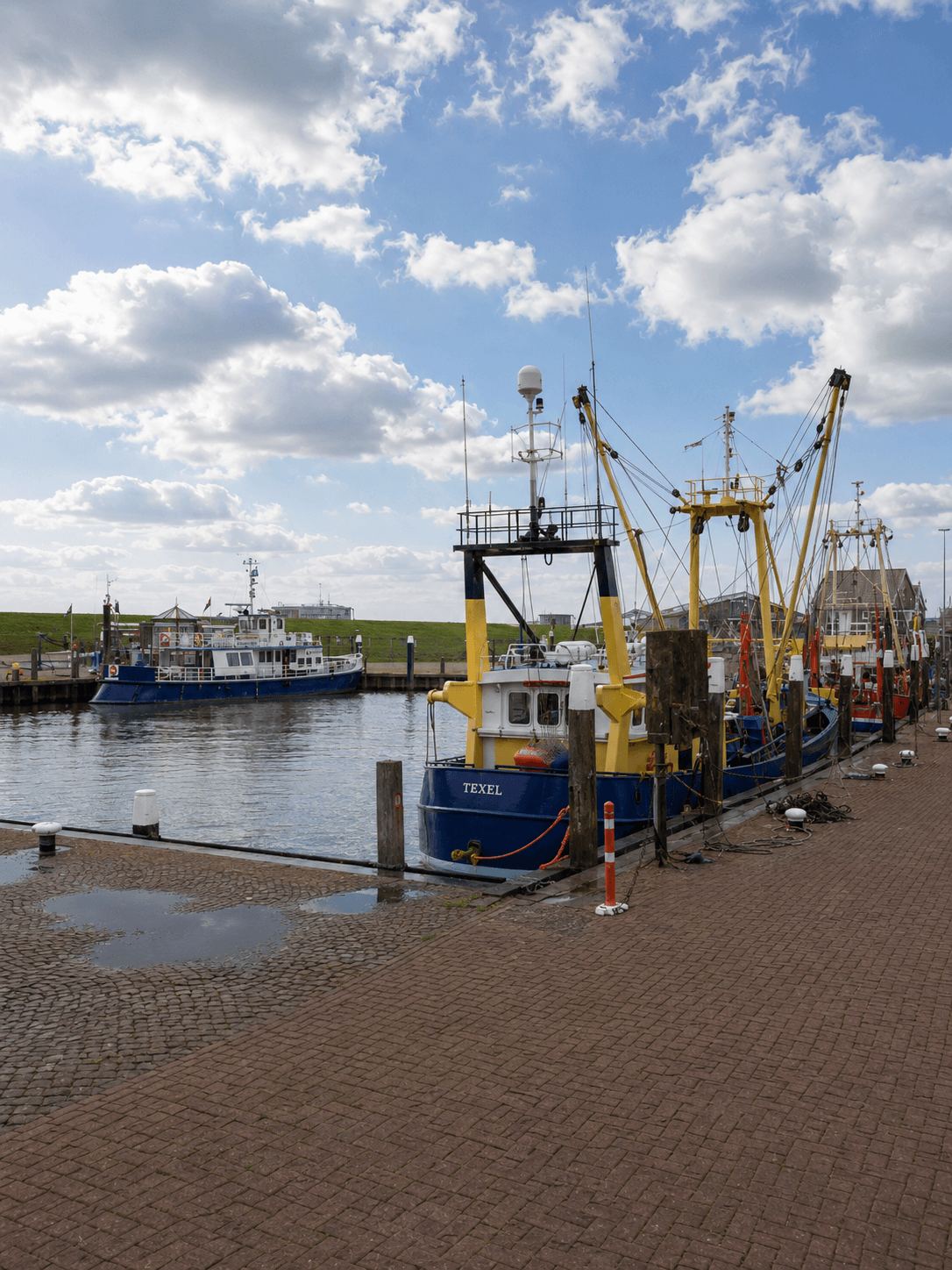
A working fishing trawler moored in the harbour.
Is It Worth the Travel Time in Winter?
Given the roughly 2-hour journey, winter Texel is a specific recommendation rather than a general one — it suits people who travel to be alone with a landscape rather than to see sights. Those people will find it extraordinary. Everyone else should visit in May or September — it suits travelers specifically drawn to quiet, dramatic coastal scenery rather than those expecting a full range of summer activities and open businesses.
Winter Texel is a landscape trip first
A winter visit works best when the coastline, wide skies and quiet villages are the attraction rather than a long list of shops and seasonal events. Shorter daylight, strong wind and a chance of rain change how much you can comfortably do outdoors. Choose one accessible beach or nature walk as the main activity and keep a nearby indoor alternative in reserve. Do not assume that a beach pavilion, bike-rental shop or visitor attraction follows its summer hours; check the particular business before planning your route around it. Winter is not automatically empty either: holiday weekends and mild sunny days can still attract visitors. The benefit of a flexible plan is that you can enjoy an uncrowded moment without depending on a promise that the island will always be deserted.
Dress for wind and plan for short daylight
At the coast, the wind can make a moderate air temperature feel much colder, especially after you stop walking or move from a sheltered village street to an open beach. Bring a wind-resistant outer layer, gloves and footwear suitable for damp ground. Check the time of sunset before selecting a remote trail; a route that is comfortable at midday may be difficult when visibility is dropping and the return path is unfamiliar. Avoid long, exposed walks when the forecast includes hazardous conditions or official warnings. If you are travelling with children or somebody who tires easily, plan a shorter loop with a clear turning-back point. A warm indoor pause is part of the itinerary, not a reward you should postpone until everyone is uncomfortable.
Choose transport with more margin than in summer
Confirm the live mainland train service, the Den Helder connection, the ferry departures and the onward island route for your actual travel date. A route that appears convenient on a summer visitor map may have different frequencies or connections in the colder months. TESO ordinary crossings use return tickets rather than reservations for a particular date or time, but that flexibility does not protect you against missing your onward train or the last useful island bus. Set a return target early and check conditions before starting an isolated nature walk. Drivers should account for weather, parking and traffic at the ferry terminal; cyclists should assess wind direction and daylight as carefully as distance. See the journey guide and ferry guide for the separate stages.
What to do when a planned stop is closed
Build an itinerary around activities that do not require every indoor business to open: a village walk, a short stretch of beach and a lunch location you have checked in advance. Keep one backup café or indoor attraction in a different nearby village only if the transport between them is realistic. If rain becomes persistent or wind makes the beach uncomfortable, use the day for an unhurried village visit instead of pressing on with a wet nature hike. If the ferry or mainland rail service is disrupted, consult the operator directly before leaving your accommodation; a spontaneous change can be easier from a warm indoor base than from a remote car park. Winter travel is more enjoyable when you give yourself permission to shorten the itinerary without treating that as failure.
Would an overnight stay work better?
With one night on Texel, you can choose the best available weather window for your outdoor activity and avoid a very early Amsterdam departure followed by a late return. Check accommodation availability, food options and the last convenient transport to your chosen village; not every location that looks close to the ferry is easy to reach without a car. On a one-day visit, select a modest coastal or village route, not a tour of the entire island. The Texel assessment helps you decide whether the travel time suits your holiday, and the beach guide explains how to choose a coastal stop without expecting summer facilities. If what you really want is an easy historic-town visit in poor weather, a mainland destination may involve fewer connections and more indoor choices.
🙋 Frequently Asked Questions (FAQ)
Is Texel open in winter?
Yes, the island and ferry service operate year-round, though some seasonal businesses, restaurants and activities reduce hours or close entirely during the quieter winter months.
Is Texel worth visiting in winter?
Yes, for visitors who enjoy dramatic coastal weather, storm-watching, and a genuinely quiet island experience. It’s less suited to visitors expecting beach weather or a full range of open shops and restaurants.
Does the Texel ferry run in winter storms?
The ferry generally continues operating in typical winter weather, but severe storms can occasionally cause delays or cancellations. Checking the TESO website on the day of travel is recommended during stormy periods.
What should I pack for a winter visit to Texel?
A genuinely windproof, waterproof coat is essential, along with warm layers and sturdy footwear — the open coastal exposure makes winter wind here more intense than in sheltered Amsterdam streets.
Final Recommendation
For a sense of what the island offers across the rest of the year, see our broader Texel worth-visiting guide.
Plan Your Visit
⛴️ Ferry schedules: teso.nl
🚂 Train & transit tickets: ns.nl
🏨 Compare accommodation prices: Booking.com
🗺️ Organised day trips & tours: GetYourGuide
🌍 Spanish-language tours & activities: Civitatis
Sources: teso.nl | KNMI | Personal observation — Noord-Holland | Details can change; check the linked official sources before booking