Amsterdam’s public transport system is genuinely simple once you understand the tap-in/tap-out logic, but it trips up a fair number of first-time visitors.
I watched a tourist at Centraal Station realise he’d just paid €14 for what should have been a €3 tram ride, because he’d tapped in but then simply walked off the tram without tapping the exit reader. The system assumes the longest possible journey if you never check out. The validator is almost always right by the doors — use it on the way in and on the way out, every single time, no exceptions.
Here’s how it actually works.
The Transport Network at a Glance
| Mode | Operator | Best For |
|---|---|---|
| Tram | GVB | Most city-centre journeys, the main workhorse |
| Metro | GVB | Faster journeys to outer districts |
| Bus | GVB / regional operators | Areas not covered by tram lines |
| Ferry | GVB | Crossing the IJ to Amsterdam-Noord (free) |
| Regional train | NS | Day trips outside the city (separate ticketing) |
How to Pay: Tap In, Tap Out
Nearly all GVB transport uses a tap-in, tap-out system. At trams, simply tap your contactless bank card or phone on the reader as you board, and tap again on a reader as you exit. Buses and the metro work the same way, with readers at the doors or gates.
OV-Chipkaart vs Contactless Card vs Day Pass
| Option | Best For | Notes |
|---|---|---|
| Contactless bank card / phone | Most visitors | Simplest option, pay-per-trip automatically |
| Anonymous OV-chipkaart | Stays of a week or more | Reloadable, but involves a card fee and managing a balance |
| GVB day/multi-day pass | Heavy tram/bus use in a single day | Unlimited rides for the period, available via the GVB app |
For the vast majority of visitors on a short trip, tapping a contactless card is the simplest approach and avoids leftover balance on a card you’ll never use again. Day passes make sense if you know you’ll be hopping on and off trams frequently in a single day rather than mostly walking.
Using the GVB App
The official GVB app shows live departure times, route planning, and lets you purchase day passes directly on your phone. It’s worth downloading before your trip if you plan to rely heavily on trams, since it removes any guesswork about which line goes where.

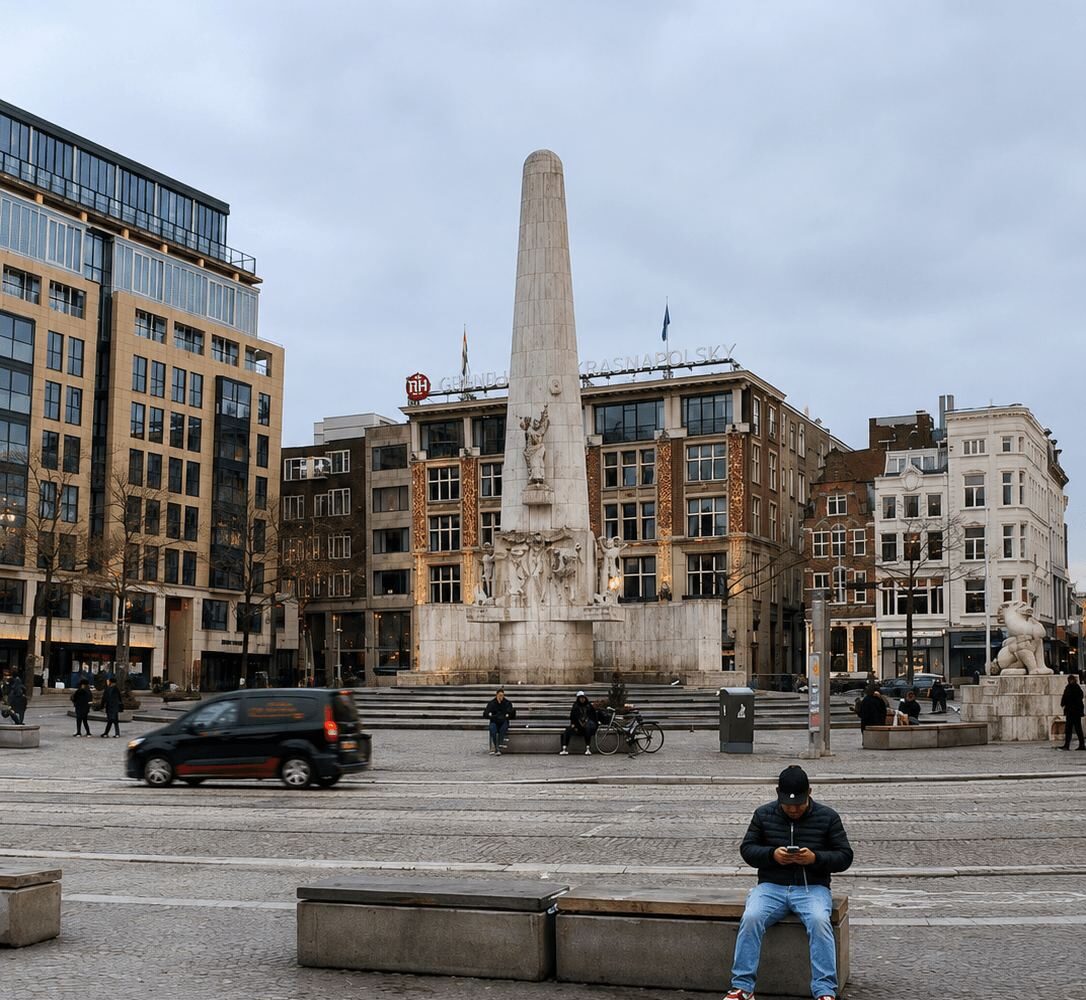
The National Monument on Dam Square, the traditional centre of Amsterdam.
The Free Ferries
A genuinely underused option: free passenger ferries run frequently from just behind Centraal Station across the IJ river to Amsterdam-Noord. No tap-in needed — just walk on. It’s a nice five-minute breather between activities and opens up Amsterdam-Noord’s attractions, including the A’DAM Lookout and EYE Filmmuseum, without any transport cost.
Regional Trains for Day Trips
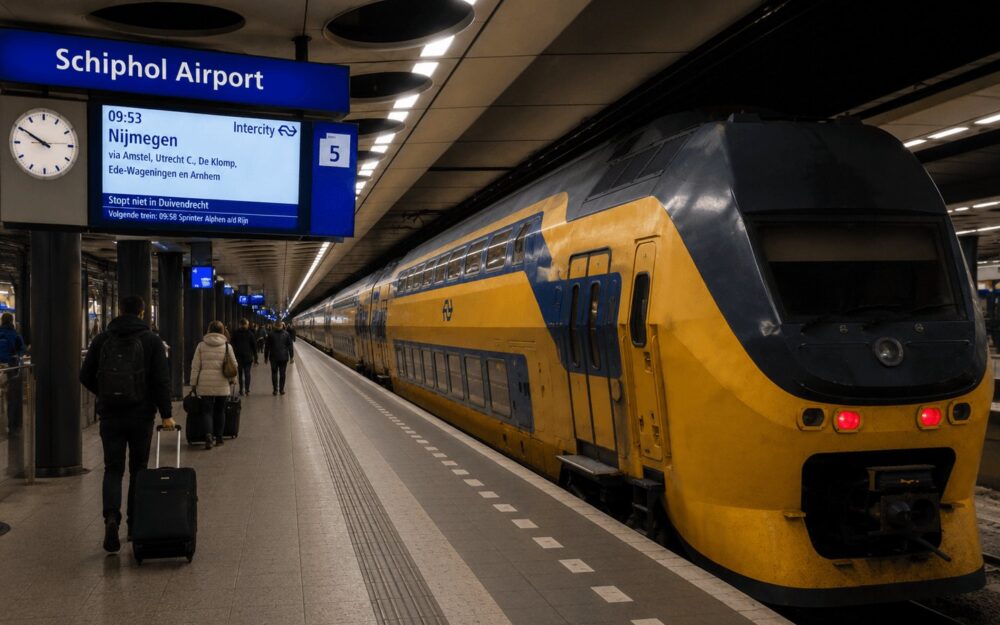
Trams, buses, and the metro are run by GVB and use the tap-in/tap-out system described above. Regional trains, run by NS, use the same contactless tap-in/tap-out logic but operate as a completely separate network — useful to know if you’re planning a day trip to somewhere like Zaanse Schans, since you’ll tap in for the train journey separately from any city tram rides on the same day.
The system sounds more complicated described in writing than it actually feels once you’re standing at a tram stop. Most visitors get the hang of tapping in and out within their first ride, and from then on it becomes background logistics rather than something you need to think about. What trips people up isn’t the mechanics of paying, but the assumption — common among visitors from cities with turnstile-based systems — that there’s a single ticket gate they need to find. In Amsterdam, the reader is simply a small yellow or blue pillar near the door of the tram, bus or at the entrance to a metro platform, and you tap your own card against it rather than going through a barrier.
It’s also worth understanding why the system is built this way. Dutch public transport fares are calculated by distance travelled, not by a flat per-ride price, which is precisely why you need to tap both at the start and end of your journey — the system has no other way to know how far you went. This is different from cities with flat-fare metro systems, and it’s the single biggest source of confusion for first-time users, who sometimes only tap in, assume that’s the whole process, and are surprised later by a higher-than-expected charge.
Navigating the System as a Tourist vs Using It Like a Local
Locals tend to default to walking and cycling far more than tourists initially expect, treating trams as a backup for longer distances or bad weather rather than a primary way to move around. If your hotel is centrally located, you may find that most of your daily movement doesn’t require transport at all — Amsterdam’s compact centre means many “must-see” stops are within a 15-20 minute walk of each other.
Where the tram and metro genuinely earn their keep is for cross-city hops — getting from the Museum Quarter to De Pijp, or from the centre out to Amsterdam-Zuid for a business meeting — where walking would eat up 30-40 minutes you’d rather spend elsewhere. Treating public transport as a tool for specific longer journeys, rather than a default for every single move, tends to match how residents actually use it and often ends up being both cheaper and more enjoyable than a tram-heavy itinerary.
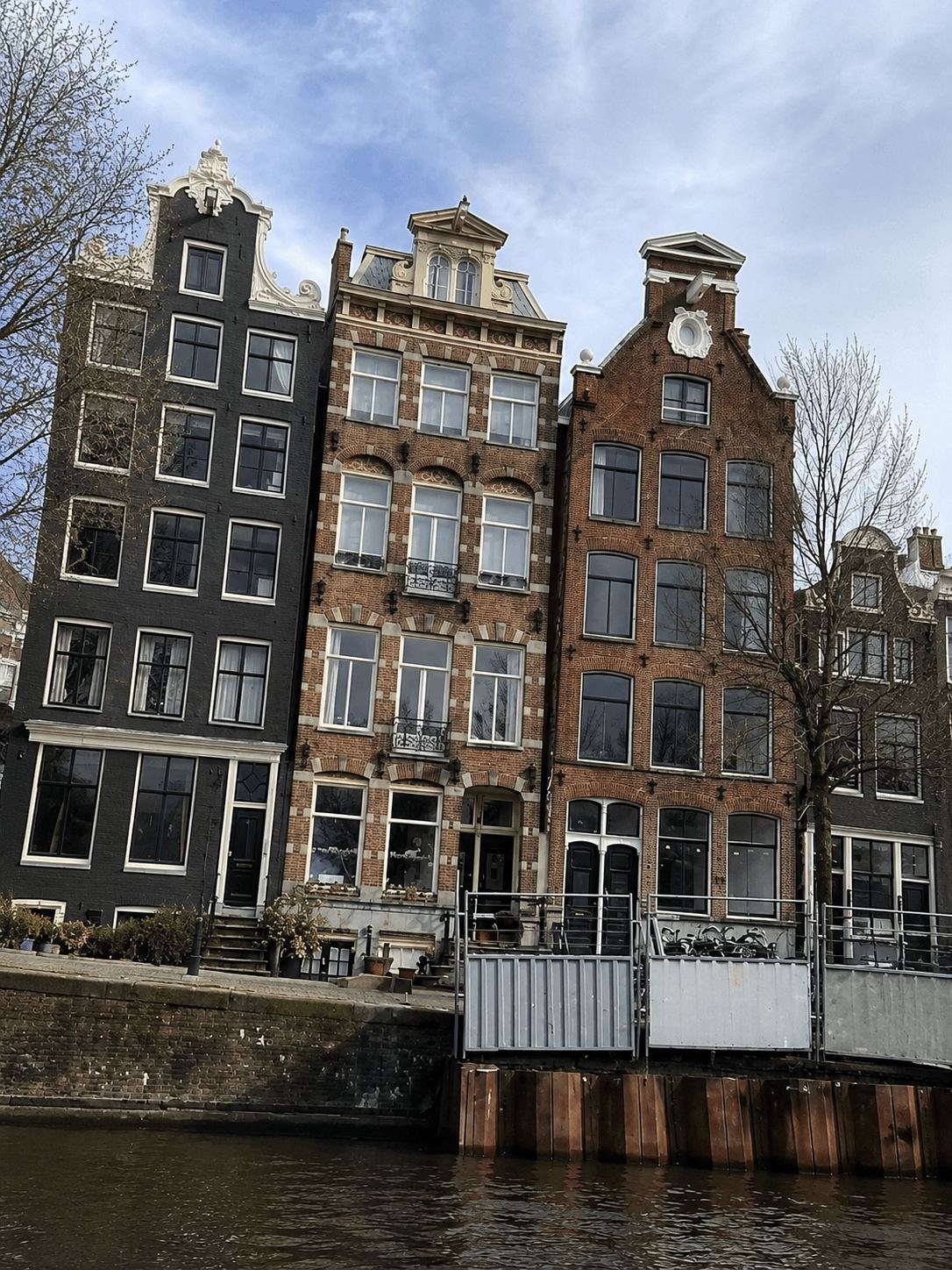
Three adjoining canal house facades, each with its own gable style.
Common Mistakes
- Forgetting to tap out — results in a maximum fare charge, often noticeably more than the trip cost.
- Buying an OV-chipkaart for a 2-day trip — the card fee plus minimum top-up rarely pays off for very short stays; a contactless bank card is simpler.
- Confusing GVB city transport with NS regional trains — they’re separate systems requiring separate tap-ins, even though both use contactless payment.
- Not checking the last tram/metro time — night-time frequency drops significantly; check the GVB app before planning a late return.
Sample Fare Costs
| Journey | Approx. Fare |
|---|---|
| Single tram ride, short distance | ≈ €1.10–1.50 |
| Single tram ride, longer distance | ≈ €2.50–3.50 |
| GVB 1-day pass | ≈ €9 |
| GVB 3-day pass | ≈ €19 |
| Free ferry (Centraal to Noord) | €0 |
Fares on trams and buses are distance-based, calculated automatically from your tap-in and tap-out points — there’s no need to know the exact fare in advance, since the system handles it.
Accessibility on Public Transport
Most metro stations and newer trams are low-floor and wheelchair or stroller accessible. Some older tram models still have a step at the door, which can be a genuine obstacle — if accessibility is a concern, the metro and bus network tend to be more consistently step-free than the oldest tram lines.

The same canal street, several months later, under a rare Amsterdam snowfall.
Cycling as an Alternative to Public Transport
Many visitors end up renting a bike rather than relying purely on trams, since Amsterdam’s cycling infrastructure is excellent and often faster than waiting for a tram for short hops. If you go this route, public transport becomes more of a backup for rainy days or longer cross-city trips rather than your primary mode.
That said, cycling in Amsterdam as a first-timer comes with its own learning curve that’s worth being honest about. The volume of bike traffic on the busiest routes — particularly around Centraal Station and through the narrower streets of the Jordaan — can feel intimidating even to confident cyclists from other cities, simply because of how many riders are moving through the same space at once, often at a faster pace than visitors expect. If you’re not used to navigating dense bike traffic, easing in with a quieter route on your first ride, perhaps along the wider paths near Vondelpark, tends to build confidence faster than diving straight into the busiest central streets.
The operator matters more than the colour of the vehicle
A visitor may use a GVB tram to reach Amsterdam Centraal, an NS train to reach Zaandijk and a regional bus later in the same day. These legs can involve different tickets and fare products even when every vehicle appears on one route-planning app. A GVB-only day ticket is not a blanket pass for an NS train or every regional bus; check the product’s operator and validity area before buying it. The same caution applies when a travel app offers a combined itinerary that crosses several providers.
With OVpay, checking in and checking out with the same physical card or the same device is essential. A phone wallet and the physical card linked to it may be treated as different identifiers; do not enter using one and exit using the other. At an operator change, follow the actual check-in and check-out instructions on the platform rather than assuming a continuous journey is automatically priced as one ride. Review the transaction in your banking or travel app if you suspect a missed check-out.
A simple route test for day trips
Before buying a day pass, write down the rides you expect to make: accommodation to museum, museum to dinner, and dinner home. Next separate the trips inside Amsterdam from any NS or regional-bus journey. A visitor walking most of the canal ring may use public transport only twice; another staying farther away may use it repeatedly. Ticket value therefore depends on your actual itinerary, not a universal ‘three rides equals a pass’ rule. The official Amsterdam payment guide explains OVpay, while our airport transfer guide covers the separate journey from Schiphol.
🙋 Frequently Asked Questions (FAQ)
How do you pay for public transport in Amsterdam?
You can tap a contactless bank card or phone directly on the readers at trams, buses, and metro gates, paying automatically per trip. Alternatively, an OV-chipkaart (reloadable transport card) or a GVB day pass can be used for unlimited travel within a set period.
Is it worth buying a GVB day pass?
A day pass is worth it if you expect to take more than 3-4 tram or bus rides in a single day. Below that, tapping a contactless card per trip is usually cheaper.
Are the ferries in Amsterdam free?
Yes, the passenger ferries across the IJ river connecting Centraal Station to Amsterdam-Noord are free to use and run frequently throughout the day.
Can I use the same card for trams and the train to Zaanse Schans?
You can use the same contactless bank card for both, but they’re separate systems — you’ll tap in and out separately for GVB trams/buses/metro and for NS regional trains, even on the same day.
Is the Amsterdam metro wheelchair accessible?
Yes, the metro system is generally step-free and accessible, making it a more reliable option than some older tram lines for travelers with mobility needs or large strollers.
Final Recommendation
The same tap-in logic carries over neatly to regional trains, which is exactly how you’ll reach Zaanse Schans or other day trips outside the city.
Plan Your Transport
🚋 GVB app & day passes: gvb.nl
🚂 Train & transit tickets: ns.nl
🏨 Compare accommodation prices: Booking.com
🗺️ Organised day trips & tours: GetYourGuide
🌍 Spanish-language tours & activities: Civitatis
Sources: gvb.nl | ns.nl | Personal observation — Noord-Holland | Details can change; check the linked official sources before booking