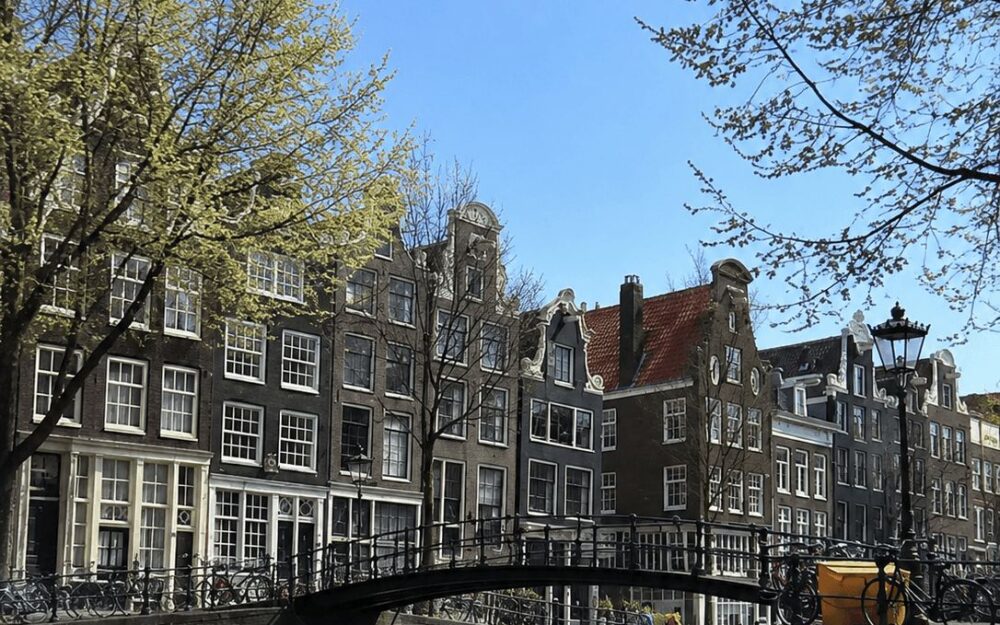
Every few weeks, someone asks me the same question before flying out to visit: “when should we actually come?” And every time, my answer is the same — it depends what you’re optimizing for, because Amsterdam genuinely changes character by month in a way that most single-paragraph blog answers don’t capture.
I once gave the same “best time to visit” answer to two different friends with opposite goals — one wanted quiet canals for photography, the other wanted maximum energy and nightlife. I sent the first to Amsterdam in late February (cold, grey, but the Jordaan was nearly empty at 9 AM) and the second to King’s Day weekend in late April. Both came back saying I’d nailed it exactly. The “best month” question only has a good answer once you know what someone actually wants from the trip.
I’ve lived in the Zaanstreek, just north of the city, long enough to watch the tourist tides come and go with the seasons. The canals in February look nothing like the canals in July — not just visually, but in terms of how the city feels to move through. This guide breaks down what to actually expect, month by month, based on weather patterns, local events, and the price and crowd data that’s publicly tracked by Dutch tourism boards.
Amsterdam Weather and Crowds at a Glance
| Month | Avg. Temp | Crowd Level | Hotel Prices | Best For |
|---|---|---|---|---|
| Jan – Feb | 3–7°C | Low | Lowest of the year | Museums, budget trips |
| Mar – Apr | 7–13°C | Rising fast | Moderate, spikes late April | Tulip season, King’s Day |
| May – Jun | 13–19°C | Moderate–High | High, climbing | Best overall balance |
| Jul – Aug | 18–22°C | Peak | Highest of the year | Warm-weather travelers, families |
| Sep – Oct | 11–18°C | Moderate | High, easing in October | Warm days, fewer queues |
| Nov – Dec | 4–9°C | Low, except NYE | Low, except late Dec | Light Festival, budget trips |
January & February: The Quiet Months
This is genuinely the best window for anyone who wants to walk into the Anne Frank House or Rijksmuseum without booking a slot three months in advance — though you should still reserve ahead, as both sell out daily even in winter. The canals can ice over in a hard freeze, and locals genuinely do skate on them when that happens, which is a sight worth catching if you’re lucky with timing.
Expect short days — sunset around 4:45 PM in January — frequent drizzle, and a biting wind off the IJ that feels colder than the thermometer suggests. Pack for wind-driven rain, not just cold.
March & April: Tulip Season Begins
This is when the bulb fields around Keukenhof start to bloom, typically from late March through mid-May depending on the year’s weather. Late March and early April give you the first blooms with noticeably thinner crowds than the May peak.
The wildcard here is King’s Day (Koningsdag) on 27 April. The entire city turns orange for a massive, free, all-day street party — canals fill with party boats, every street becomes a flea market, and the atmosphere is unlike anything else in the Dutch calendar. It’s genuinely fun if that’s what you want, but hotel prices spike hard and the city centre becomes difficult to move through. Decide in advance whether you want to be in the middle of it or well away from it.

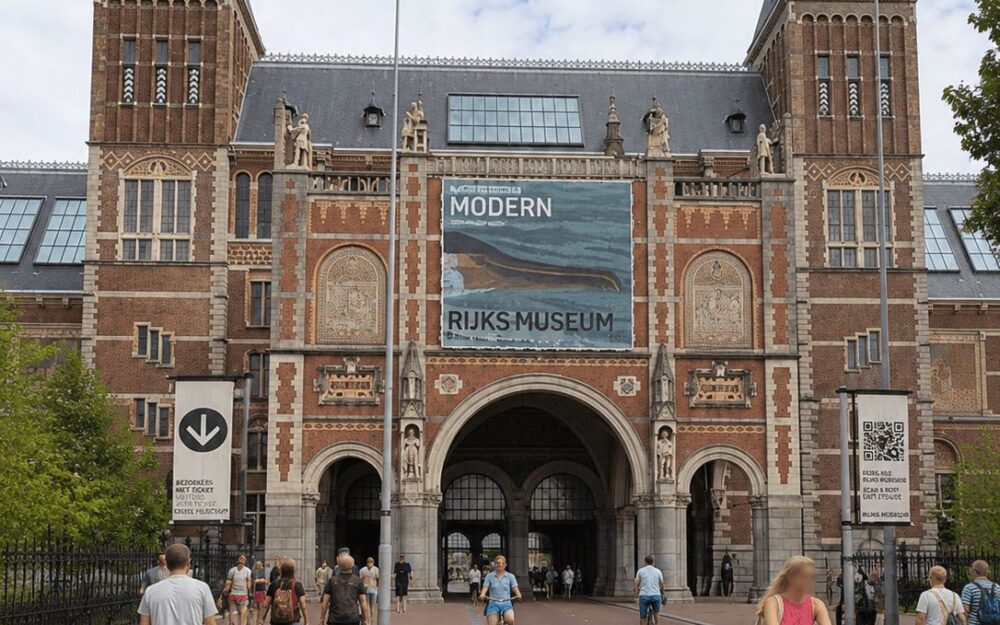
The Rijksmuseum’s cycle-through entrance passage, one of Amsterdam’s most photographed spots.
May & June: The Sweet Spot
By early June, terraces along the canals fill every evening, and the long daylight hours — sunset past 9:30 PM by late June — make it easy to fit in a full day of museums and still have a relaxed evening walk through the Jordaan.
July & August: Peak Season
This is when Amsterdam is at its busiest and most expensive. Families travel during school holidays, the weather is the most reliably warm of the year, and every popular restaurant, museum slot, and canal cruise needs to be booked well in advance.
If you’re set on these months, the trade-off is manageable if you plan around it: book timed museum tickets weeks ahead, eat dinner early or late to dodge the worst restaurant queues, and consider day trips to Zaanse Schans or the coast on the busiest weekend days to spread out your time.

The same canal street, several months later, under a rare Amsterdam snowfall.
September & October: The Insider’s Choice
Ask a local when they’d personally choose to show the city to a friend, and a lot of us will say September. Summer-length warmth often carries into the first half of the month, school holidays have ended, and the worst of the queues have thinned out noticeably. October brings cooler evenings and the first autumn colour along the canal trees, plus generally lower hotel rates than August.
November & December: Lights, Markets, and Bargains
The Amsterdam Light Festival runs roughly from late November to mid-January, with illuminated art installations along a boat route through the canals — one of the most underrated things to do in the city in winter. Christmas markets and ice rinks pop up around the centre in December.

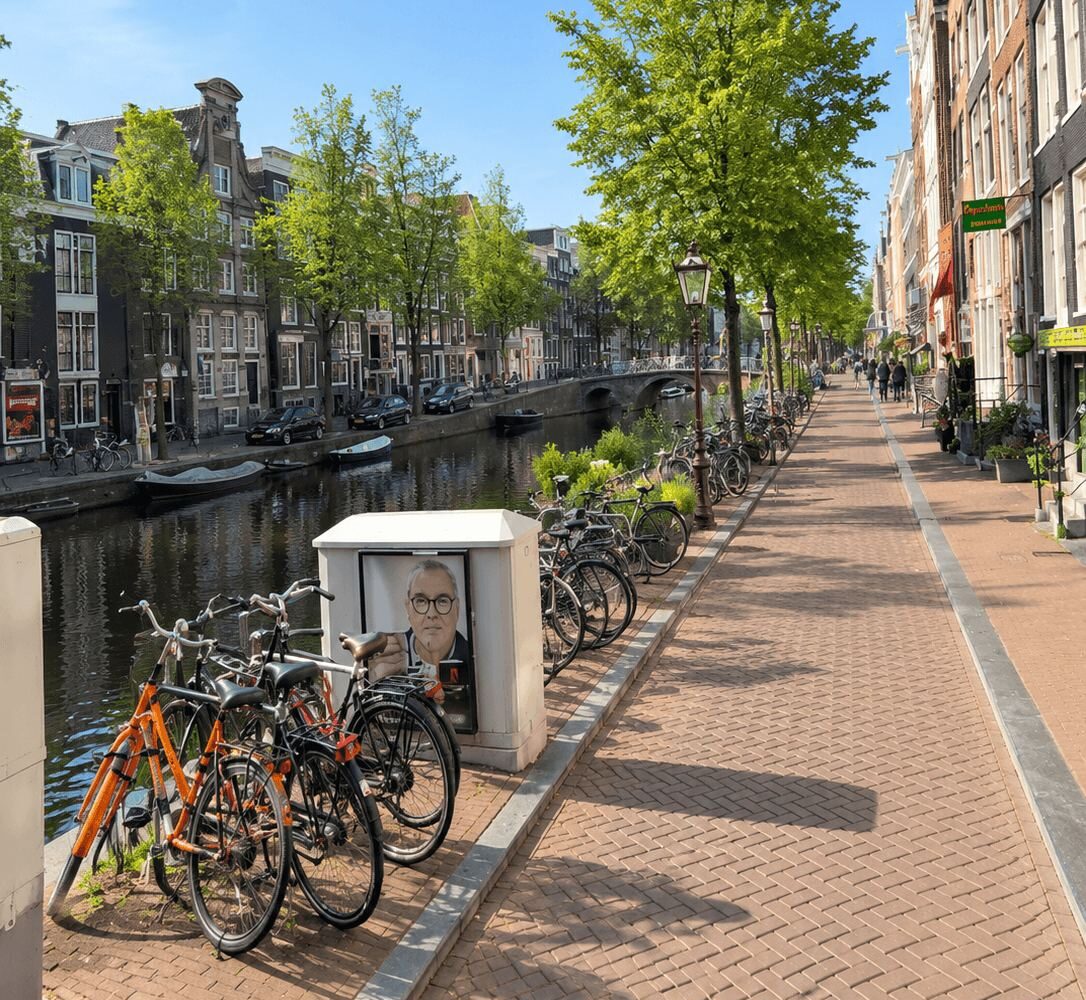
A classic Amsterdam canal scene — bikes, water, and fresh spring leaves.
My Recommended Strategy by Traveler Type
First-time visitor, no strong preference: Book May or September. You get good weather, manageable crowds, and don’t need to plan around a single event.
Tight budget: Late November (before mid-month) or January–February. Skip New Year’s week entirely.
Traveling with school-age kids: July–August is unavoidable for most families, so book museum slots and restaurant tables at least 3-4 weeks ahead.
Tulip-focused trip: Mid-April to early May, with a dedicated day trip to Keukenhof and the bulb fields near Lisse.
Photography / quiet canals: Early morning in any winter month, or any weekday in late September.
Key Events That Shape Each Month
Beyond weather, a handful of recurring events genuinely change what it’s like to be in the city on a given date. Building your trip around — or away from — these can matter more than the temperature.
- King’s Day (27 April): Citywide street party, orange everything, packed canals. Hotel prices spike for several days around it.
- Tulip season (late March–mid May): Peaks vary year to year with spring weather, but mid-April is historically the most reliable window for full bloom at Keukenhof.
- Pride Amsterdam (early August): Canal parade and citywide events add an extra layer of crowding on top of already-peak summer season.
- Amsterdam Dance Event, ADE (October): A major electronic music festival that fills hotels across the city for roughly a week — worth knowing about even if you’re not attending, since it affects availability and prices.
- Sinterklaas season (mid-November–5 December): A distinctly Dutch family tradition with parades and decorations; pleasant to witness, minimal impact on crowding for tourists.
- Amsterdam Light Festival (late November–mid-January): Illuminated art along a canal boat route — genuinely one of the best winter activities in the city.
- New Year’s Eve: Fireworks city-wide, large crowds in the centre, premium pricing on accommodation for several nights around it.
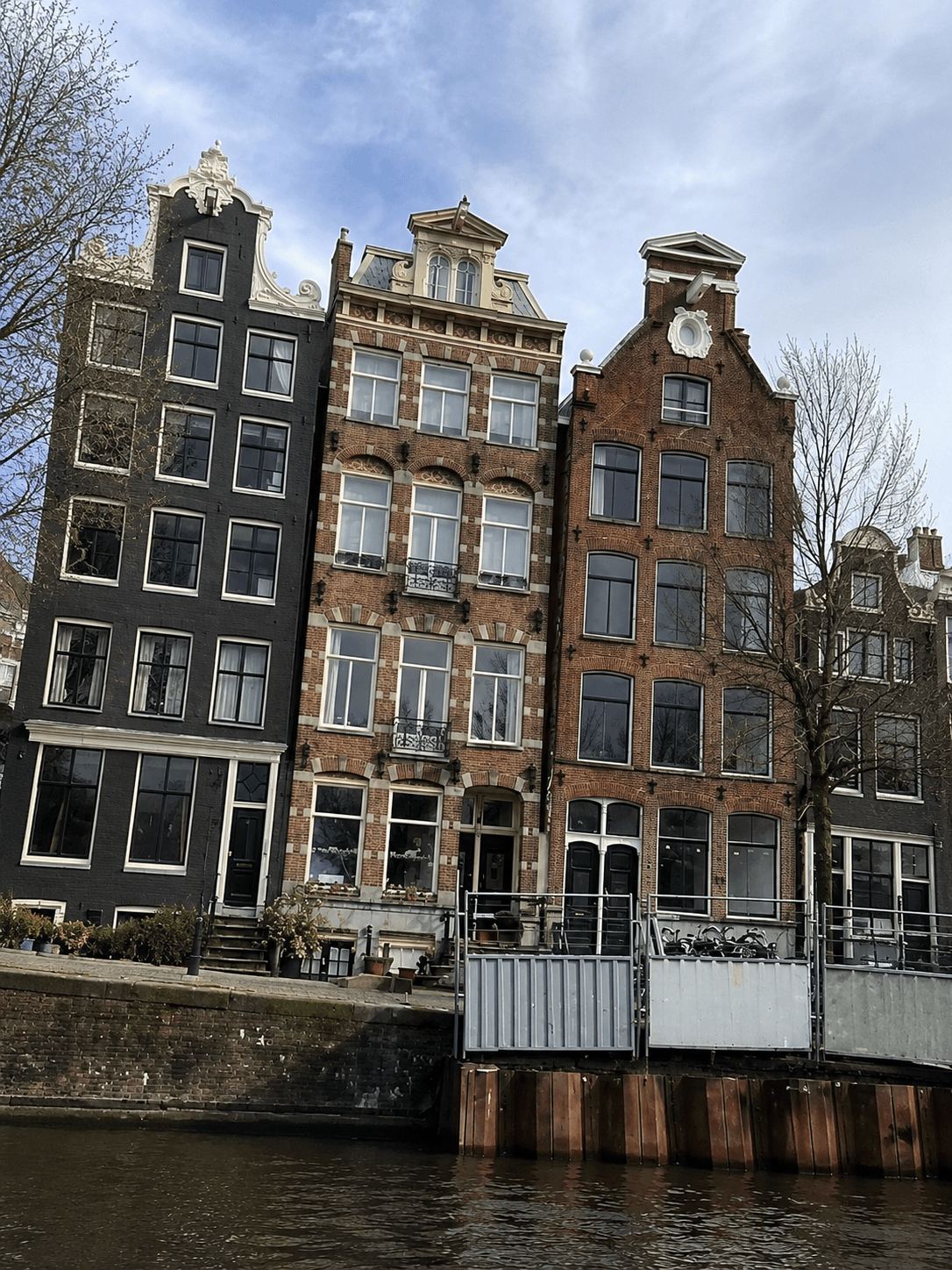
Three adjoining canal house facades, each with its own gable style.
What to Pack by Season
Dutch weather is changeable year-round, but the baseline shifts enough by season that it’s worth adjusting your packing list rather than relying on a single generic “bring a rain jacket” tip.
| Season | Pack | Skip |
|---|---|---|
| Winter (Dec–Feb) | Windproof coat, waterproof shoes, gloves, layers | Light jackets, open shoes |
| Spring (Mar–May) | Packable rain shell, layers for big daily temperature swings | Shorts-only wardrobes |
| Summer (Jun–Aug) | Light rain jacket (still useful), comfortable walking shoes | Heavy coats |
| Autumn (Sep–Nov) | Waterproof jacket, warm layers for evenings | Summer-only clothing |
Common Mistakes When Timing a Trip
A few patterns come up again and again with visitors who end up disappointed by their timing — most are avoidable with a bit of planning ahead of booking flights.
- Booking King’s Day by accident. Some visitors land on 27 April without realizing what it is, expecting a normal sightseeing day, and are caught off guard by the closures and crowds. Decide deliberately whether you want to be there for it.
- Assuming “spring” means warm. March and even early April can still feel like winter, with temperatures regularly in single digits Celsius. Don’t pack as if May weather starts on the first of March.
- Skipping advance museum bookings in summer. The Anne Frank House and Van Gogh Museum routinely sell out days or weeks ahead in July and August — walking up on the day rarely works.
- Not checking ADE dates if visiting in October. If you’re not interested in the festival, double-check the dates aren’t overlapping with your trip, since hotel prices and availability shift noticeably that week.
- Underestimating winter daylight. With sunset before 5 PM in December and January, plan outdoor sightseeing for the earlier part of the day and save museums or dinner for after dark.
Choose Dates by What You Want to Do, Not a Single Best Month
A museum-heavy trip is less sensitive to poor weather than a trip built around long canal walks, cycling or flower-field photography. In winter, the short daylight window matters for outdoor plans, but an early museum booking followed by an afternoon café can still make a good day. Spring offers changing blossom and bulb displays, yet no single weekend can guarantee that every flower variety will be at its peak. Summer has long evenings and outdoor events, but school holidays and popular weekends may make accommodation harder to find. Autumn often suits a slower city break, although rain and wind can change your walking plans quickly.
Book around your non-negotiable event first. For Keukenhof, confirm the official garden dates and understand that bloom conditions change within the season. For King’s Day, check the year’s date and city programme before assuming museum hours or public transport will be normal. For a quieter museum visit, look at timed-ticket availability and holiday calendars rather than using a monthly crowd forecast as a guarantee. Any claim that a particular month will always be a fixed percentage cheaper than July should be checked against live prices for your exact dates.
A Simple Two-Plan Method for Amsterdam Weather
Make an outdoor Plan A and an indoor Plan B within the same neighbourhood. If rain arrives during a canal stroll, switching to a nearby museum, café or cinema is much easier than travelling across town to rescue an overpacked itinerary. Put your one essential timed reservation in both plans. On windy days, allow more time for cycling; on hot days, schedule longer indoor breaks and carry drinking water. An umbrella can help in light rain, but a waterproof jacket is more practical in strong canal-side wind.
Use our Amsterdam rainy-day guide for indoor alternatives, or compare a city break with a Haarlem day trip. The aim is to choose dates you can enjoy even if the forecast is different from the average.
Planning check: Keukenhof for dates and NS for travel information. Information in this guide can change; check official schedules and admission details for your travel date.
Practical Questions Before You Go
What is the best month to visit Amsterdam?
May and September are the strongest all-round months. May pairs late tulip blooms with mild, dry-leaning weather and lighter crowds than April. September keeps summer-length daylight and warm canal-side afternoons but loses the peak-July queues and price spikes.
What is the cheapest time to visit Amsterdam?
Late November through mid-December, and again in January and February outside of New Year, can have attractive hotel offers, but exact prices depend on events, dates and demand. You trade lower costs for short days, cold wind off the canals, and a real chance of rain.
Should I avoid Amsterdam during King’s Day?
Avoid it only if you dislike enormous, loud street crowds. King’s Day on 27 April turns the entire city orange with a free street party, but hotel prices spike, the centre becomes nearly impassable, and many residents leave town for the day.
Is Amsterdam worth visiting in winter?
Yes, especially for museum-focused trips. Winter brings the lowest prices and shortest queues at the Rijksmuseum and Van Gogh Museum, plus the Light Festival along the canals from late November to mid-January. The trade-off is roughly 8 hours of daylight and frequent rain or wind.
Does it rain a lot in Amsterdam?
Yes, rain is possible in any month — there’s no fully dry season. Spring and summer see shorter, more scattered showers, while autumn and winter bring longer, more persistent rain spells. A packable rain jacket is worth having regardless of when you visit.
Final Recommendation
Whichever month you land on, build in at least one day trip outside the city — the contrast between Amsterdam’s canals and the windmills, fishing villages, and bulb fields just outside it is a big part of what makes a Netherlands trip memorable.
Plan Your Visit
🌷 Tulip season tickets: keukenhof.nl
🎟️ Museum tickets & timed slots: rijksmuseum.nl
🚂 Train & transit tickets: ns.nl
🏨 Compare accommodation prices: Booking.com
🗺️ Organised day trips & tours: GetYourGuide
🌍 Spanish-language tours & activities: Civitatis
Sources: iamsterdam.com | KNMI (Royal Netherlands Meteorological Institute) | amsterdamlightfestival.com | Personal observation — Noord-Holland | Details can change; check the linked official sources before booking