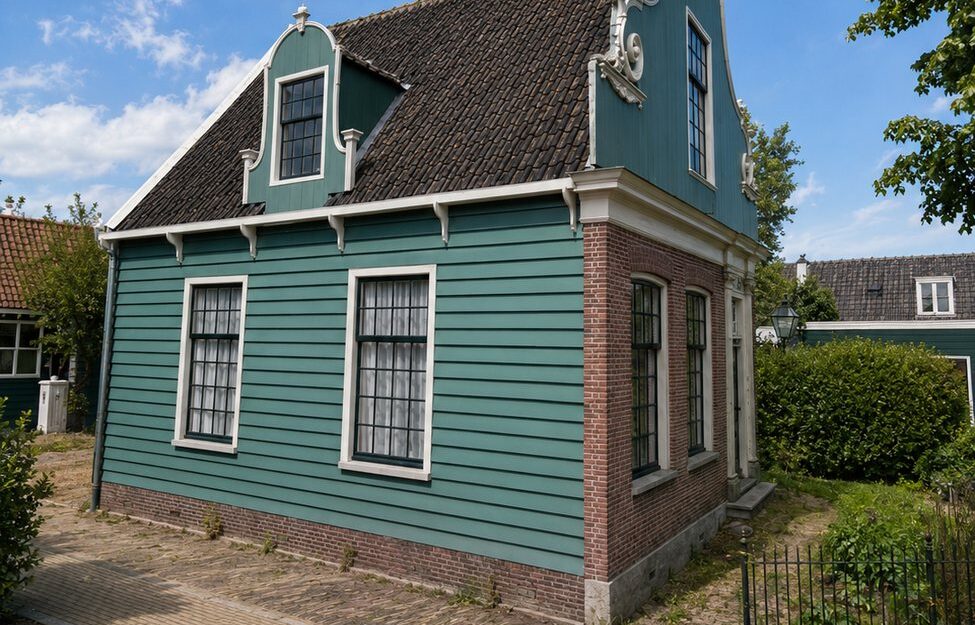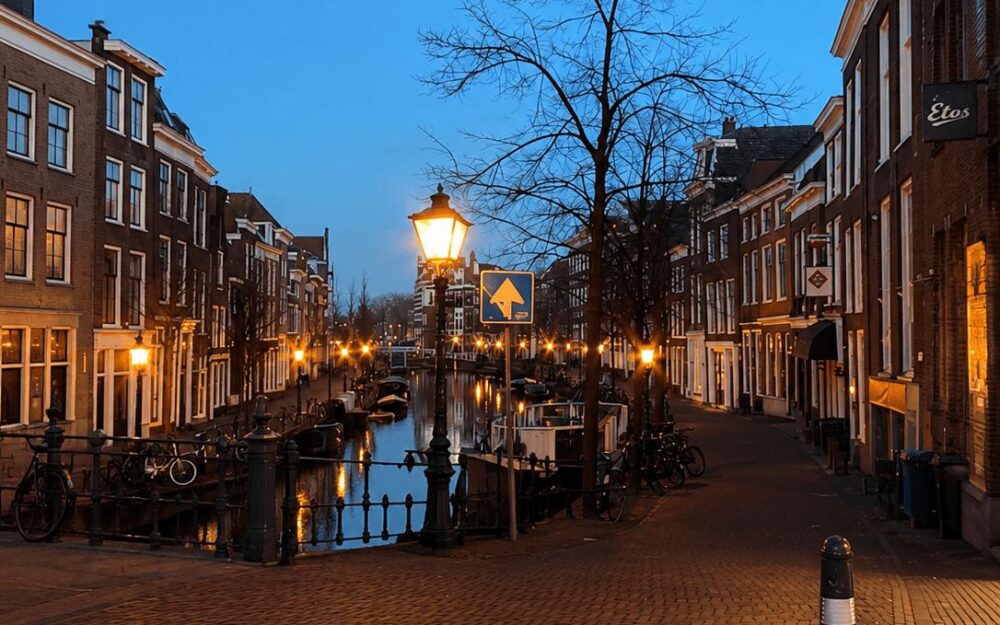
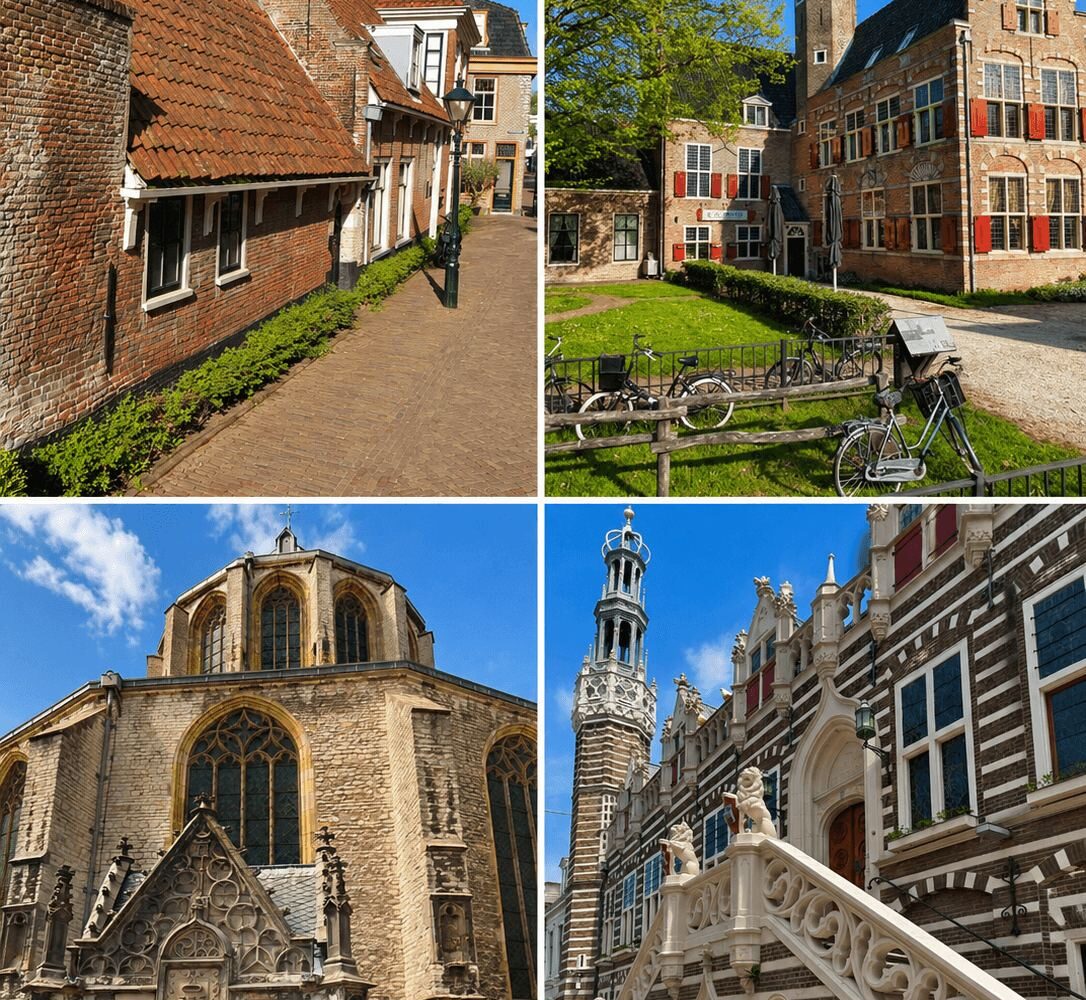
Haarlem is the official capital of the province of Noord-Holland — although Amsterdam, located in the same province, serves as the national capital of the Netherlands. It is a distinction that surprises many international visitors, and one that says something useful about Haarlem’s character: it is a city that has always governed quietly rather than loudly, and preserved its identity precisely because it did not need to perform it.
It is not a museum piece. It is not a theme park version of the Netherlands. Haarlem is a real, functioning provincial capital with a 750-year-old city center, one of the finest collections of 17th-century architecture in the country, a Frans Hals Museum that belongs in a different league entirely from what its modest marketing suggests, and a café and restaurant scene that has been feeding students, artists, and locals for generations.
I know this city from the inside. I spent part of my student years here, became a member of Novitas — the Haarlem student association — and learned, as most students do, that the city rewards people who stay long enough to find its rhythms. The Zeilstraat was where that education began.
Haarlem at a Glance: Key Facts for Your Visit
| Detail | Information |
|---|---|
| Province | Noord-Holland (provincial capital) |
| Train from Amsterdam Centraal | ±15 minutes, direct Intercity, every 7–10 minutes |
| Train from Schiphol Airport | ±10 minutes, direct connection |
| City Center Size | Compact — most highlights within 15 minutes on foot |
| Best Day to Visit | Saturday (market day on the Grote Markt) or any weekday morning |
| Ideal Visit Length | 5 to 7 hours for a relaxed full day |
| Don’t Miss | Frans Hals Museum, Sint-Bavokerk, Zeilstraat, the hofjes, Teylers Museum |
Why Haarlem Is Worth More Than a Passing Visit
The standard knock against Haarlem — that it is “just like Amsterdam but smaller” — is one of the laziest observations in Dutch travel writing. Haarlem is not smaller Amsterdam. It is its own city, one that happens to share a canal network and a golden age heritage.
Amsterdam became a global trading capital and built itself outward in every direction. Haarlem stayed provincial, focused inward, and in doing so preserved a medieval street pattern, a set of hidden courtyard almshouses, and a genuine local identity that Amsterdam largely lost to tourism decades ago.
The result is a city where the Grote Markt — the main square dominated by the towering Sint-Bavokerk — still functions as a real market on Saturdays, where the side streets off the cathedral are lined with independent bookshops and bakeries rather than souvenir stands, and where a glass of jonge jenever in a brown café still costs what it should rather than what a tourist will pay.
The Zeilstraat and Student Haarlem: A Personal Memory
The Zeilstraat and its immediate surroundings remain the best single street in Haarlem for understanding what the city’s social culture actually looks like when tourists are not the primary audience. The cafés here — some of them genuinely old, with low ceilings, wooden bar tops worn smooth by generations of elbows, and no menu beyond beer, jenever, and bar snacks — are the kind of places that do not need to advertise because they have never needed to.
For any visitor who wants to experience Haarlem beyond its postcard face, an evening in the Zeilstraat area is more instructive than any museum.
Haarlem in a Day: Route Overview
| Time | Stop / Activity |
|---|---|
| 09:00 | Arrive Haarlem Station — one of the most beautiful train station buildings in the Netherlands |
| 09:15 | Walk to the Grote Markt — morning light on the Sint-Bavokerk facade |
| 09:30 | Enter Sint-Bavokerk and find the Müller organ — one of the finest in Europe |
| 10:30 | Walk the hidden hofjes — the Hofje van Bakenes, the Hofje van Oorschot |
| 11:30 | Frans Hals Museum — two hours minimum |
| 13:30 | Lunch at a Grote Markt terrace or the Turfmarkt canal side |
| 14:30 | Teylers Museum — the oldest museum in the Netherlands |
| 16:00 | Walk the Zeilstraat and Gouden Straat — boutiques, bookshops, independent cafés |
| 17:30 | Evening drink in a Zeilstraat brown café — jonge jenever or a local craft beer |
| 19:00 | Train back to Amsterdam (15 minutes) |
The Sint-Bavokerk: More Than a Backdrop
Every photograph of Haarlem’s Grote Markt contains the Sint-Bavokerk, and after a while you stop really seeing it. That would be a mistake. The church — formally the Grote of Sint-Bavokerk — is a genuine late-Gothic masterpiece, begun in the 14th century and completed over nearly 150 years of continuous construction. Its tower rises 78 meters above the market square and has been a navigation point for sailors approaching the Noord-Holland coast for centuries.
Inside, the scale is disorienting in the best way. The nave is vast, and the quality of the light through the clerestory windows changes entirely depending on the time of day. The Müller organ — built in 1738 and considered one of the finest pipe organs in the world — dominates the western end of the nave. Mozart played it as a child of ten during a visit with his father in 1766. Handel played it. If an organ recital is running during your visit, stay for it.
The Frans Hals Museum: Do Not Skip This
There is a persistent assumption among visitors that the Frans Hals Museum is a minor regional attraction — interesting if you happen to be in Haarlem anyway, but not worth making a trip for. This assumption is wrong.
Frans Hals was one of the greatest portrait painters of the 17th century, and the collection in Haarlem — held across two buildings, the Hof and the Hal — is extraordinary. The civic guard portraits in particular are paintings of genuine psychological complexity: groups of men who look as though they are about to speak, frozen at the precise moment when a face is most itself.
The museum also houses work by Jan Steen, Jacob van Ruisdael, and Judith Leyster — one of the few women admitted to the Haarlem Guild of Saint Luke in the 17th century and a painter who deserves to be far better known than she is. Budget two hours minimum. If you rush this museum, you will regret it.
Haarlem’s Hidden Hofjes: The City Within the City
Haarlem contains more than twenty historic hofjes — enclosed courtyard almshouses — within its city center, more than almost any other Dutch city. They are hidden behind unmarked doors in ordinary street facades, and most visitors walk past them entirely without realizing what lies behind.
The Hofje van Bakenes on the Wijde Appelaarsteeg is one of the oldest surviving hofjes in the Netherlands, dating to 1395. The Hofje van Oorschot on the Begijnesteeg is smaller but extraordinarily well preserved, with original 17th-century cottages still arranged around a central garden planted with herbs. The Teylers Hofje on the Koudenhorn was established by the same Pieter Teyler van der Hulst who funded the Teylers Museum — and at the right time of day its interior garden is one of the most peaceful spaces in all of Noord-Holland.
The hofjes are not attractions in the conventional sense. They are residential complexes where people still live. The convention is to enter quietly, not to photograph residents or their private spaces, and to leave as you found it. Treat them as you would a church: enter with awareness of where you are.
Teylers Museum: The Oldest in the Netherlands
Founded in 1784 and housed in a building that has barely changed since, Teylers Museum is the oldest museum in the Netherlands and one of the most distinctive in Europe. It is not large, and it does not try to be. The collections — drawings, scientific instruments, fossils, minerals, and coins — occupy a series of rooms arranged around the magnificent oval Fossil Hall, which is itself a historical monument.
The atmosphere is closer to a private 18th-century cabinet of curiosities than a modern museum. The original display cases, the original lighting, the original arrangement of objects — all of it creates a time-capsule quality that no amount of digital interactivity can replicate. It is the kind of museum that makes you slow down involuntarily.
The Zeilstraat and Gouden Straat: Where Haarlem Lives
If the Grote Markt and the Sint-Bavokerk are Haarlem’s formal face, the Zeilstraat and the adjacent Gouden Straat are where the city actually lives. These two parallel streets running south from the cathedral contain the highest concentration of independent shops, cafés, and restaurants in the city — and almost none of them are aimed primarily at tourists.
You will find second-hand bookshops with stock spilling onto the pavement, a record shop that has been in the same location for decades, a cheese shop where they still cut from the wheel, and a rotating cast of brown cafés whose clientele on a Friday afternoon is split roughly evenly between students, builders finishing their shift, and retired professors.
The jonge jenever ritual is worth describing properly for anyone who has not encountered it. Young Dutch gin — lighter and less botanical than its English counterpart, slightly grainy from the malt wine base — is served in a small tulip glass filled so precisely to the rim that lifting it without spilling is impossible. You lean forward, both hands behind your back by convention, and take the first sip at the bar. It is called a kopstootje when paired with a small glass of beer. It is one of those rituals that feels entirely natural after the first time and entirely mandatory after the second.
What Else to Do in Haarlem
- The Saturday Market on the Grote Markt: One of the largest and most authentic weekly markets in Noord-Holland. Flowers, fish, vegetables, cheese, stroopwafels fresh off the iron. Running every Saturday morning from approximately 8:00 AM.
- The Spaarne Riverbank: The Turfmarkt and Damstraat along the Spaarne river offer some of the best canal-side walking in the city, with historic warehouses, moored barges, and terrace cafés that are significantly less crowded than those on the Grote Markt.
- Haarlem’s Cycling Culture: The city is extraordinarily bike-friendly. Rent a bicycle at the station and cycle south through the Haarlem Hout park toward the dunes — the entire route takes about 40 minutes and ends at the North Sea beach at Zandvoort or Bloemendaal aan Zee.
- Corrie ten Boom House: The historic hiding place used by the ten Boom family to shelter Jewish refugees during the German occupation. A deeply moving, historically important site on the Barteljorisstraat, just off the Grote Markt.
- De Jopenkerk: A craft brewery installed inside a converted 1910 church on the Gedempte Voldersgracht. One of the most atmospheric places to drink a beer in all of Noord-Holland — the brewing tanks rise two floors inside the original nave.
Haarlem’s Best-Kept Secret: The Amsterdamse Poort
Most visitors to Haarlem never find the Amsterdamse Poort. It is not on the main tourist circuit, it does not appear prominently on most city maps, and there is no sign pointing you toward it from the Grote Markt. Which is exactly what makes it worth finding.
The Amsterdamse Poort is a late-15th-century city gate located at the far end of the Damstraat, where the road narrows and crosses the Spaarne river. It is the only surviving city gate in Haarlem from the medieval period — two square towers connected by a covered passageway, still standing where they were built in 1355. The gate looks exactly as a medieval city gate should look: massive, slightly asymmetric, built for function rather than decoration, with the patina of six centuries of weather on its brick face.
What makes it genuinely special is its setting. Approach it from the Damstraat side in the late afternoon and you find it reflected almost perfectly in the still water of the Spaarne. From the other direction, coming along the river path from the Turfmarkt, the gate appears framed between the warehouses and the mast of a moored barge. It is one of the most photographically satisfying views in all of Noord-Holland — and almost no tourist ever stands there.
The Amsterdamse Poort is the single building in Haarlem that most consistently surprises people who have visited before. They walk past the end of the Damstraat, look up, and genuinely do not understand why nobody told them this was here. Now you know.
Where to Eat in Haarlem: The Best Restaurants and Lunch Spots
Haarlem has one of the strongest food scenes of any city its size in the Netherlands. The concentration of good independent restaurants, bakeries, and lunch spots in the city center is genuinely impressive — and the prices are consistently lower than equivalent quality in Amsterdam.
Lunch in Haarlem
For a relaxed midday meal, the area around the Turfmarkt along the Spaarne river is the strongest option. The canal-side terraces here are significantly less crowded than those directly facing the Sint-Bavokerk, and the view across the water to the historic warehouses is one of the best in the city. Most of the lunch spots along this stretch serve straightforward Dutch and European food — uitsmijters (fried eggs on toast with ham or cheese), tostis, and broodjes — at prices that would be considered reasonable even outside tourist areas.
The Gouden Straat has several independent lunch spots that are popular with locals but almost invisible to passing visitors. If you see a place with handwritten menus in the window and most of the clientele speaking Dutch to each other, that is a reliable indicator that the food is good and the prices are honest.
Dinner in Haarlem
For dinner, Haarlem rewards those who walk slightly off the main thoroughfares. The Lange Veerstraat — a short street running parallel to the Grote Markt — has arguably the highest density of quality dinner restaurants in the city center, ranging from modern Dutch to Italian, Japanese, and Surinamese. The latter is worth emphasizing: Haarlem has a strong Surinamese community, and the Surinamese restaurants here — particularly around the Raaks area — serve some of the most authentic roti, bami, and pom in Noord-Holland.
For a special occasion or a longer evening, De Jopenkerk on the Gedempte Voldersgracht functions as both brewery and full-service restaurant, serving Dutch-inspired food alongside their house-brewed beers in the extraordinary setting of a converted church nave. Booking in advance is advisable at weekends.
Coffee and Bakeries
Haarlem’s independent coffee culture is well developed. The area around the Klokhuisplein — a small square just behind the Sint-Bavokerk — has several specialty coffee spots that use the church’s shadow as natural shade for their outdoor seating. Dutch bakeries in the city still produce Haarlemse moppen — the city’s own traditional almond biscuits — which are worth finding in any of the artisan bakeries on the Gouden Straat or Barteljorisstraat.
Haarlem and the Beach: The Perfect Combination
One of the most underused aspects of Haarlem as a day trip destination is its proximity to the North Sea coast. The distance from Haarlem city center to the beach at Zandvoort is approximately 11 kilometers — a 35-minute cycle through the Haarlem Hout park and the Kennemerduinen dune landscape, or a 12-minute direct train from Haarlem station.
The combination works better than most visitors realize. Spend your morning in the city — the Sint-Bavokerk, the Frans Hals Museum, the hofjes — and your afternoon at the beach. The dune crossing between Haarlem and the coast is itself part of the experience: the path runs through the Zuid-Kennemerland National Park, a protected dune landscape of extraordinary beauty that most tourists who visit the beach from Amsterdam never see because they take the direct train from Centraal rather than routing through Haarlem.
Bloemendaal aan Zee, slightly north of Zandvoort, is the alternative for visitors who prefer a quieter stretch of coast. The beach clubs at Bloemendaal — some of them legendary in the Dutch outdoor culture scene — have a different atmosphere entirely from the family beaches at Zandvoort: more adult, more music-oriented in summer, and significantly less commercial. The dune path from Haarlem to Bloemendaal runs through some of the most remote-feeling landscape within 30 kilometers of Amsterdam.
Haarlem vs. Leiden: How to Choose
If you are planning a day trip from Amsterdam and weighing Haarlem against Leiden, the honest answer is that they are not equivalent destinations — they serve different travel personalities. Here is a straightforward comparison:
| Feature | Haarlem | Leiden |
|---|---|---|
| Travel time from Amsterdam | ±15 minutes by train | ±35 minutes by train |
| Primary draw | Golden Age architecture, Frans Hals, café culture | University city, Rembrandt’s birthplace, canal atmosphere |
| Museums | World-class (Frans Hals, Teylers) | World-class (Rijksmuseum van Oudheden, Naturalis) |
| Student atmosphere | Strong — Novitas and independent café scene | Stronger — one of the oldest universities in Europe |
| Architecture scale | More monumental — the Sint-Bavokerk dominates | More intimate — canals and alleyways at human scale |
| Crowd levels | Moderate — higher on Saturdays and in summer | Lower — fewer international tour groups |
| Beach access | Excellent — Zandvoort 12 min by train | None direct — Katwijk is accessible by bus |
| Best for | Culture + beach combination, café evenings, photography | History, academic atmosphere, quieter canal exploration |
The short version: choose Haarlem if you want the beach option, a livelier café and food scene, and a city that rewards a single full day completely. Choose Leiden if you prefer a quieter, more intimate atmosphere and are interested in Dutch academic and scientific history. Both cities can easily be combined into a single day trip if you travel early and manage your time — Haarlem in the morning, Leiden in the afternoon, with the Keukenhof route running between them in spring.
When to Add Haarlem to an Amsterdam Stay
This is the argument that most travel guides avoid making because it sounds like a slight against Amsterdam. It is not. Amsterdam is one of the great cities of Europe and fully justifies multiple visits. But for a specific type of traveler — one who has already done the Rijksmuseum, the canal ring, and the Anne Frank House — a second day in Amsterdam often delivers diminishing returns, while a day in Haarlem delivers something new at every turn.
- It is significantly cheaper. Restaurant prices, café prices, and accommodation prices in Haarlem are meaningfully lower than in central Amsterdam. A canal-side lunch that would cost €18 per person in Amsterdam costs €12 in Haarlem. A hotel room that would cost €200 in Amsterdam costs €110 in Haarlem.
- The crowds are dramatically smaller. Even on a busy Saturday, Haarlem’s Grote Markt never reaches the density of the Amsterdam canal belt on a weekend afternoon. You can actually walk at your own pace, stop to photograph what you want, and eat where you want without a queue.
- The local character is more intact. Amsterdam’s city center has become, in large parts, a service environment for tourists rather than a functioning city. Haarlem’s center still has residents shopping in it, schools operating in it, and cafés that are primarily used by people who live nearby.
- The museums are world-class and uncrowded. The Frans Hals Museum is a genuinely exceptional collection. On a normal weekday you can stand in front of a monumental civic guard portrait by one of the greatest painters of the 17th century with no one else in the room.
- The train takes 15 minutes. There is no logistical argument for not going. Amsterdam Centraal to Haarlem is 15 minutes on a direct train that runs every 7 to 10 minutes throughout the day. You can be in Haarlem before the Amsterdam streets are fully awake.
The visitors I have watched get the most out of the Netherlands are not the ones who spend five days in Amsterdam. They are the ones who spend two days in Amsterdam and use the remaining days to move — to Haarlem, to Leiden, to Zaanse Schans, to the coast. The country is compact enough to make this easy. Haarlem, at 15 minutes, is the easiest move of all.
🛑 The Biggest Mistakes to Avoid in Haarlem
- Spending less than half a day: Haarlem is not a ninety-minute stop between Amsterdam and the tulip fields. The Frans Hals Museum alone justifies a full afternoon. If you are treating this as a checkbox stop, you are doing it wrong.
- Staying only on the Grote Markt: The main square is beautiful and worth your time, but the city unfolds in the streets behind it. The hofjes, the Zeilstraat, the Spaarne riverbank — all of them are within a ten-minute walk of the cathedral and all of them are more interesting than the terrace directly in front of it.
- Missing the Frans Hals Museum: It is always surprising how many day-trippers skip it in favor of a second café stop. The collection is genuinely world-class. If you visit Haarlem and do not go to the Frans Hals Museum, you have seen the packaging but not the contents.
- Arriving by tour bus: Haarlem rewards wandering at your own pace in a way that no organized group tour can accommodate. The train takes 15 minutes from Amsterdam Centraal and runs every 7 to 10 minutes. There is no logistical reason to arrive any other way.
A Haarlem Day Trip That Does Not Depend on Perfect Weather
Think of Haarlem as two connected visits: a compact historic centre around Grote Markt, and an optional second area chosen for your interests. The first works on foot. Start near the station, follow a direct route to Grote Markt, look at the church from the square and then choose either the smaller lanes around the shopping streets or a museum. This is more satisfying than rushing from one historic building to the next without entering anything. The Frans Hals Museum and Teylers Museum offer very different visits; choose one if you only have half a day and leave time for the canals.
On a rainy visit, stay within walking distance of the centre and make one booked museum your anchor. On a sunny day, add a quiet courtyard where visitors are welcome, or a longer canal walk. Hofjes are residential places, not theme-park exhibits: entrances may be closed, opening rules vary, and residents deserve privacy. A closed gate is a reason to carry on, not an invitation to peer through windows or insist on entering.
Haarlem Plus the Beach: When the Combination Makes Sense
Haarlem and Zandvoort are easy to pair geographically, but a full museum visit, a leisurely city lunch and a long beach afternoon are not a realistic plan for everyone in winter. Decide on the beach before leaving Amsterdam. If it is the main attraction, allow time for the rail connection, the walk to the shore and the return journey; keep Haarlem’s city-centre visit selective. If museums are the main attraction, treat the beach as an optional addition rather than a target that forces you to cut the last gallery short.
Restaurant and hotel prices are not consistently lower than Amsterdam across every date, venue and season. Compare real menus and live room rates for your travel dates instead of relying on a fixed city-wide price difference. For another compact historic city, use our Leiden day trip, and if you are planning the flower season, see the Haarlem and Keukenhof guide for how to divide your time.
Planning check: Frans Hals Museum and Teylers Museum for current hours. Information in this guide can change; check official schedules and admission details for your travel date.
Practical Questions Before You Go
Is Haarlem worth a day trip from Amsterdam?
Absolutely — and it is one of the easiest day trips in the Netherlands to execute. The train takes 15 minutes from Amsterdam Centraal, runs continuously throughout the day, and deposits you a 10-minute walk from the Grote Markt. A well-planned day in Haarlem is more culturally rewarding than a second day in Amsterdam for most visitors.
What is Haarlem known for?
Haarlem is the official capital of the province of Noord-Holland — not to be confused with Amsterdam, which is the national capital but located within the same province. Haarlem is known for the Sint-Bavokerk cathedral, the Frans Hals Museum, Teylers Museum (the oldest in the Netherlands), its extraordinary collection of historic hofjes, the Amsterdamse Poort medieval city gate, and a café culture — particularly around the Zeilstraat — that has been continuous since the Golden Age.
How long do you need in Haarlem?
A minimum of 5 to 6 hours to do the city justice — meaning the Sint-Bavokerk, the Frans Hals Museum, at least one or two hofjes, and time in the Zeilstraat area. If you want to add Teylers Museum, the Amsterdamse Poort, and a canal-side lunch, budget 7 to 8 hours. Haarlem is not a city that rewards rushing.
Can you visit Haarlem and the beach in one day?
Yes, easily. Zandvoort is 12 minutes from Haarlem station by direct train, and Bloemendaal aan Zee is accessible by bicycle in approximately 35 minutes through the Kennemerduinen dunes. A practical Haarlem beach day looks like this: city morning (Sint-Bavokerk, hofjes, lunch on the Turfmarkt), beach afternoon (Zandvoort or Bloemendaal), evening train back to Amsterdam. The dune cycling route between the city and the coast through Zuid-Kennemerland National Park is itself one of the best half-day rides in Noord-Holland.
What are the best restaurants in Haarlem?
For lunch, the canal-side terraces along the Turfmarkt are the strongest option — less crowded than the Grote Markt, better views, and honest prices. For dinner, the Lange Veerstraat has the highest density of quality restaurants in the center, with options ranging from modern Dutch to Surinamese. For a special occasion, De Jopenkerk on the Gedempte Voldersgracht combines a full-service restaurant with one of the most extraordinary settings in the city — a craft brewery inside a converted church nave. For coffee and pastries, the Klokhuisplein area behind the Sint-Bavokerk has several excellent independent coffee shops.
Is Haarlem or Leiden better for a day trip?
They serve different travel personalities. Choose Haarlem if you want a livelier café and food scene, excellent museums, and the option to combine the city with a North Sea beach visit. Choose Leiden if you prefer a quieter, more intimate atmosphere and are drawn to Dutch academic and scientific history. Haarlem is 15 minutes from Amsterdam Centraal; Leiden is 35 minutes. Both are worth a full day.
What is the Amsterdamse Poort in Haarlem?
The Amsterdamse Poort is a late-15th-century city gate at the far end of the Damstraat, where the road crosses the Spaarne river. It is the only surviving medieval city gate in Haarlem — two square towers connected by a covered passageway, dating to 1355 — and one of the most photographically striking spots in the city. Most visitors walk past the end of the Damstraat without finding it. Approach from the river path for the best view of it reflected in the Spaarne.
What is a kopstootje?
A kopstootje (literally “little head-butt”) is the traditional Dutch pairing of a small glass of jonge jenever (young Dutch gin) with a small glass of beer. The jenever glass is filled so precisely to the brim that you cannot lift it without spilling — by convention, you lean forward and take the first sip at the bar with both hands behind your back. It is a ritual inseparable from Haarlem’s brown café culture and one of the most genuinely Dutch experiences in Noord-Holland.
What is Novitas Haarlem?
Novitas is the Haarlem student association, founded in 1946. It is one of the older student associations in Noord-Holland and has its base in the city center. Like most Dutch student associations, it provides a social and cultural network for students at local educational institutions — and, as generations of members would confirm, a thorough education in the geography of the Zeilstraat.
Is the Frans Hals Museum worth visiting?
Yes, emphatically. The Frans Hals Museum holds one of the most important collections of 17th-century Dutch painting in the world, including Hals’s monumental civic guard portraits and work by Judith Leyster, Jan Steen, and Jacob van Ruisdael. It is housed partly in a former almshouse whose courtyard alone justifies the entrance fee. Plan for two hours minimum.
Before You Leave: Plan Your Haarlem Day Trip
09:00 AM — Arrive Haarlem Station. The station building itself — a 1908 Art Nouveau construction — is worth pausing for. It is one of the most beautiful in the Netherlands.
09:15 AM — Walk to the Grote Markt. The 10-minute walk through the Kruisstraat shopping street is the fastest route; the Jansstraat canal route is the most beautiful.
09:30 AM — Enter the Sint-Bavokerk. Find the Müller organ. If a morning rehearsal is running, stay and listen.
10:30 AM — Walk the hofjes. Start with the Hofje van Bakenes on the Wijde Appelaarsteeg. Then the Hofje van Oorschot on the Begijnesteeg. Enter quietly.
11:30 AM — Frans Hals Museum. Two hours minimum. Buy a combined ticket with Teylers if you plan to visit both.
13:30 PM — Lunch. The Turfmarkt along the Spaarne river has the best canal-side terraces and is significantly less crowded than the Grote Markt.
14:30 PM — Teylers Museum. The Fossil Hall alone is worth the visit. Budget 1.5 hours.
16:00 PM — Zeilstraat and Gouden Straat. Browse, wander, find the record shop, find the cheese shop, find a terrace.
17:30 PM — A brown café in the Zeilstraat area. Order a kopstootje. Lean forward. Both hands behind your back.
19:00 PM — Train back to Amsterdam Centraal. 15 minutes.
Plan Your Visit
🚂 Train schedules & tickets: ns.nl
🎨 Frans Hals Museum: franshalsmuseum.nl
🏛️ Teylers Museum: teylersmuseum.nl
⛪ Sint-Bavokerk: bavo.nl
🍺 De Jopenkerk brewery: jopenkerk.nl
🏨 Hotels in Haarlem: Booking.com
🗺️ Day tours from Amsterdam: Viator or GetYourGuide
Sources: franshalsmuseum.nl | teylersmuseum.nl | bavo.nl | ns.nl | Personal observation — Haarlem, Noord-Holland