Where you stay shapes your whole trip more than most people expect in a city this compact.
A friend once booked an Airbnb in the Red Light District thinking it would be “central and lively,” and spent four nights being woken at 2 AM by stag party noise on the canal below her window. Her review of the trip overall was still positive — Amsterdam absorbs that kind of thing — but she said if she went back she’d pay the same money for a quieter street three minutes further from the action and have a measurably better week’s sleep.
Here’s how the main areas actually compare, based on what visiting friends have liked and disliked about each.
Neighbourhood Comparison
| Area | Vibe | Noise Level | Best For |
|---|---|---|---|
| Canal Ring (Centrum) | Classic postcard Amsterdam | Moderate–High | First-timers wanting to walk everywhere |
| Museum Quarter | Cultural, near Vondelpark | Low–Moderate | Museum-focused trips, families |
| Jordaan | Local, charming, brown cafés | Low–Moderate | Quieter stays with central access |
| De Pijp | Trendy, multicultural, food scene | Moderate | Foodies, younger travelers |
| Amsterdam-Zuid | Upscale, residential | Low | Business trips, quiet families |
| Red Light District (De Wallen) | Central, nightlife-heavy | High, especially at night | Nightlife-focused, budget-flexible travelers |
Canal Ring (Centrum): The Classic Choice
This is what most people picture when they imagine Amsterdam — narrow canal houses, bridges, and a short walk to nearly everything. It’s genuinely the most convenient base, but also the busiest and most expensive, with noise from bars and bikes a real factor on weekend nights.
Museum Quarter: Best for Culture-Focused Trips
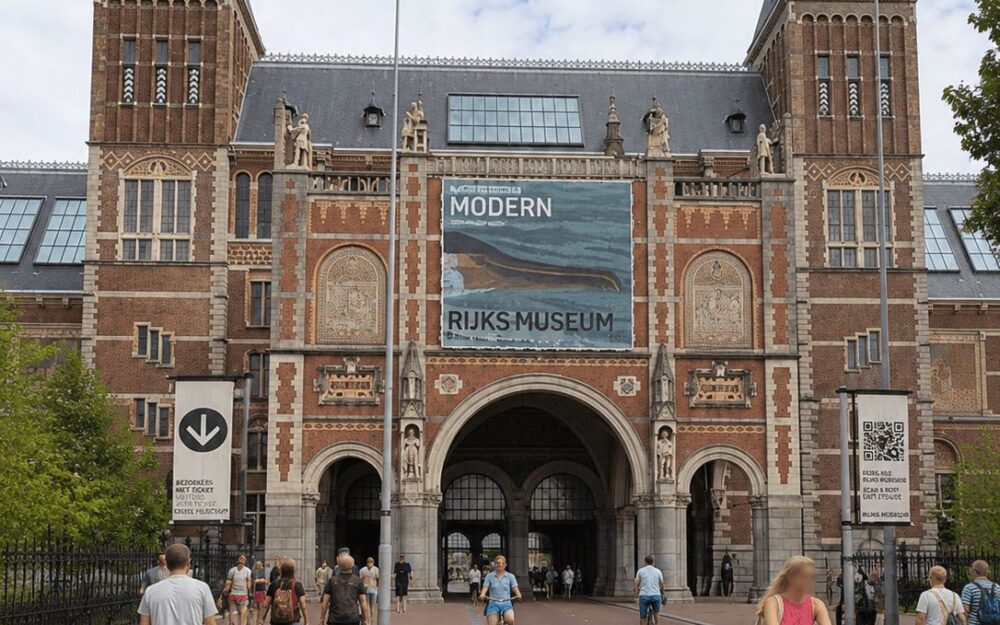
Home to the Rijksmuseum, Van Gogh Museum and Stedelijk Museum, with Vondelpark right alongside. Quieter than the Canal Ring at night, with easy tram access into the centre. A strong pick for families and museum-focused travelers.

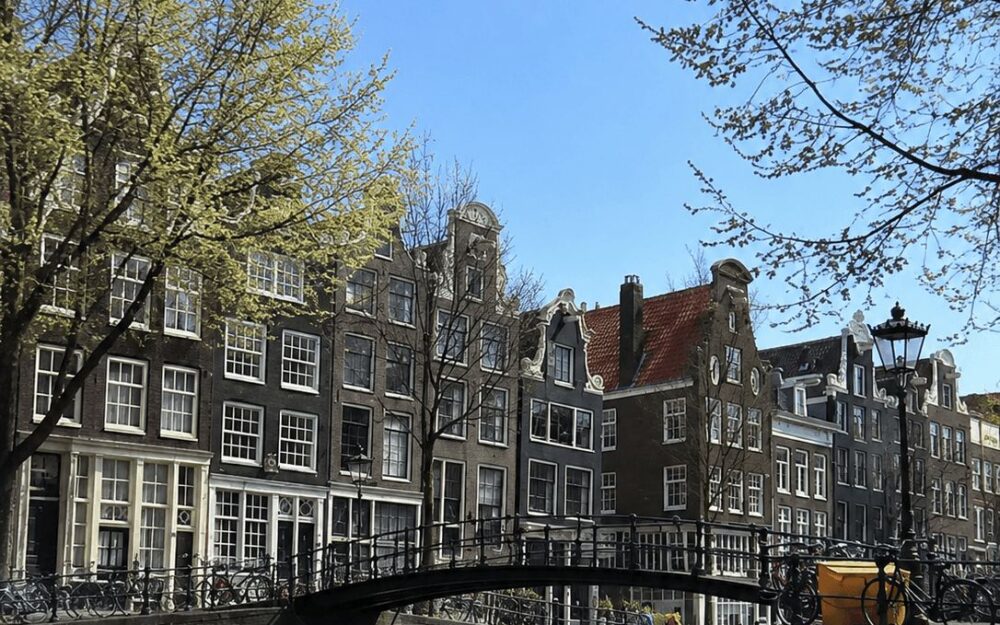
The same canal street, several months later, under a rare Amsterdam snowfall.
Jordaan: Local Charm, Central Access
Narrow streets, independent boutiques, and some of the best brown cafés in the city. A favourite among repeat visitors who want charm without the loudest tourist crowds.
De Pijp: For Food and a Younger Crowd
Home to the Albert Cuyp Market and a dense concentration of restaurants representing the city’s multicultural food scene. Slightly further from the canal-ring postcard views, but well connected by tram and a favourite with younger travelers and foodies.

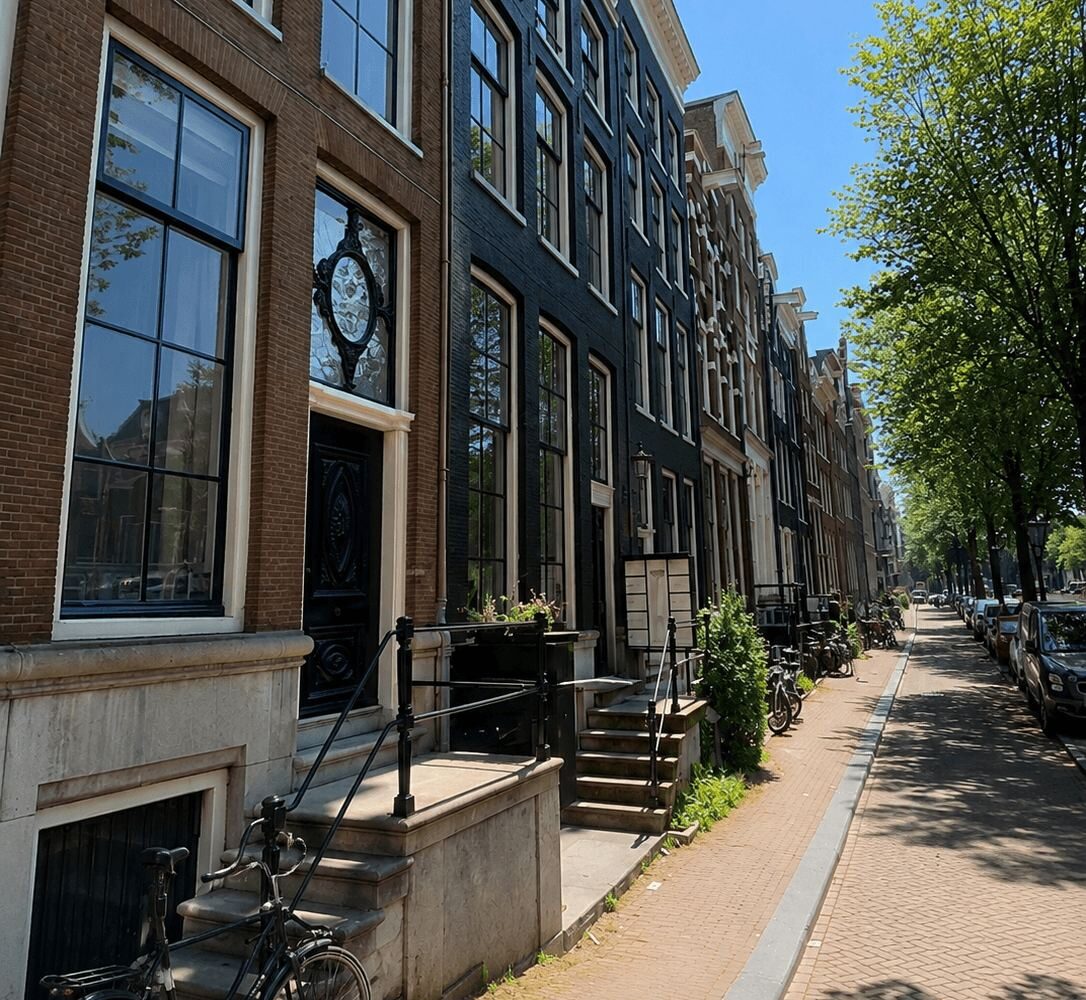
The stone stoops and tall facades typical of Amsterdam’s canal ring.
Amsterdam-Zuid: Quiet and Upscale
A more residential, business-district feel with wider streets, good tram links, and proximity to the RAI convention centre. Less charming for pure sightseeing, but a solid, quiet base, especially for business travel or families wanting some distance from nightlife.
Red Light District (De Wallen): Central but Loud
Centrally located and historically interesting by day, but genuinely noisy and crowded at night, especially on weekends. This works for travelers prioritizing nightlife access and willing to accept the noise trade-off, but isn’t the best fit for families or light sleepers.

A quiet stretch of one of Amsterdam’s narrow centre streets.
How to Choose Based on Your Trip Type
First visit, want to walk everywhere: Canal Ring or Jordaan.
Museum-focused trip: Museum Quarter.
Traveling with kids: Museum Quarter or Amsterdam-Zuid, for the quieter streets and proximity to Vondelpark.
Foodie trip: De Pijp.
Business trip: Amsterdam-Zuid, close to the RAI and well connected by tram.
Budget priority, don’t mind noise: Areas slightly further from the centre, connected by a short tram ride, such as Amsterdam-Oost.
Transport Access by Area
Nearly every central neighbourhood is within a 10-15 minute tram ride of Centraal Station, so the practical transport difference between most areas is small. The bigger factors are walkability to your specific planned activities and how much nightlife noise you’re willing to tolerate at night.

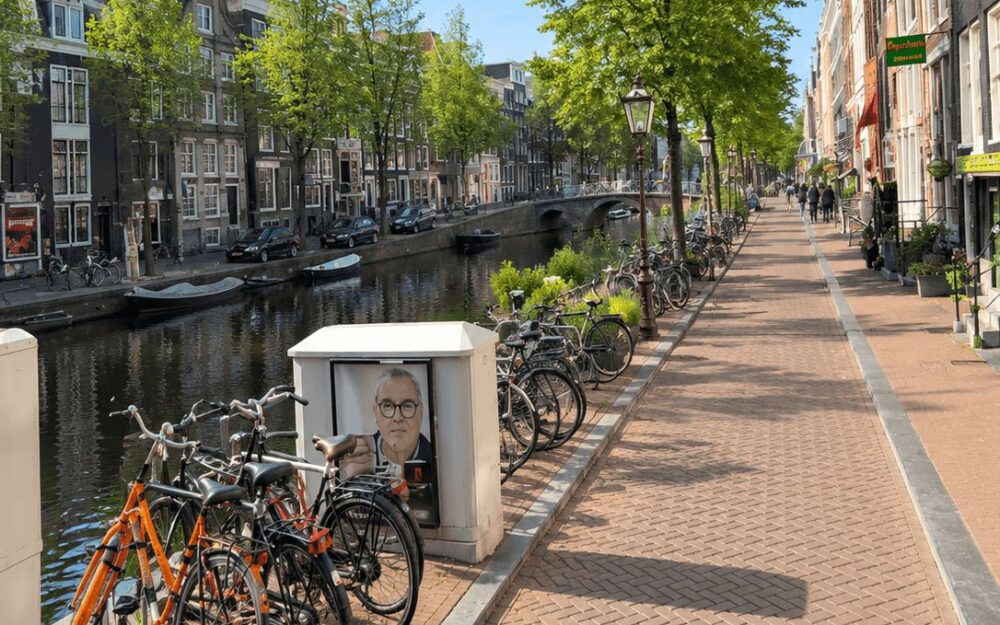
A classic Amsterdam canal scene — bikes, water, and fresh spring leaves.
Price Comparison by Area
| Area | Relative Price Level | Why |
|---|---|---|
| Canal Ring (Centrum) | Highest | Most central, most postcard-famous, highest demand |
| Museum Quarter | High | Prime location near major attractions |
| Jordaan | High | Popular, charming, limited inventory of smaller hotels |
| De Pijp | Moderate | Slightly further from centre, still well connected |
| Amsterdam-Zuid | Moderate–High | Business-district pricing, larger hotel inventory |
| Amsterdam-Oost | Lower | Slightly further out, short tram ride to centre |
Step-by-Step: How to Pick Your Area
- List your top 3 planned activities. If they cluster near the museums, the Museum Quarter wins on convenience. If they’re spread across the centre, the Canal Ring or Jordaan work better.
- Decide your noise tolerance. If you’re a light sleeper or traveling with young kids, rule out the Canal Ring’s busiest stretches and the Red Light District.
- Check your budget against the price table above. If Canal Ring prices are out of range, Amsterdam-Oost or De Pijp offer a short tram ride at a lower cost without losing much practical convenience.
- Confirm transport access to day trips. If a day trip to Zaanse Schans or Volendam is on your itinerary, staying within easy reach of Centraal Station (by tram or a short walk) saves time on those mornings.
One thing that surprises a lot of first-time visitors is just how small the practical differences are between Amsterdam’s central neighbourhoods, at least in terms of raw distance. Unlike many capital cities where “centre” and “outskirts” might be an hour apart by transport, nearly every neighbourhood discussed in this guide sits within a 20-25 minute walk of Dam Square. What actually differentiates them isn’t proximity so much as character — the density of bars and restaurants, the architecture, the typical noise level after dark, and who else tends to be staying there.
This is worth internalizing before booking, because it means you’re rarely making a trade-off between “convenient” and “inconvenient” — you’re choosing between different flavours of convenient. A stay in De Pijp doesn’t meaningfully sacrifice access to the Rijksmuseum compared to staying in the Museum Quarter itself; it just means a 15-minute tram ride instead of a 5-minute walk, in exchange for a livelier food scene on your own doorstep. Thinking about neighbourhood choice this way — as a trade between flavours rather than a trade between good and bad — tends to lead to a more satisfying decision than chasing the single “best” area that every blog post recommends.
What First-Time Visitors Often Get Wrong
- Assuming “central” always means “best.” The most central blocks of the Canal Ring and Red Light District are also the loudest — central doesn’t always mean ideal for sleep quality.
- Overestimating walking distances. Amsterdam’s centre is more compact than it looks on a map; even “further out” areas like De Pijp or the Jordaan are a manageable 20-25 minute walk from Centraal Station.
- Underestimating canal-house stairs. Many historic buildings have steep, narrow staircases and no lift — worth checking specifically if mobility or heavy luggage is a concern.
Another pattern worth flagging: travelers sometimes choose a neighbourhood based on a single iconic photo they’ve seen online — a particular canal bend or a row of gabled houses — without realizing that the photogenic blocks of the Canal Ring are a relatively small fraction of the whole area, and that staying directly on one doesn’t necessarily make the rest of your stay meaningfully better than staying a few streets away. If a specific view matters enormously to you, it’s worth checking the exact street on a map before booking rather than assuming any “Canal Ring” listing delivers it.
How to judge a hotel location beyond its neighbourhood label
Two hotels advertised as ‘Centrum’ can have very different walking routes, noise levels and station access. Before booking, open the hotel’s actual street address on a map and test a weekday evening return from the attraction you expect to visit most. The nearest tram stop may be less useful than a slightly farther railway station if you intend to take three regional trips. Likewise, a canal-side room can be charming without being quiet: the room may face a busy pedestrian route or a late-night venue. Recent room-specific reviews are often more informative than a general neighbourhood reputation.
If you have a wheelchair, heavy suitcase or pushchair, check step-free access from pavement to room, not only whether a lift is shown in the listing. Tall, narrow canal houses can have steep staircases; ask the property directly if the listing is unclear. A room marketed as a ‘ground-floor suite’ can still involve a step at the entrance. If travelling with a child, check the bed configuration and cancellation policy as carefully as the central location.
Stay near Amsterdam or stay inside Amsterdam?
A hotel near a regional railway station may offer better space for the same booking budget, but do not compare nightly rates alone. Add rail fares for everyone, the cost of reaching the station after a late dinner, last-service times and the value of a flexible evening in the centre. If your sightseeing is primarily at the windmills, a base in Zaandam or Zaandijk might fit a very different itinerary from one centred on Amsterdam museums. If all evening activities are in the centre, the convenience of a centrally located room may justify a higher rate. Our budget breakdown explains how to compare complete costs rather than only the room price.
🙋 Frequently Asked Questions (FAQ)
What is the best area to stay in Amsterdam for first-time visitors?
The Canal Ring (Centrum) and the Museum Quarter are among the most popular choices for first-timers, offering walkable access to major sights. For a quieter stay with similarly easy access, Amsterdam-Zuid and the Jordaan are strong alternatives.
Is the Red Light District a good area to stay in Amsterdam?
It’s centrally located and convenient for transport, but tends to be noisy at night and isn’t the best fit for families or anyone wanting a quiet stay. It works fine for travelers who don’t mind nightlife noise and want to be close to everything.
Should I stay near Amsterdam Centraal station?
Staying very close to Centraal Station is convenient for trains and day trips, but the immediate area can be busy and touristy. A short walk or one tram stop away often gives a quieter base while keeping the same transport convenience.
Which Amsterdam neighbourhood is best for families?
The Museum Quarter and Amsterdam-Zuid both work well for families, offering proximity to Vondelpark, family-friendly museums, and generally quieter streets than the busiest parts of the Canal Ring.
Is it cheaper to stay outside the city centre?
Generally yes. Areas like Amsterdam-Oost offer noticeably lower accommodation prices than the Canal Ring or Museum Quarter, while still being a short, direct tram ride from the centre.
Final Recommendation
Whatever neighbourhood you settle on, it’s worth remembering that your accommodation choice shapes your evenings far more than your days. During daylight hours, you’ll likely be moving across multiple neighbourhoods regardless of where you sleep — visiting museums in one area, eating lunch in another, and walking the canal ring somewhere else entirely. Where the choice really matters is at the end of a long day, when you want a short, easy journey back rather than a tired slog across the city, and when the immediate streets around your hotel set the tone for a quiet nightcap or a final evening stroll.
Wherever you stay, Centraal Station remains your hub for day trips — the same regional train network connects you to Zaanse Schans in 17 minutes, regardless of which neighbourhood you’re based in.
Plan Your Stay
🚋 Public transport map: gvb.nl
🚂 Train & transit tickets: ns.nl
🏨 Compare accommodation prices: Booking.com
🗺️ Organised day trips & tours: GetYourGuide
🌍 Spanish-language tours & activities: Civitatis
Sources: iamsterdam.com | gvb.nl | Personal observation — Noord-Holland | Details can change; check the linked official sources before booking