Having commuted to and from Amsterdam from Zaandijk for years — and before that spending significant time in the city as a student member of the Novitas association in Haarlem — I’ve seen how most visitors experience the city (the Rijksmuseum belt and the Canal Ring) versus how people who actually live there spend their time. This guide covers the parts of the gap worth bridging.
A distinction that took me years to notice: Amsterdam locals almost never go to the Rijksmuseum neighbourhood on a weekend unless they’re taking visiting family. The actual daily life of the city happens in De Pijp, the Jordaan hofjes, the Dappermarkt, and Amsterdam-Noord. The tourist city and the resident city are two overlapping but distinct maps.
Neighbourhoods Worth Exploring Off-Script
De Pijp: The Best Food Neighbourhood
The Albert Cuyp Market running through De Pijp’s heart is one of the longest street markets in Europe and genuinely serves a local residential population rather than being staged for tourism. I buy stroopwafels warm from the press at a stall near the middle — the maker has been there for as long as I’ve been coming — and there’s a herring stall that rivals anything in Volendam. The surrounding streets — Sarphatistraat, Ferdinand Bolstraat, the smaller side streets — have a restaurant density and cultural variety that rivals anything in the tourist centre but at noticeably lower prices and with far fewer queues.
Amsterdam-Oost: The Understated East
Amsterdam-Oost’s Dappermarkt is the most multicultural daily market in the city, and the Oosterpark and its immediate surroundings form a residential neighbourhood that sees almost no organized tourism. The Brouwerij ‘t IJ brewery, located inside a historic windmill (De Gooyer), sits at the western edge of Oost and offers craft beer with genuine neighbourhood atmosphere rather than tourist-bar pricing.
Oud-West: Boutique Without the Price Tag
The stretch of Oud-West between the Kinkerstraat and the western edge of Vondelpark has quietly become one of the best independent-shop and restaurant streets in Amsterdam without drawing the tourist concentration of the Nine Streets. The Foodhallen, located in a converted tram depot here, is worth knowing about as a casual indoor food hall that functions as a real local destination rather than a tourist stop.
Markets That Locals Actually Use
- Albert Cuyp Market (De Pijp) — open daily except Sunday, long and busy, genuinely local clientele alongside tourists.
- Dappermarkt (Oost) — daily market with a distinctly multicultural character, less well-known internationally than Albert Cuyp.
- IJ-Hallen flea market — Europe’s largest flea market, runs monthly in the former NDSM shipyard in Amsterdam-Noord; worth planning a trip around if vintage goods interest you.
- NDSM Wharf (Noord) — the broader NDSM site in Amsterdam-Noord is a former industrial shipyard turned creative district that functions as a genuinely local cultural space.

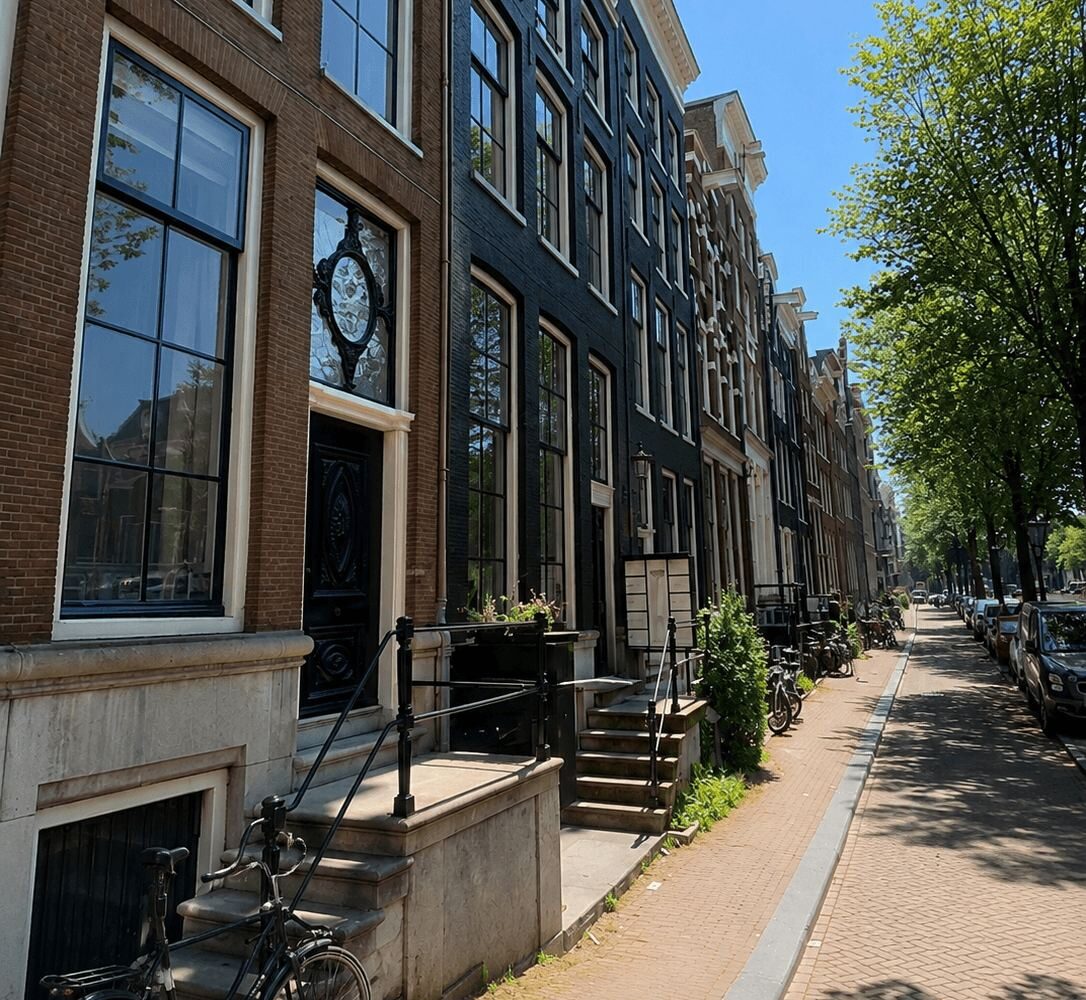
The stone stoops and tall facades typical of Amsterdam’s canal ring.
Amsterdam-Noord: The Post-Industrial Frontier
Until the expanded ferry service, Amsterdam-Noord was genuinely unknown to most visitors. It’s still undervisited, which makes it worth the five-minute crossing. The Pllek café on the IJ waterfront occupies a former industrial site and serves better coffee than most of the tourist-belt cafés at half the tourist-belt price. The view of the Amsterdam skyline from the Noord side of the IJ is better than the view of Noord from Amsterdam’s south bank. The NDSM Wharf, the A’DAM Tower, EYE Filmmuseum, and a growing cluster of independent restaurants and bars — Pllek, Butcher’s Tears — have built a creative neighbourhood character that’s distinct from anything on the south side of the IJ.
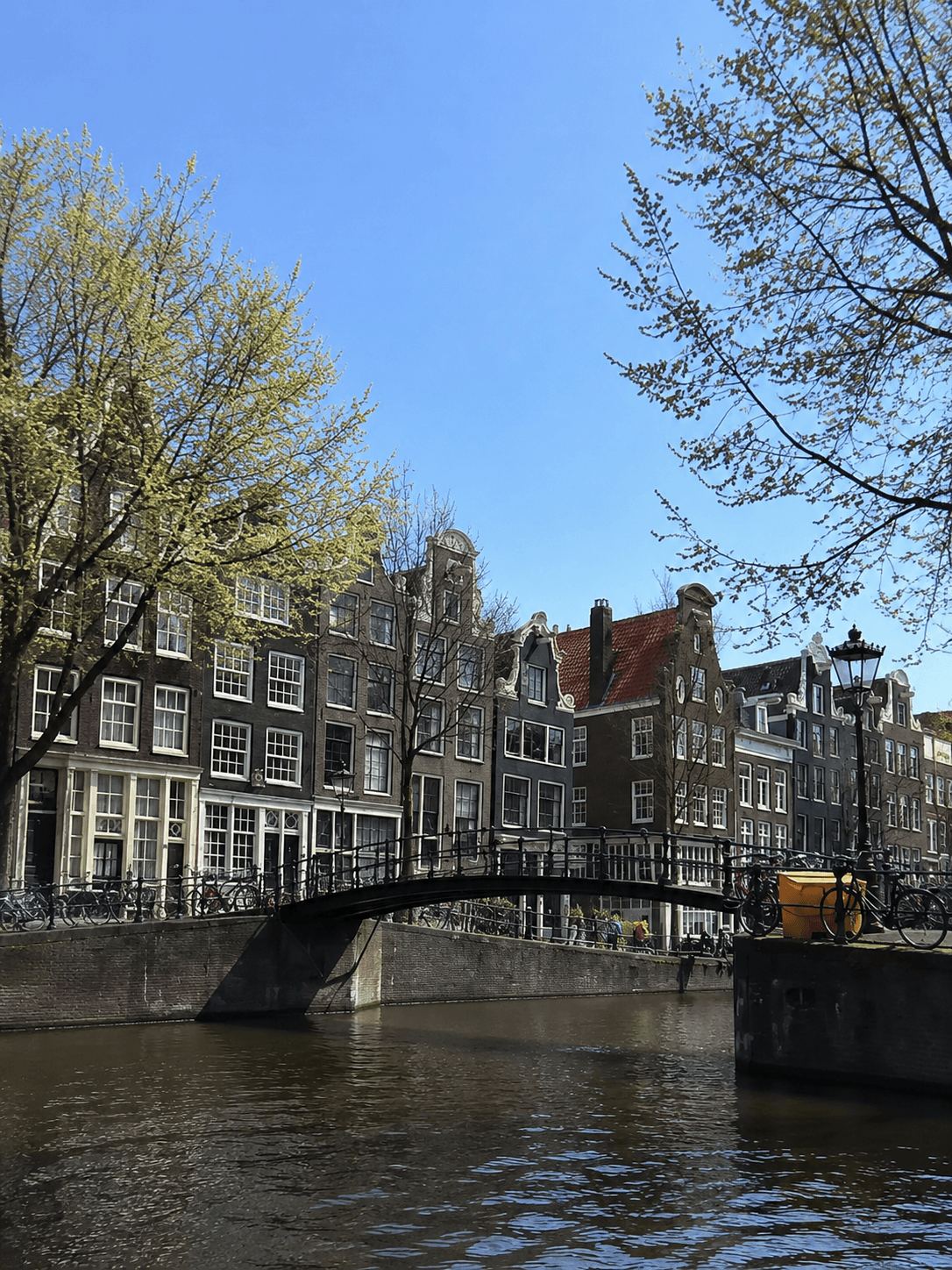
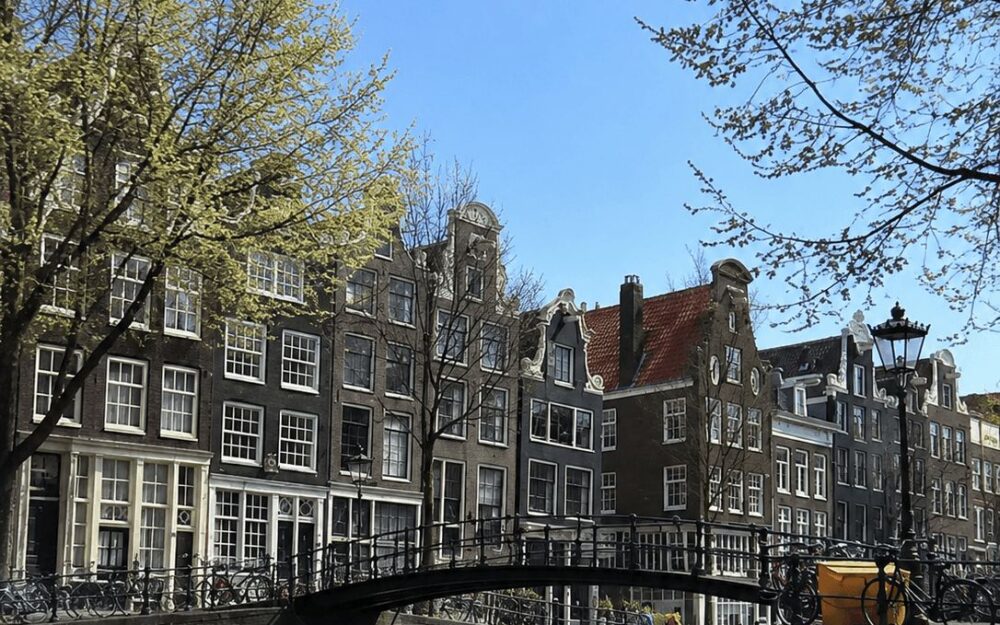
One of the many small pedestrian bridges crossing Amsterdam’s canals.
Pick a neighbourhood for what you want to do there
Going beyond the tourist trail does not mean walking without a purpose through any residential street. De Pijp is useful for market browsing and food stops, Amsterdam-Oost offers an extensive urban area with different parks and streetscapes, Oud-West is well suited to cafés and a neighbourhood walk, and Amsterdam-Noord has former industrial spaces as well as ordinary residential districts. These are broad neighbourhood descriptions, not promises that every business is independent or that each street is less crowded than the centre. Choose one area for a half-day rather than turning the outing into a citywide race. A good local-style day might mean buying lunch at a market, spending time in a park and finding a café, with no museum ticket at all. Be considerate of the people who live there and do not turn private residential courtyards into tourist photo stops.
A food-focused half-day in De Pijp
Start by deciding whether you want a market visit, a planned meal or a street-and-architecture walk. The Albert Cuypmarkt is a natural reference point, but check its actual opening days and hours before organising a morning around it. Food stalls vary, and a busy market is not the same as a quiet residential experience. After browsing, choose a nearby café or restaurant based on your budget, dietary requirements and available seating; do not assume a particular stall offers the same product every day. You can finish with a slower walk away from the market streets or a park stop if the weather is suitable. If you are travelling with a stroller or wheelchair, consider pavement congestion and the accessibility of individual establishments. This is a better use of a half-day than trying to combine three distant food markets simply because they appear in one online itinerary.
Oud-West and Amsterdam-Oost: two different urban afternoons
Oud-West is an option for visitors who enjoy café streets, shopping and architecture within reach of the more central neighbourhoods. Amsterdam-Oost can support a longer walk linking a park or museum with a lunch stop, but you should choose the particular destination before relying on a generic neighbourhood label. Weather makes a difference: a rainy afternoon is easier when you have an indoor exhibition or café identified in advance. If you want to rent a bicycle, check traffic rules and follow marked cycling infrastructure rather than riding through crowded pedestrian space. Amsterdam’s bike network belongs to commuters as well as visitors, so sudden stops for photographs can be hazardous. On foot, look at the tram or metro stop nearest your eventual return point so you are not obliged to retrace a long walk once you are tired.
Crossing to Amsterdam-Noord without making the ferry the whole trip
A ferry crossing from the central-station waterfront can be part of the experience, but check the current route and departure point for the part of Noord you want to explore. Noord is large; reaching one waterfront destination does not place every museum, food hall and park within an easy stroll. The former industrial waterfront attracts many visitors already, so it should not be described as a deserted secret. Decide whether you are going for architecture, a named cultural venue or simply a view back across the IJ. If an exhibition is central to the plan, check its opening day and entry price before you travel. When the weather is rough, dress for wind on the water and consider a shorter loop. The ferry is public transport, and people using it for their commute need room to board and disembark.
Build a route with two anchors and a free hour
For a half-day, choose one neighbourhood and two anchors: perhaps a market and a park, or an exhibition and a café. The free hour is where the trip becomes personal, because you can follow an appealing public street or stay longer at a place that interests you. A citywide list of photogenic spots usually produces more transfers than exploration. Use live public transport information for your day and leave room for a change in weather. If you have accessibility needs, check the particular venue and transit stop rather than assuming an entire neighbourhood is uniformly step-free. Keep costs realistic as well: one sit-down lunch, transit and a ticketed museum can add up, while an outdoor walking route with a snack may cost very little. The goal is flexibility, not an arbitrary claim that you have discovered the “real” city.
How this article differs from a day trip outside the city
Neighbourhood exploration stays inside Amsterdam and works well when you have only a few spare hours before dinner, a flight or a museum reservation. A trip to a Waterland village or the Zaan polder is a different decision involving regional transport and fewer indoor alternatives. See places beyond the usual coach circuit if you want to leave the city, and Amsterdam beyond the canals for a broader set of city ideas. You do not need to call a neighbourhood “undiscovered” to explain why it is worth visiting. Describe what a traveller can do, what to check before going, and what sort of afternoon the place offers. That is more useful than promising a universally authentic or crowd-free experience.
🙋 Frequently Asked Questions (FAQ)
What do locals do in Amsterdam that tourists miss?
Amsterdam residents tend to prefer neighbourhood markets, independent cafes in De Pijp and Oud-West, cycling through Vondelpark and the western canal belt, and day trips north into the Waterland region rather than the most visited tourist attractions.
Which Amsterdam neighbourhood is most local?
De Pijp and Amsterdam-Oost are the two neighbourhoods that most consistently feel like genuine residential Amsterdam rather than tourist-focused areas, with strong local food and café culture.
What is Amsterdam-Noord like?
Amsterdam-Noord is a former industrial area now housing a growing creative district around the NDSM Wharf, with a distinctly different character from the historic south side — more spacious, less tourist-oriented, and interesting specifically because it doesn’t feel like a postcard version of Amsterdam.

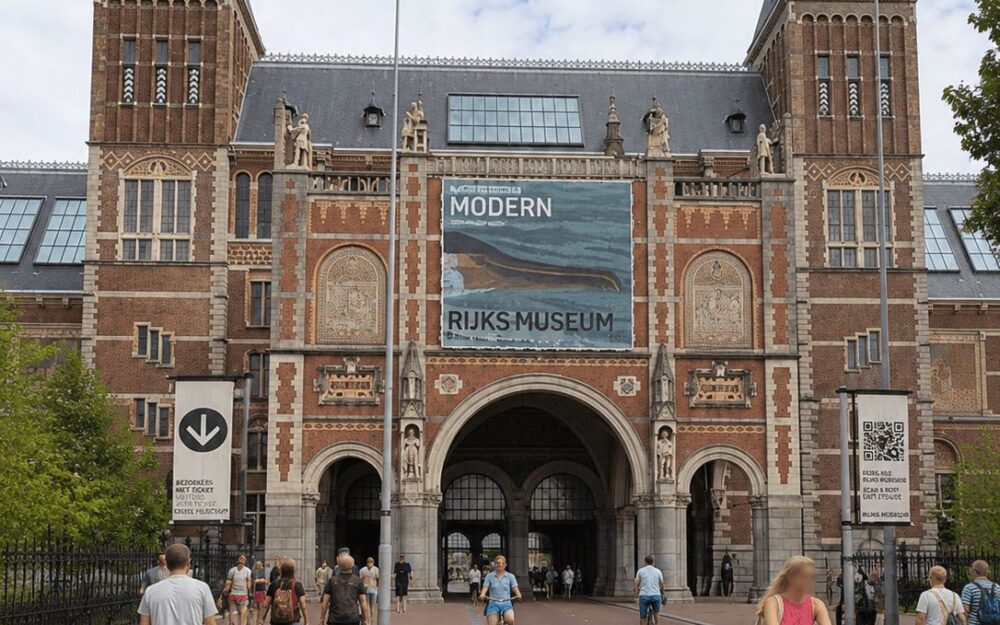
The Rijksmuseum’s cycle-through entrance passage, one of Amsterdam’s most photographed spots.
Final Recommendation
Explore Further
🎬 EYE Filmmuseum: eyefilm.nl
🍺 Brouwerij ‘t IJ: brouwerijhetij.nl
🚂 Train & transit tickets: ns.nl
🏨 Compare accommodation prices: Booking.com
🗺️ Organised day trips & tours: GetYourGuide
🌍 Spanish-language tours & activities: Civitatis
Sources: Editorial route guidance; verify before travel | iamsterdam.com | Details can change; check the linked official sources before booking