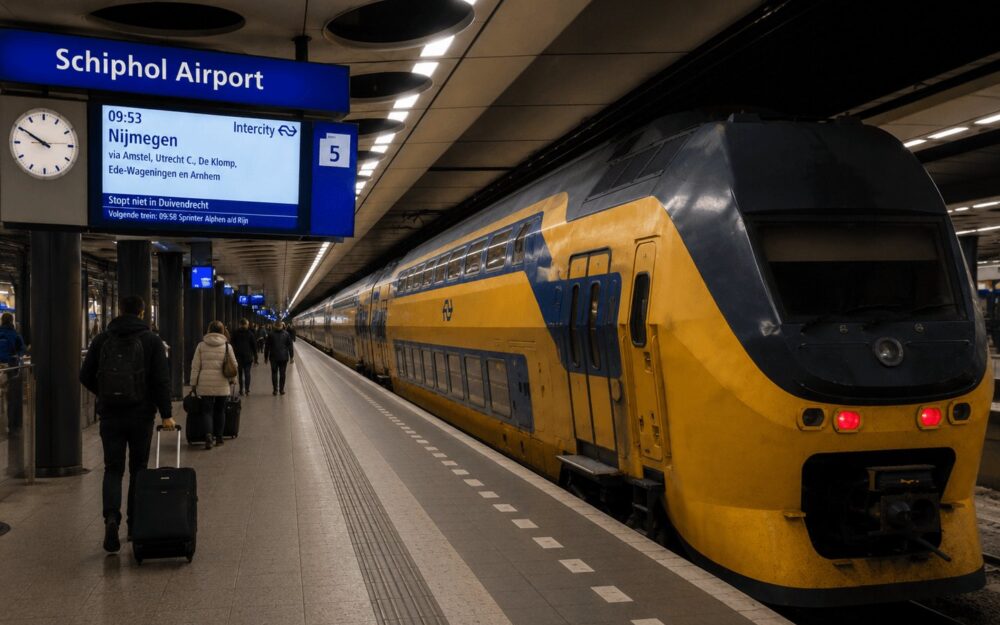
One of the most common questions visitors ask is what weather to expect — and the honest answer is: some rain in every month, more daylight than you’d expect in summer, and far less extreme cold or heat than continental climates.
Here’s the real picture month by month.
Monthly Weather at a Glance
| Month | Avg. Temp | Daylight | Rain Risk | Notes |
|---|---|---|---|---|
| January | 2–5°C | ≈ 8 hrs | Moderate–High | Cold wind; occasional frost |
| February | 3–7°C | ≈ 10 hrs | Moderate | First signs of spring; still cold |
| March | 6–10°C | ≈ 12 hrs | Moderate | Tulips beginning; unpredictable |
| April | 8–14°C | ≈ 14 hrs | Moderate | Peak tulip bloom; pleasant if dry |
| May | 12–18°C | ≈ 16 hrs | Lower | Best overall balance |
| June | 15–20°C | ≈ 17 hrs | Moderate | Long days; warm evenings |
| July | 17–22°C | ≈ 16.5 hrs | Moderate | Warmest month; peak tourist season |
| August | 17–22°C | ≈ 15 hrs | Moderate | Similar to July; school holidays |
| September | 14–19°C | ≈ 13 hrs | Moderate | Second-best month; crowds thin |
| October | 10–15°C | ≈ 11 hrs | Higher | Autumn colour; cooler evenings |
| November | 6–10°C | ≈ 9 hrs | High | Wet; Light Festival begins late month |
| December | 3–7°C | ≈ 8 hrs | High | Festive atmosphere; short days |
What to Pack by Season
| Season | Essential Items |
|---|---|
| Winter (Dec–Feb) | Windproof insulated coat, waterproof shoes, gloves, layers |
| Spring (Mar–May) | Packable rain shell, layers for big daily swings |
| Summer (Jun–Aug) | Light rain jacket (still useful), comfortable walking shoes |
| Autumn (Sep–Nov) | Waterproof jacket, warm layers for evenings |
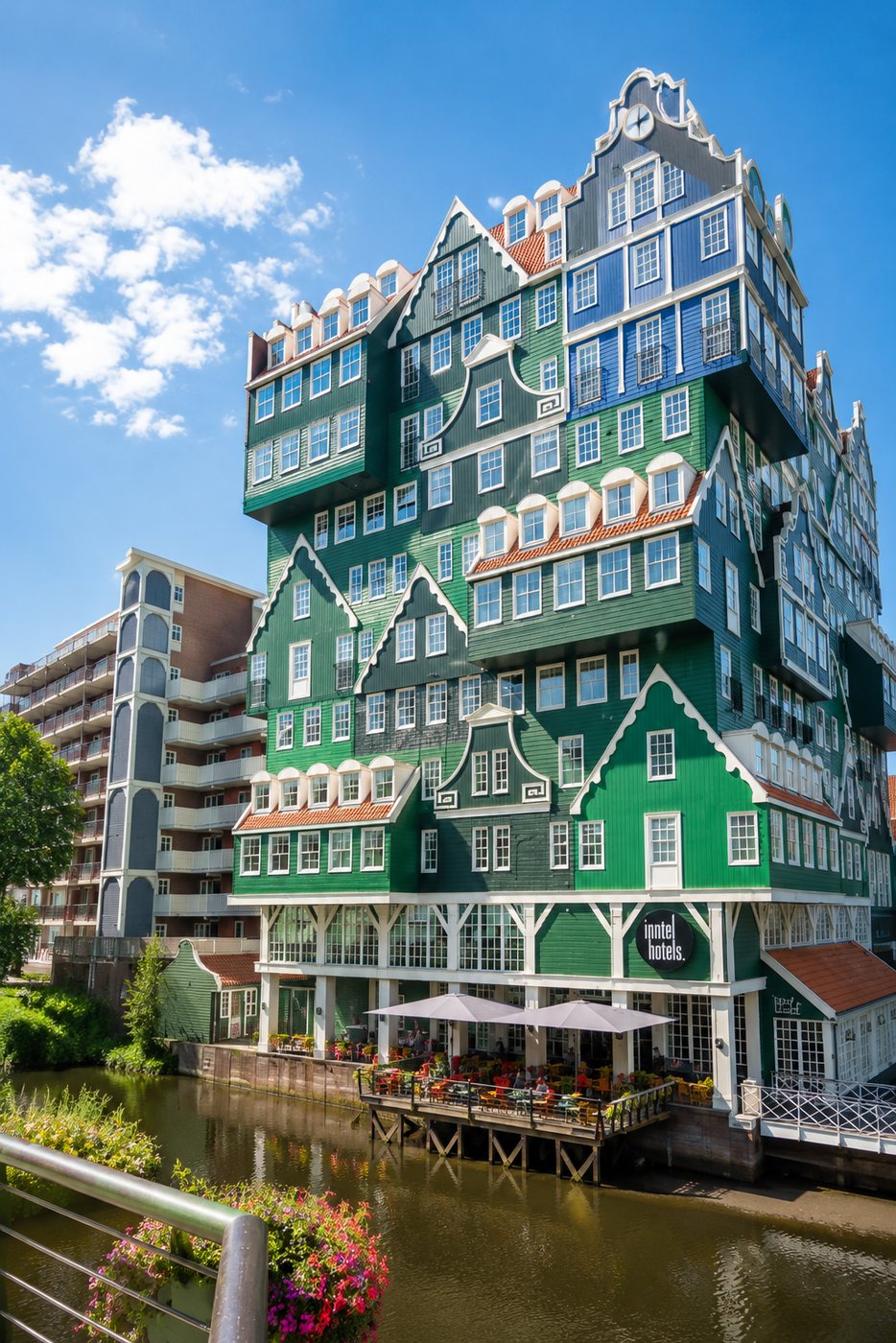
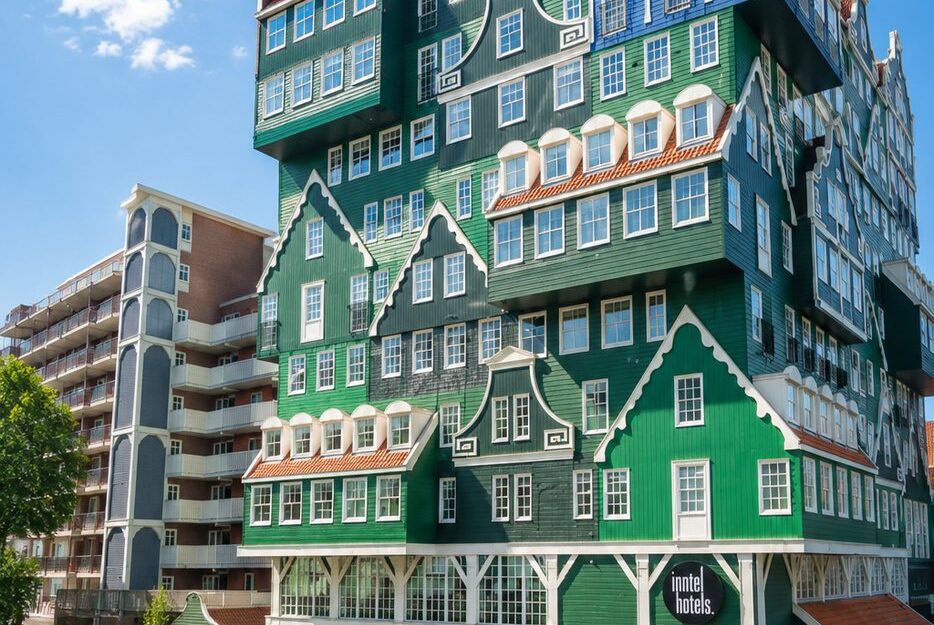
The distinctive stacked-house skyline along the Zaan in central Zaandam.
Rain: What the Numbers Actually Mean
The Netherlands gets around 700-850mm of rain per year on average — spread across all seasons rather than concentrated in any single wet season. October through January tends to be the wettest period, with May having lower average rainfall. The crucial thing for visitors is that Dutch rain is typically short and scattered rather than all-day sustained downpours, making hourly forecasts more useful than daily averages.
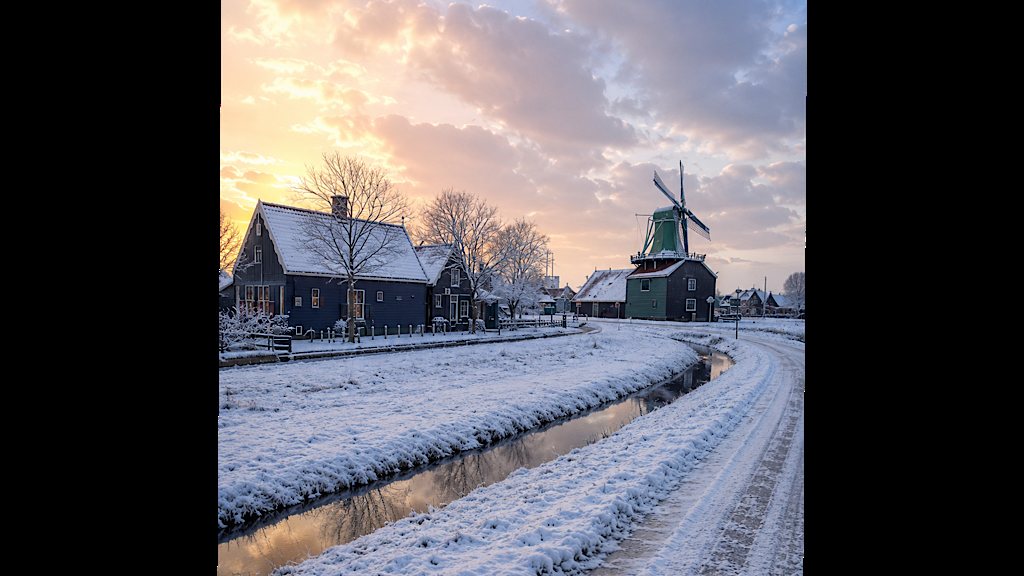
A quiet winter morning at Zaanse Schans, with frost over the village.
Wind: The Factor Most Visitors Underestimate
The Netherlands is flat and exposed, sitting between the North Sea and the continental interior. Wind makes cold temperatures feel significantly colder than the thermometer suggests, particularly in winter and near the coast. A windproof outer layer matters more in the Netherlands than in many destinations at similar temperatures.

Classic Zaans architecture — timber houses painted in the region’s traditional green.
January and February: short daylight and exposed wind
Dutch winter travel is not simply a matter of checking the lowest temperature on a weather app. Wind and damp conditions can make waiting on an open station platform or walking across a waterfront feel much colder. Pack layers that can be adjusted indoors because trains, museums and cafés may be warm while the journey between them is not. Daylight is limited, so schedule your most scenic outdoor route in the middle of the day and leave a museum or café for late afternoon. Snow may occur, but do not build an itinerary around a frozen canal or expect ice skating to be available during every winter visit. Even when it is dry in Amsterdam, exposed places such as Zaanse Schans and the North Sea beach can feel very different. Check the local forecast for the actual destination rather than relying on the city where you are sleeping.
March and April: spring colour with changing conditions
Spring can bring bright sunshine followed by showers and sharp winds. The changeability is particularly relevant when your itinerary combines Haarlem, the Keukenhof gardens and open flower fields. Bring a light waterproof outer layer, shoes that tolerate damp paths and a warmer option for evenings. The spring flower season does not progress uniformly from one location to another: cultivated displays and outdoor production fields depend on the weather and the individual crop. Consult official bloom updates if flowers are the purpose of your journey. If you are visiting around Easter or King’s Day, also check holiday transport arrangements and local opening times rather than assuming a normal weekday schedule. A flexible spring day starts with the weather-dependent outdoor stop and keeps a nearby indoor option in reserve, especially for families travelling with children.
May and June: longer evenings, not a rain guarantee
Longer daylight makes it easier to fit a town walk and a short waterside extension into the same day. However, mild temperatures do not eliminate the need for a waterproof layer, particularly if you plan to cycle or spend time on a boat. At the coast, the breeze can be noticeably cooler than in sheltered streets; pack an extra layer even when your Amsterdam forecast appears comfortable. If you want to photograph windmills or canals in softer evening light, check the final return train or bus before deciding to stay longer. Boat tours, museums and gardens may operate seasonal timetables, so separate the question “will the weather be pleasant?” from “will the attraction be open?” Many visitors enjoy these months because the days allow more flexibility, but a single sunny photograph should not be used as a forecast for a fixed week a year later.
July and August: heat, showers and busy visitor periods
Summer often offers long days suitable for cycling, terrace meals and beach excursions, yet a warm forecast can come with thunderstorms or periods of uncomfortable heat. Carry water, use sun protection and look for shade during the hottest part of the day. An afternoon at the North Sea is not automatically safe for swimming: follow local lifeguard advice, beach flags and water-condition warnings. For a city break, book any time-sensitive indoor attractions according to your interests rather than using them only as a last-minute bad-weather alternative; busy periods can limit spontaneity. If you plan a day trip by regional bus, allow time for return services and weekend variations. A good summer packing list includes light clothing, one windproof or waterproof layer, comfortable walking shoes and a small bag that protects electronics during a sudden shower.
September and October: a useful mix of indoor and outdoor days
Early autumn may still feel summery on a sheltered terrace, while later weeks can bring stronger winds, more frequent rain and earlier darkness. This is a good period for a museum-plus-walk itinerary because the indoor portion can move earlier or later according to the forecast. Trees and canal reflections can make a smaller city attractive even when flower attractions have closed for the season. Check for school holidays and special events before estimating crowds from the weather alone. At the coast or in a polder landscape, a waterproof outer layer and shoes with grip are valuable; inland urban walks may require less equipment. Keep the final return journey in mind when planning sunset photography. The time of sunset changes quickly through autumn, and an appealing late-afternoon route can end in the dark sooner than a traveller expects.
November and December: design a weather-proof city day
A winter city visit can revolve around a compact historic centre, one museum and a long café stop. Choose accommodation and transport connections that keep transfers manageable when it rains. Waterproof footwear matters more than packing an umbrella that may be difficult to use in a strong wind. Holiday lighting and seasonal events vary by city and year; check official programmes rather than assuming a festival will operate on the same dates as the previous winter. An afternoon trip to a small residential village can be beautiful in low light, but limited cafés and transport make a late return less comfortable. For flexible planning, keep an indoor backup for every outdoor highlight and check whether your chosen venue closes earlier around public holidays. Our Amsterdam by month guide addresses city-specific choices, while Texel in winter explains the additional challenges of a coastal island visit.
🙋 Frequently Asked Questions (FAQ)
What is the weather like in the Netherlands in summer?
Dutch summers are mild rather than hot — average July temperatures in the 18-22°C range — with long daylight hours but rain possible at any time. It rarely gets extremely hot, which makes extended sightseeing comfortable.
Does it rain a lot in the Netherlands?
Yes, rain is possible in every month with no genuinely dry season. Most showers are short and scattered rather than sustained all-day rain. A packable rain jacket is useful year-round.
What is the best weather month in the Netherlands?
May and September tend to have the most balanced weather — mild temperatures, reasonable daylight, and somewhat lower rainfall than the wettest months.
Does it snow in the Netherlands?
Snow is possible in January and February but far from guaranteed most winters. When it does snow it rarely stays long given the mild maritime climate, though occasional heavier snowfall does happen.
Final Recommendation
For how weather affects specific destinations, see our Amsterdam month-by-month guide and Zaanse Schans seasonal guide.
Plan Your Visit
🌤️ Weather forecasts: buienradar.nl
🚂 Train & transit tickets: ns.nl
🏨 Compare accommodation prices: Booking.com
🗺️ Organised day trips & tours: GetYourGuide
🌍 Spanish-language tours & activities: Civitatis
Sources: KNMI (Royal Netherlands Meteorological Institute)| Details can change; check the linked official sources before booking