
Texel comes up often in “best islands near Amsterdam” lists, but the honest answer to whether it’s worth the trip depends heavily on how much time you can give it.
I once recommended Texel to a couple with a tight 4-day Amsterdam-only itinerary who then squeezed in a rushed single-day trip anyway. They came back saying it “felt like a missed opportunity” — they’d seen one beach in a hurry and spent more time travelling than actually being there. A different friend who built two nights into her itinerary called it the calmest, most memorable two days of her whole trip. Same island. Completely different verdicts, entirely explained by time invested.
Here’s a balanced look.
What Texel Actually Offers
- Long, open beaches stretching along much of the island’s western coast, genuinely some of the best in the Netherlands.
- Nature reserves with dune landscapes, birdwatching, and protected wildlife areas.
- A strong cycling culture with extensive, well-maintained bike paths covering most of the island.
- A noticeably slower pace than Amsterdam, appealing to visitors wanting genuine relaxation rather than another packed sightseeing day.
The Honest Downsides
- Travel time is significant. At roughly 2 hours each way, Texel demands more commitment than closer day trips like Zaanse Schans or Volendam.
- It’s not ideal as a rushed single day trip. By the time you account for travel, a single day leaves limited actual time on the island.
- Limited public transport on the island itself. A bike or car genuinely matters here more than on most other day-trip destinations.

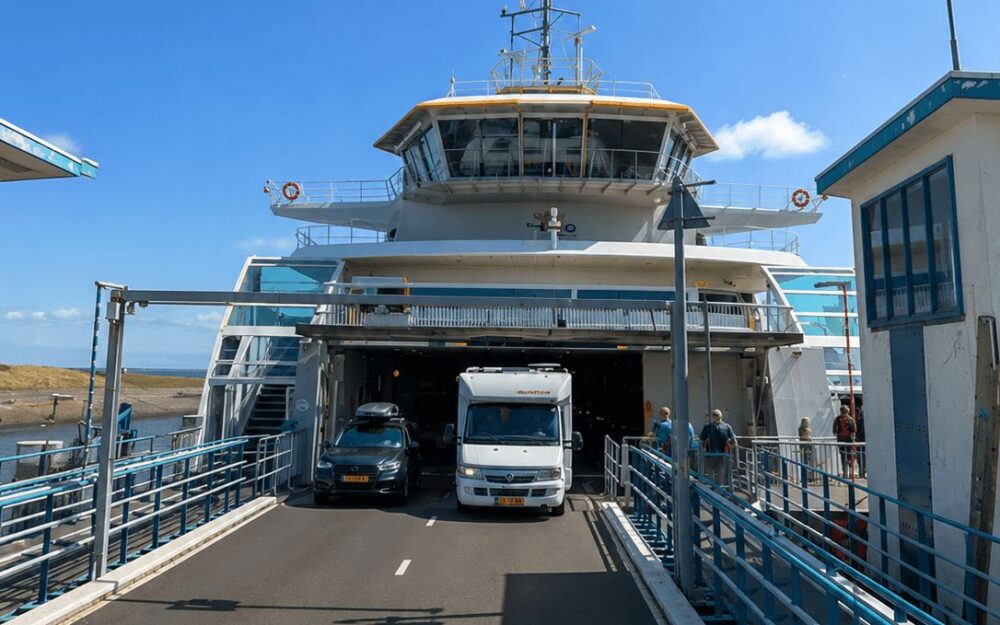
The covered vehicle deck of the TESO ferry, mid-crossing.
Texel vs Closer Day Trips
| Destination | Travel Time | Best For |
|---|---|---|
| Zaanse Schans | ≈ 17 min | Quick half-day windmill visit |
| Volendam/Marken | ≈ 30–45 min | Harbor towns, costume photos |
| Texel | ≈ 2 hours | Beaches, nature, slower multi-day pace |

A wide sandy beach bordering one of the island’s dune-side holiday parks.
Who Will Enjoy Texel Most
Beach lovers, cyclists, birdwatchers, and anyone wanting a genuine escape from city sightseeing will likely rank Texel as a trip highlight. Visitors with very limited time who are trying to maximize the number of distinct “stops” on a short Amsterdam trip will generally get better value from closer destinations.
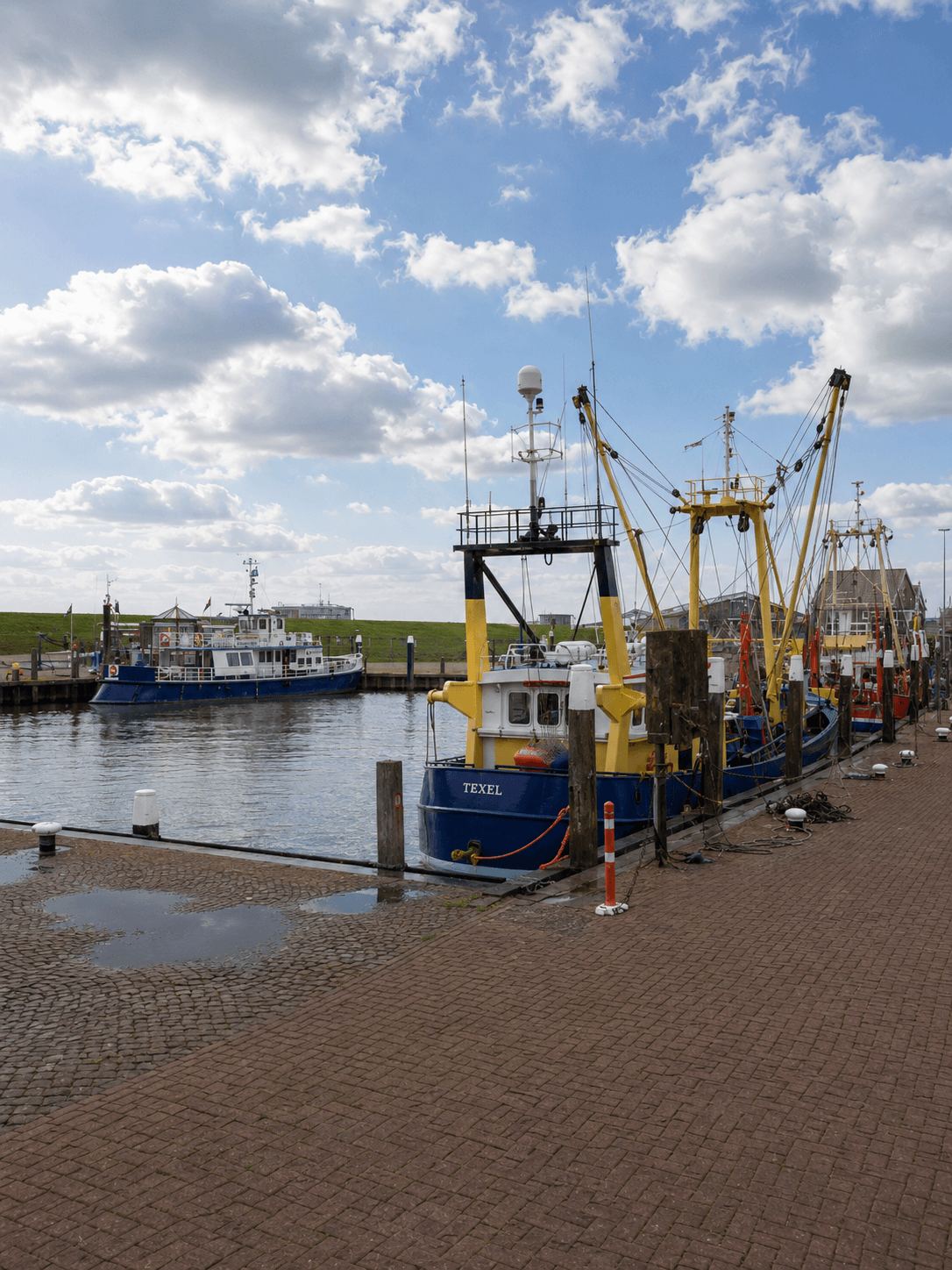
A working fishing trawler moored in the harbour.
Decide whether you want an island or a quick landmark
Texel makes sense when the island itself is the reason for your journey: you want wide landscapes, beaches, small villages, walking or cycling, and time away from a tightly packed city itinerary. It is less straightforward as a quick stop between Amsterdam museums. Getting there requires reaching Den Helder, taking the ferry, then travelling from the Texel ferry terminal to the part of the island you actually want to visit. That final stage is easy to overlook when an online journey estimate stops at the ferry. Before deciding, open a map and mark one or two places you would genuinely enjoy spending time in. If those places are far apart, choose a car or realistic public-transport plan, or consider staying overnight. A full list of island highlights is not automatically a sensible one-day route.
For nature, choose the season and activity together
Texel can be experienced through a beach walk, a dune trail, birdwatching, a visit to a nature centre or a slow cycle between villages. These activities are not interchangeable in every season. An exposed beach can be windy and cold on a day when a sheltered village café is comfortable; a nature trail may have seasonal restrictions intended to protect wildlife. Check the current access rules and remain on marked paths rather than entering dunes for a photograph. Birdwatching is often more rewarding when you allow quiet observation time instead of treating each stop as a quick checkmark. If nature is the point of your visit, two well-chosen areas are more satisfying than an island-wide driving loop with almost no time outside the car. The Texel beach guide compares types of beach visit, while the winter guide deals with the shorter, quieter days.
What families and non-drivers should check
Families can enjoy an island day, but the ferry, transfer and return journey take time before the actual activities start. A child who needs regular breaks may be happier with one beach and one child-friendly attraction than a series of distant stops. If you arrive without a car, make sure your planned bike rental or public-transport connection is available from the terminal or the location you are travelling to. Do not assume that a bicycle is suitable for every traveller or that a rental shop always has the right child seat or trailer. For travellers with reduced mobility, check transport and attraction accessibility independently. Our family guide and bike rental guide help you plan according to your actual group, not an idealised fast-moving day-tripper.
The ferry is part of the trip, but it is not the whole trip
The TESO ferry connects Den Helder with Texel and takes roughly twenty minutes to cross. The operator sells return tickets and does not reserve a particular date or sailing time for an ordinary crossing. Travellers should still check the current departure schedule, expected crowds and ticket category before leaving home. Once you arrive on Texel, you have not arrived at every beach or village: allow separate onward travel. The Amsterdam-to-Texel transport guide breaks down the mainland journey, and our ferry guide explains how to board with a car, bicycle or as a pedestrian. If your main goal is simply to see a picturesque Dutch settlement on a short stop, a nearer village may make better use of your available hours.
When an overnight stay changes the experience
Spending a night on the island removes the pressure to return across the ferry immediately after the main activity. You can choose a longer afternoon walk, visit a second area the following day or wait for a spell of better weather. Book accommodation according to your intended transport: a room near one village is not automatically close to a beach you hope to visit every morning. If you bring a car, check parking at the accommodation and your intended attractions; if you rely on buses or a bicycle, look at the actual route before choosing where to sleep. A one-day trip remains possible, but it is most enjoyable with a limited plan and a comfortable return buffer. Texel is not necessarily the right choice for every traveller: its value depends on how much you enjoy the open landscape and how much travel time your holiday can afford.
A quick test for whether Texel belongs in your itinerary
Write down how many usable daylight hours you have after your mainland journey, ferry crossing and island transfer. Then list your two preferred Texel experiences, such as a beach walk and one village, with a realistic gap for lunch. If that plan can be completed comfortably without chasing the final useful connection, a day visit may suit you. If the only way to include your priorities is a very early departure followed by a late return, consider one night on the island or choose a closer excursion.
Visitors who value distinctive coastal landscapes may find the additional travel worthwhile. Travellers who mostly want a brief canal-side stroll, an indoor gallery or a quick windmill photograph may be happier elsewhere. This is not a score for the island: it is a way to avoid paying for transport to a destination whose main qualities do not match the day you have available. Check the particular beach, nature area and accommodation rather than expecting the name “Texel” to describe one uniform experience.
🙋 Frequently Asked Questions (FAQ)
Is Texel worth visiting from Amsterdam?
Yes, particularly for visitors who enjoy beaches, nature reserves and a slower pace than the city offers. The roughly 2-hour travel time from Amsterdam means it suits an overnight or multi-day stay better than a rushed single day trip.
How far is Texel from Amsterdam?
Texel is roughly 2 hours from Amsterdam by public transport, combining a train to Den Helder with a ferry crossing to the island.
Is Texel better as a day trip or an overnight stay?
An overnight stay is generally more rewarding given the travel time involved. A single day trip is possible but leaves limited time to actually explore the island once travel time is factored in.
What is Texel best known for?
Texel is best known for its long beaches, dune nature reserves, and a strong island cycling culture, making it a popular destination for outdoor-focused travelers.
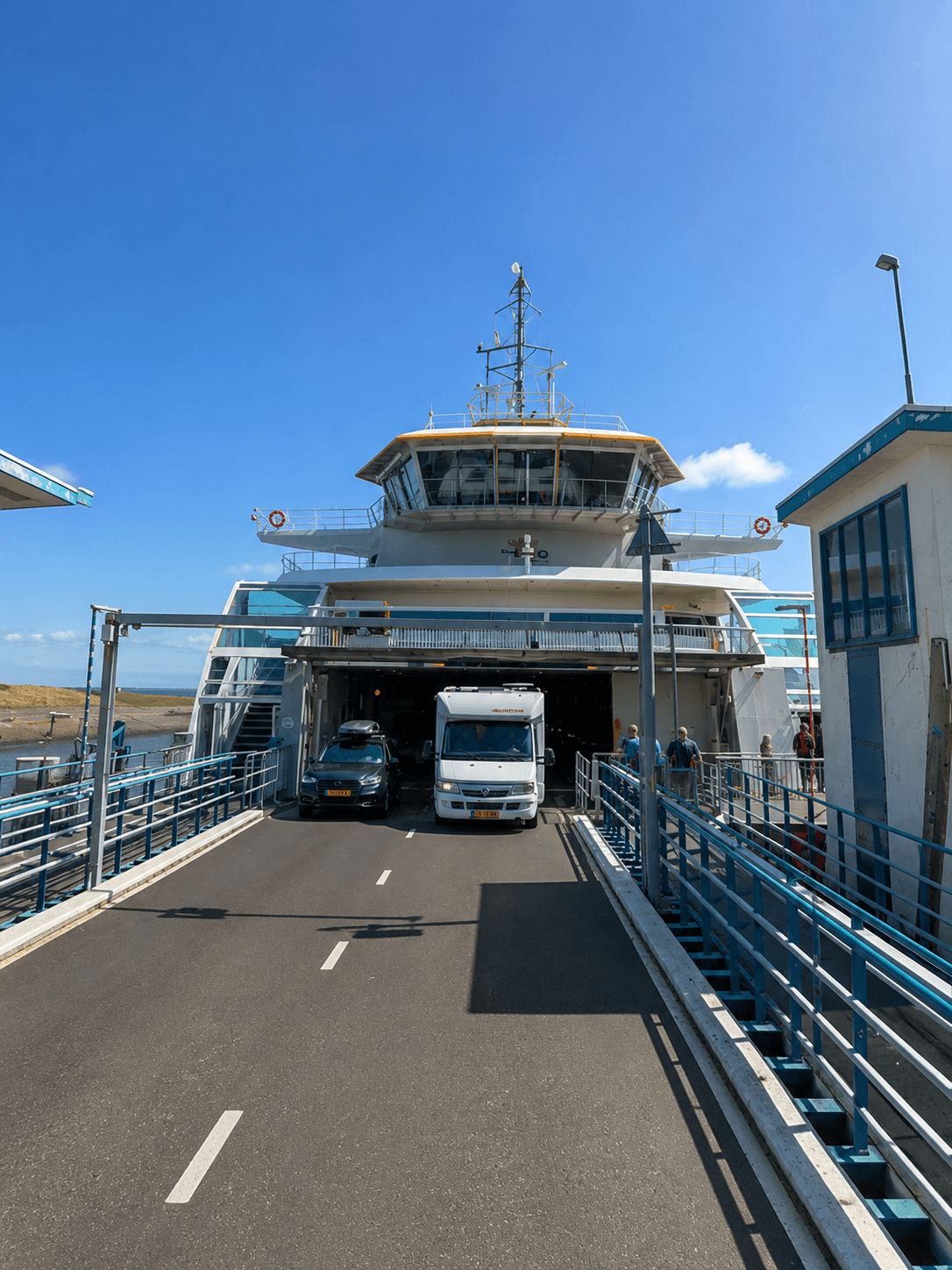
Boarding at the terminal — cars and campervans loading together.
Final Recommendation
If you do decide on a single day, see our Texel in one day guide for how to make the most of a tighter schedule.
Plan Your Visit
⛴️ Ferry schedules: teso.nl
🚂 Train & transit tickets: ns.nl
🏨 Compare accommodation prices: Booking.com
🗺️ Organised day trips & tours: GetYourGuide
🌍 Spanish-language tours & activities: Civitatis
Sources: texel.net | teso.nl | Personal observation — Noord-Holland | Details can change; check the linked official sources before booking