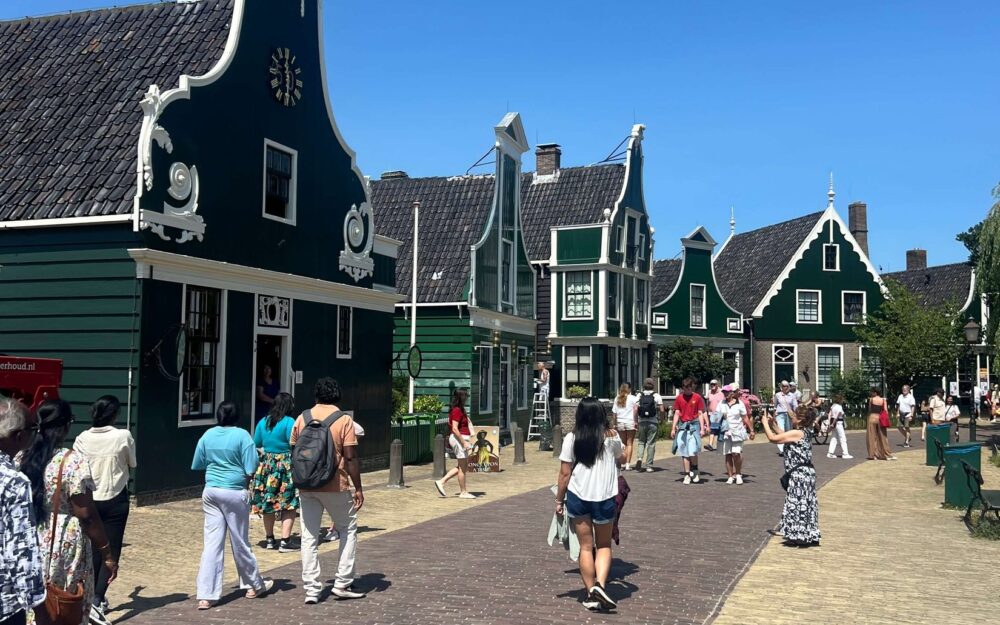

Zaanse Schans is often described as a windmill village near Amsterdam. That is correct, but it also makes the place sound more artificial than it really is. The houses and industrial buildings were moved here from different parts of the Zaan region to preserve them, while several of the windmills still perform the work they were built to do. This is not simply a row of decorative sails placed beside a souvenir shop.
I live in Zaanstad and have approached Zaanse Schans in nearly every ordinary way: by train, by car, by bicycle and on foot from Zaandijk. I have visited alone, with guests and with my son. The most important lesson is that the quality of the visit depends less on completing every attraction and more on choosing the right time and two or three things you genuinely want to experience.
This Zaanse Schans travel guide explains what the site is, which windmills and workshops deserve your time, what is free, how to travel from Amsterdam and how to turn a potentially rushed tourist stop into a relaxed half-day in the Zaan region.
Zaanse Schans at a Glance
| Planning question | Practical answer |
|---|---|
| Where is it? | In Zaanstad, north of Amsterdam, beside the River Zaan and opposite historic Zaandijk. |
| How much time? | About 2 hours for an outdoor highlights walk; 3–4 hours for a windmill, workshops and lunch; 5–6 hours with the Zaans Museum. |
| Is the whole visit free? | Public outdoor areas can be explored without one all-site admission, but windmill interiors, museums and some activities require tickets. Always check the current access model. |
| Best arrival? | Train to Zaandijk Zaanse Schans for most Amsterdam visitors; car for families or a wider North Holland route. |
| Best time of day? | Before the main late-morning groups or later in the afternoon. Opening hours vary by individual attraction. |
| Good with children? | Yes. The clog workshop, cheese tasting and Verkade Experience are usually easier wins than a long historical tour. |
What Exactly Is Zaanse Schans?
The Zaan region became one of Europe’s earliest large industrial areas. Wind power drove sawmills, oil mills, paper mills, spice mills and paint mills long before electricity. Zaanse Schans preserves a concentrated part of that history beside the river where wind, water transport and trade once worked together.
Some visitors call it an open-air museum, but there is no single front door that neatly separates “inside” from “outside.” There are public paths, homes, shops, workshops, museum buildings and working windmills with their own access arrangements. That is why conflicting online answers about tickets are common. A person who only walks beside the windmills has a different visit from someone who enters several mills and spends two hours inside the Zaans Museum.
The village is compact enough to understand without a guide. Signs and maps help, and the main windmill line is impossible to miss. A guided tour becomes useful when you want industrial history explained, need fixed transport from Amsterdam or prefer a combination trip with another destination.
The Best Things to Do at Zaanse Schans
1. Walk the Windmill Path
The classic experience is the riverside path past the windmills. Give yourself time to stop rather than treating it as a straight march to the final mill. The view changes with every bend: broad river panoramas, sails above low wooden buildings and narrow bridges across the drainage channels.
For a first visit, I recommend walking the outdoor route once before deciding which interiors to enter. From the outside, you can hear which mills are working hard and see where queues are forming. Our separate Zaanse Schans windmill guide compares the major mills and helps you choose one rather than buying tickets at random.

The riverside windmill line is the core of a Zaanse Schans visit, but entering one working mill changes it from scenery into industrial history.
2. Enter a Working Windmill
If you pay for only one attraction, make it a working mill that matches your interests. De Kat is visually dramatic because pigments and grinding machinery make the process easy to understand. Het Jonge Schaap explains how wind-powered sawmills helped the Dutch shipbuilding economy. Oil mills have their own heavy rhythm and smell. Access, opening days and demonstrations can change, so check the official windmill information before planning around one specific interior.
Inside, expect steep timber stairs, low beams, noise and movement. That is part of the experience, but it matters for young children, visitors with limited mobility and anyone uncomfortable with heights. You can still enjoy the windmill landscape without climbing.
3. Watch Wooden Shoes Being Made
The wooden shoe workshop is one of the easiest attractions to enjoy in a short visit. A demonstration shows how a block of wood becomes a hollow shoe using specialised machines. It is visual, noisy enough to keep children interested and short enough that it does not dominate the morning. The surrounding displays explain regional styles and unusual ceremonial clogs.
It can become crowded when several coach groups arrive together. If the room is packed, continue your walk and return later. See the detailed wooden shoe workshop guide for timing, children and accessibility.
4. Visit the Cheese Farm
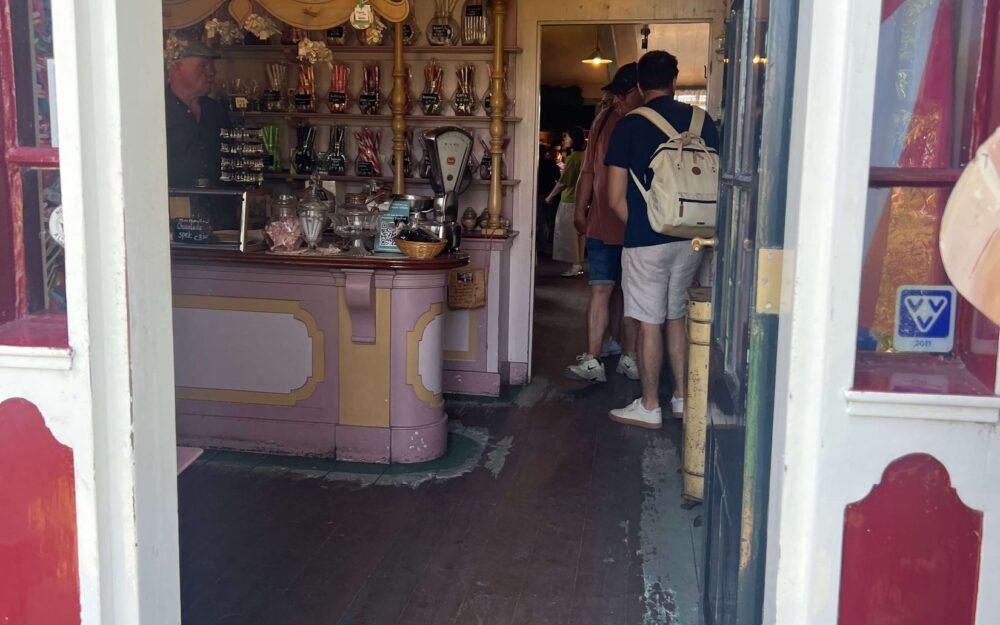
The cheese farm can be an easy indoor stop if the weather changes. Short explanations and tasting counters may work particularly well for families, although a visit should not depend on buying anything in the shop.
You do not need to buy cheese to justify the stop. If you do buy something, remember that carrying a heavy cheese through the rest of the route is less charming than it sounds. Save shopping until late in the visit when possible.
5. Explore the Zaans Museum and Verkade Experience
The Zaans Museum gives the wider industrial story that the outdoor route can only hint at. The Verkade Experience, built around historic biscuit and chocolate production, is especially useful on a rainy day or with school-age children. It also turns Zaanse Schans into a longer half-day rather than a quick photo stop.
Do not add the museum automatically if your schedule is already tight. It deserves real time. A rushed thirty-minute dash through it at the end of an overfilled itinerary offers poor value compared with either committing to it or saving it for another visit.
6. Cross into Historic Zaandijk
Many visitors turn around at the official entrance and never cross the Julianabrug. That is a mistake. The bridge gives one of the best broad views of the windmill line, while the Lagedijk on the Zaandijk side shows historic green wooden architecture in an ordinary inhabited setting.
This is also the natural walking route from Zaandijk Zaanse Schans station. The approach creates a useful sequence: real village streets, the elevated bridge view and then the preserved industrial landscape. It feels far more satisfying than stepping from a coach directly into the busiest part of the site.
How to Get from Amsterdam to Zaanse Schans
For most independent visitors staying near central Amsterdam, the train is the simplest choice. Travel to Zaandijk Zaanse Schans station and walk through Zaandijk toward the bridge. The rail journey is short, but you must include the walk when estimating door-to-door time.
Bus, car and bicycle can all make sense depending on your starting point. A car is useful when Zaanse Schans is one stop in a larger North Holland day. Cycling gives the strongest sense of the transition from Amsterdam to the Zaan region but requires confidence in Dutch traffic and weather. Our complete Amsterdam to Zaanse Schans transport guide compares train, bus, car and bike without forcing every traveller into the same answer.
How Much Time Do You Need?
Two hours is enough for the outdoor windmill line, photographs and one quick workshop. Three to four hours is the better first-visit plan because it leaves room for one windmill interior, the clog workshop, cheese tasting and a relaxed food stop. Five or six hours works if you want the Zaans Museum, several mills and time in Zaandijk.
For families, watching a bridge, passing boats or the windmill machinery can take longer than an adult expects. Build that flexibility into the schedule rather than attempting to complete every attraction in one visit.
Do not confuse the cost of getting to Zaanse Schans with the cost of admission. Train or bus fares, parking, individual attractions and food are separate budget decisions. If you use a discount card or museum membership, check exactly which venues accept it rather than assuming it works everywhere in the village.
Consider three straightforward plans. For a low-cost visit, walk through Zaandijk, cross the Julianabrug and follow the outdoor windmill line, then choose whether to pay for a single interior. For an industrial-history visit, pick a working mill and make time for the Zaans Museum instead of racing through every craft shop. For a family half-day, give children a chance to watch a clog-making demonstration, leave room for snacks and choose one paid attraction only if the group still has energy. Each route offers a different experience; buying the largest ticket before setting your priorities is unnecessary.
The outdoor streets and paths, paid mill interiors and museum exhibitions are different parts of a Zaanse Schans visit. Walking through the heritage area does not automatically require purchasing a combined attraction ticket; a mill interior or museum may require admission. A pass can be worthwhile when you genuinely intend to visit several participating attractions, but its value depends on what is open on your date and which entrances it covers. The current museum ticket information and day-by-day opening information are the appropriate places to check those details. A promotional picture showing many mills is not a promise that every mill will be open when you arrive.
Choose Your Paid Stops Before Buying a Pass
Tickets, Free Areas and the Zaanse Schans Card
Zaanse Schans does not behave like one conventional attraction with one permanent answer for every visitor. Outdoor circulation, individual windmills, museums, workshops, parking products and combination passes can have different rules. Access arrangements and prices may also change.
Decide first what you actually want to enter. If you only want an outdoor walk and one windmill, individual payment may be sensible. If you plan several paid interiors and the museum, compare the current Card inclusions. Our Zaanse Schans tickets and Card guide provides a decision table and links to the official price pages.
Best Time to Visit Zaanse Schans
Early morning is best for quiet paths and photography, although not every interior will be open yet. Late afternoon is another strong option after many organised groups leave. Midday offers the widest chance of finding attractions operating, but it is also when the compact paths feel busiest.
Spring brings longer days and fresh colour. Summer offers the broadest visitor schedule but the largest crowds. Autumn can be atmospheric and calmer. Winter is quiet and beautiful in a stark way, but individual attractions may reduce their hours. Use our month-by-month Zaanse Schans guide and winter guide for the trade-offs.
Visiting Zaanse Schans with Kids
Zaanse Schans works well for children because much of the visit happens outdoors and the best family stops involve movement, sound, food or machinery. The wooden shoe demonstration, cheese tasting and Verkade Experience are generally stronger choices than asking a young child to inspect every museum room.
The main caution is inside the windmills. Stairs can be steep and narrow, and a stroller cannot follow you. Families may need to split briefly or choose an attraction with easier access. Our Zaanse Schans with kids guide covers strollers, toilets, food, rainy weather and a realistic family route.
Common Planning Mistakes
- Arriving with no priorities. Choosing one mill and one workshop is better than drifting into every queue.
- Ignoring the station walk. Door-to-door travel is longer than the train ride alone.
- Assuming every attraction shares the same hours. Check individual opening information.
- Using old prices from a blog as a guarantee. Verify tickets, transport and parking before departure.
- Planning too much with children. Leave time for snacks, bridges, water and simply watching the sails.
- Staying only inside the busiest loop. Cross the bridge into Zaandijk for context and a different view.
Frequently Asked Questions
Is Zaanse Schans worth visiting?
Yes for first-time Netherlands visitors, families, photographers and anyone interested in industrial history. It may feel too commercial for travellers expecting an undiscovered rural village, so visit early and include Zaandijk if authenticity matters to you.
Is Zaanse Schans in Amsterdam?
No. Zaanse Schans is in the municipality of Zaanstad, north of Amsterdam. It is close enough for an easy half-day trip but has its own regional history and identity.
Can you visit without a tour?
Yes. Independent travel is straightforward and gives you control over timing. A tour is useful when you want transport, explanation or several destinations combined.
Which windmill should a first-time visitor enter?
De Kat is a popular first choice because its paint-making process is visually distinctive. Het Jonge Schaap is a strong alternative for sawmill and shipbuilding history. Check what is operating on your date.
Can you combine Zaanse Schans with Volendam?
Yes, especially by car or organised tour. By public transport the combination needs more planning because the route is not simply one direct city line. Keep Zaanse Schans to a focused morning if you want time to enjoy Volendam rather than merely arrive there.
My Recommended First Visit
Arrive through Zaandijk, cross the Julianabrug, walk the windmill path and enter one working mill. Add the wooden shoe workshop and cheese farm, then choose between a relaxed lunch and the Zaans Museum according to your interests. That is enough. Zaanse Schans becomes less enjoyable when every shop, museum and photo point turns into an obligation.
The landscape is famous, but the machinery is what gives it meaning. Hear a working mill from the inside, feel the timber move and then step back outside to see the same sails from across the river. That single contrast is the part I would protect in any itinerary.
Plan Your Visit
Official visitor information and current tickets: dezaanseschans.nl
Train planning and live fares: NS
Door-to-door public transport: 9292
Zaans Museum information: Zaans Museum
Sources: official Zaanse Schans visitor information · Zaans Museum · NS · 9292 · Personal observation in Zaanstad. Prices, access rules and operating hours can change; verify them before travelling.