Amsterdam has among the most expensive and restrictive parking regimes in Europe — by design. I’ve watched the city tighten its parking rules steadily over the past decade, and the direction is clear: Amsterdam does not want private cars in its centre and will make parking expensive and inconvenient until that goal is achieved.
This guide covers the realistic low-cost alternatives for visitors who are arriving by car and need a practical solution, without pretending that central free parking exists in any meaningful sense.
Best Options: Low Cost Near Amsterdam
| Option | Cost | Connection to Centre |
|---|---|---|
| Official P+R facilities (Amsterdam edge) | €13 for the first 24 hours before 10:00 on weekdays; €6 after 10:00, weekends and public holidays. Public transport costs extra. | Metro, tram, bus or train, depending on location |
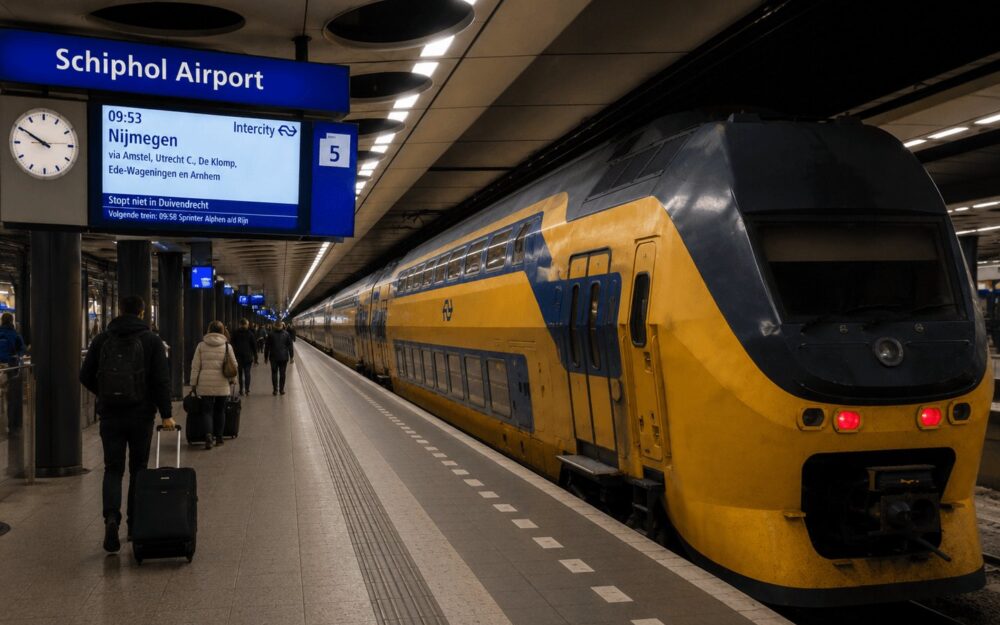
| Zaandam station parking | Paid, but much cheaper than Amsterdam | Direct train, 12 min |
| Haarlem station parking | Paid, cheaper than Amsterdam | Direct train, 17 min |
| P+R outside Amsterdam | Some are free; others charge a local rate | Train or regional bus; journey time varies |
Park & Ride (P+R): The Official Low-Cost Solution
Amsterdam P+R parking has a conditional reduced tariff; check the municipality’s current price, eligible transport tickets, return-zone rule and site-specific restrictions before arrival.
P+R Zeeburg 2 and 3 are served by tram 26 or bus 37—not metro 54. Availability and temporary restrictions can change, so check the City of Amsterdam’s live P+R information before setting off.
Zaandam: The Underrated Train-In Strategy
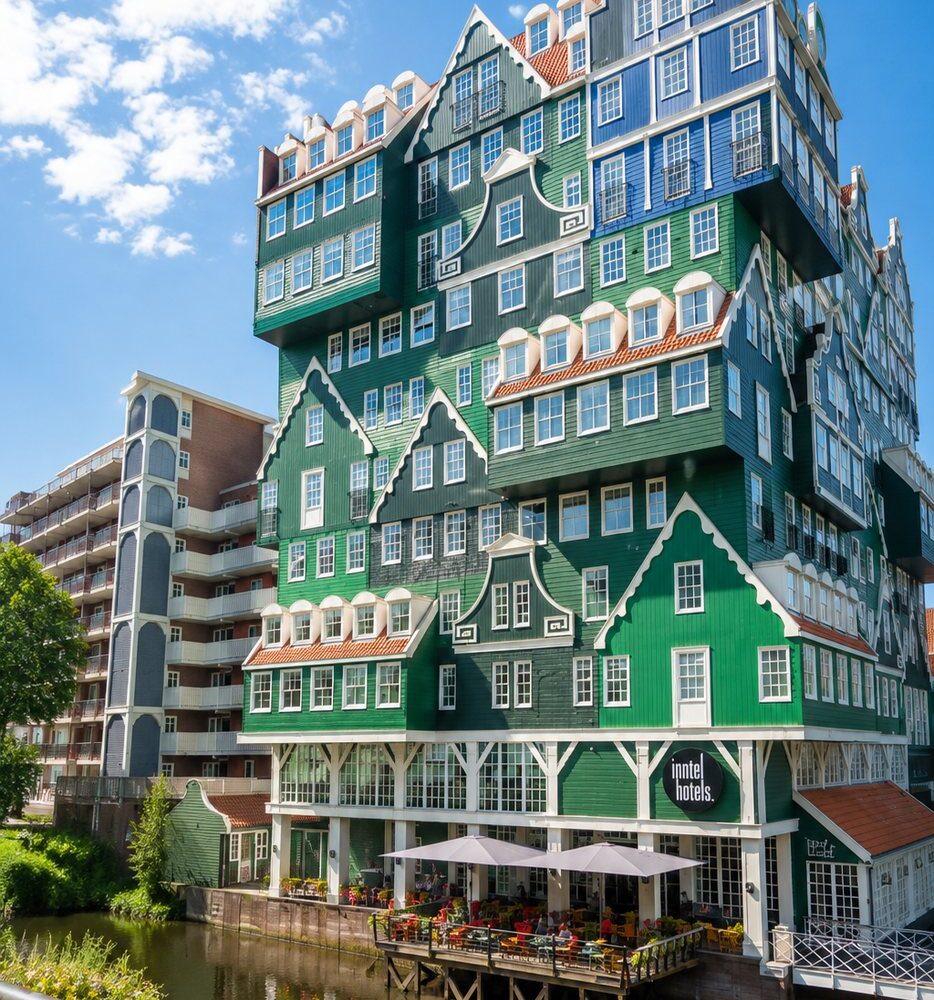
Zaandam, 10 km north of Amsterdam, is where I live, and the parking situation there is genuinely much cheaper than central Amsterdam. The Inverdan shopping district near the station has a large covered lot, and the streets around the station zone have metered spaces that are cheap by Amsterdam standards. A direct intercity train runs to Amsterdam Centraal in about 12 minutes and costs roughly €3-4 single. The station area has multiple parking facilities; check current rates on arrival as these change periodically.
Haarlem Station: The Western Approach
If you’re approaching from the west or south-west, Haarlem station parking follows a similar logic — paid parking at much lower Amsterdam rates, then a direct 17-minute train to Amsterdam Centraal. Haarlem itself is worth visiting in its own right, making this an option that can fold naturally into your day rather than just being a logistical workaround.
Free Street Parking: Do Not Plan Around It
Parking zones and tariffs change, so a street that an old blog post describes as free may now be paid or permit-only. Treat any genuinely free space as an exception you verify from the signs and the city’s current parking map, not as a reliable visitor strategy.
When Free Parking in a Surrounding Town Makes Sense
If you’re spending a day at Zaanse Schans, Volendam, Haarlem, or another destination rather than Amsterdam itself, parking in that destination’s own lower-cost facilities (or genuine free spots where available) and skipping Amsterdam parking entirely is often the best approach — see the individual parking guides for each destination.
Free parking and cheap parking are different questions
A free parking space is not automatically a cheaper day out once the onward train or bus fare, the length of the walk and the risk of a restriction are considered. Amsterdam’s official P+R facilities are generally paid at a reduced rate when the visitor follows the qualifying transport and payment rules. They should not be advertised as free. Some locations outside the city offer free Park & Ride, but that does not mean every nearby railway-station garage is free or that leaving a car on a residential street is permitted. A realistic comparison should include the parking cost for your actual arrival time, return tickets for everyone in your party and the inconvenience of a transfer. For a family, two adults and several children may compare differently from one traveller. Start with the City of Amsterdam’s current P+R information rather than an online map labelled “free parking” that may have been posted years ago.
How the official Amsterdam P+R discount actually works
The municipality currently states a reduced P+R rate of €13 for the first 24 hours when arriving on weekdays before 10:00, and €6 per 24 hours after that or when arriving later, at weekends or on public holidays. These figures describe the published scheme at the time of review; check the linked official page again before using them. The discount requires an eligible journey to and from the city centre and a qualifying return-ticket or payment method. A contactless bank card or phone is not accepted for the discount at most P+R facilities; Sloterdijk has specific exceptions. Your final check-in or transfer must satisfy the central-zone rule, and you must pay within the permitted period after the return journey. If you ignore any of those conditions, you may owe the ordinary parking fee. Public transport is not included in the parking price.
Choose the entrance and transport mode before driving
Amsterdam’s P+R sites are not identical. Some have different height limits, event closures, maximum stays or routes into the centre. A driver heading to Zeeburg should not follow old advice that recommends the same metro link as a different parking location; check the operator’s current routes. If you have a roof box or camper, verify the entrance height and vehicle rules. If you want to leave the car for several nights, note that most municipal P+R facilities cap reduced-rate stays at 96 hours, while P+R RAI has a shorter limit. The city lists restrictions and real-time availability on its own website. Check those before entering a car park because a full facility or event closure may require a different approach. The cheapest option on paper is not useful when your car cannot legally enter or the chosen service no longer runs.
When a neighbouring town is the more practical choice
Parking in Zaandam or Haarlem can work if your day’s route naturally approaches from that direction, but you should calculate the full journey rather than assuming any station car park is free. Verify the garage’s current hourly or daily tariff, opening rules and distance to the station. Then check NS fares and the last comfortable return train. This alternative may suit visitors who plan to spend time in the town itself before continuing to Amsterdam; it is less attractive if it adds an unnecessary detour at the start and end of a short visit. Do not direct travellers to park on residential streets by searching for an unregulated zone. Parking signs, local permits and environmental restrictions can change independently of online guide updates. A published suggestion is no substitute for the sign and payment system at the actual location.
Four worked decision examples
If you are staying in Amsterdam and do not need the car, ask your accommodation about parking before arrival and compare the combined cost of leaving the vehicle there against moving it. If you are driving in for a few hours, check whether an official P+R and return transport fit your schedule. If you have a large family with luggage, compare the full-group public transport cost and walking distance to the hotel before choosing a distant car park. If you are visiting an event near the ArenA, read the relevant P+R closure notice: major events can make a normally useful location unavailable for new arrivals. For each scenario, write down the entrance time, expected exit time, number of passengers, ticket type and the exact car park; only then can the apparent saving be assessed fairly.
Before you leave your car: a quick checklist
Confirm the chosen car park is open, note the exit deadline, photograph the parking level or location, and read the P+R discount instructions before boarding transport. Keep the parking ticket where required, use the eligible transport product and check which part of the city you must return from to qualify. Do not pay the full standard parking rate in advance if the official process requires scanning the qualifying return journey at the pay station; follow the steps at that location. The city’s official P+R guide should be treated as the final source of prices and rules. For the onward journey see Amsterdam public transport explained; if you are weighing a day trip from a nearby town, consult where to stay in Amsterdam for the trade-off between location and transport.
🙋 Frequently Asked Questions (FAQ)
Is there free parking near Amsterdam?
Genuinely free parking in or immediately adjacent to Amsterdam is very limited. The most practical low-cost options are the official Park & Ride facilities on the city’s edges, which are inexpensive and connect to public transport into the centre.
What is the cheapest way to park near Amsterdam?
The official Park & Ride (P+R) locations on the city’s edge are usually the cheapest formal Amsterdam option. Public transport is paid separately, and you must use an accepted ticket and follow the return check-in rules to receive the reduced parking rate.
Can you park in Zaandam and take the train to Amsterdam?
Yes. Parking near Zaandam station is generally paid, so compare the current garage rate plus train tickets with the Amsterdam P+R total before choosing. Direct trains to Amsterdam Centraal take about 12 minutes.
Does Amsterdam have any free parking garages?
No. Amsterdam does not offer free city-centre parking garages for general visitors. The P+R facilities are the lowest-cost official option.
Final Recommendation
Plan Your Parking
🅿️ Amsterdam P+R rules and availability: City of Amsterdam P+R
🅿️ Real-time parking: parkmobile.nl
🚂 Train & transit tickets: ns.nl
🏨 Compare accommodation prices: Booking.com
🗺️ Organised day trips & tours: GetYourGuide
🌍 Spanish-language tours & activities: Civitatis
Sources: City of Amsterdam P+R rules and locations| Information checked July 2026 — rates, availability and ticket rules may change; always confirm before travel