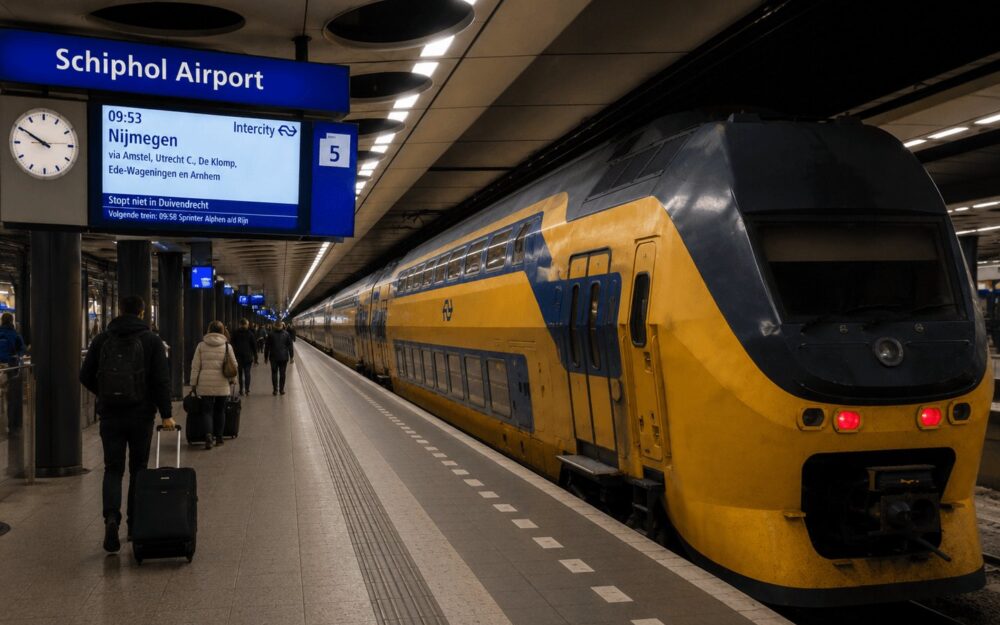

Schiphol’s location — practically inside Amsterdam itself, just 17 minutes from Centraal Station by train — makes it one of the best layover airports in Europe for a quick city taste.
The most important warning I can give: do not attempt Zaanse Schans on anything under a 5-hour layover. I made exactly this mistake with a visiting friend who had a 4-hour connection. We arrived at Zaanse Schans with 90 minutes to spare, ran through the village, caught the return train, and reached Schiphol with 35 minutes left. His gate had already closed. He made the flight by roughly six people’s worth of boarding time. We have never discussed that afternoon calmly since.
“You can do it” and “you should do it” aren’t the same thing at every layover length, so here’s an honest breakdown by hour count.
Layover Time Budget: What Actually Eats Your Hours
| Step | Time Needed |
|---|---|
| Deplaning, immigration (if applicable), baggage logistics | 20–45 min |
| Luggage storage (if checked through, skip this) | 10–15 min |
| Train to Amsterdam Centraal | 17 min + walk to platform |
| Train back to Schiphol | 17 min + walk from platform |
| Security re-screening + walk to gate | 30–60 min |
| Total overhead, before any sightseeing | ≈ 2–3 hours |
That overhead is the key number most layover advice skips. It means a “6-hour layover” really gives you roughly 3-4 hours of actual time in the city, not 6.
4-Hour Layover: Stay at the Airport
With the overhead above, a 4-hour layover leaves you essentially no safe margin for sightseeing once you account for any delay risk. Instead, Schiphol itself has more to offer than most airports: an airside outpost of the Rijksmuseum displaying real artworks (no security exit needed), lounges, and a reasonable range of restaurants. Use this time to rest rather than rush.
6-Hour Layover: A Tight But Doable Taste
Hour 0: Deplane, clear immigration if needed, store any luggage you’re carrying.
Hour 0:20: Board the train to Amsterdam Centraal.
Hour 0:45 – 3:00: Walk the Damrak toward Dam Square, see the Royal Palace exterior, and walk a loop through the Nine Streets — purely a walking tour, no museum queue risk.
Hour 3:00: Head back to Centraal Station, allowing buffer for any tram delay.
Hour 3:20: Train back to Schiphol.
Hour 3:45 onward: Reclaim luggage, security, gate — built-in buffer for the unexpected.

A quiet stretch of one of Amsterdam’s narrow centre streets.
8-Hour Layover: Room for One Real Activity
Eight hours opens up a genuine choice: either a single major museum visit (with a pre-booked timed slot to avoid queue risk) or a relaxed canal cruise plus a walk through the centre. Pick one, not both — trying to cram in two activities on an 8-hour layover is where most people end up rushing back to the airport stressed.
12-Hour Layover: A Real Half-Day
At 12 hours, the math finally gives you breathing room — roughly 8-9 hours of actual city time after overhead. This is enough for a museum visit, a relaxed lunch, and a walk through one or two neighbourhoods, without the constant clock-watching of shorter layovers.
Morning: Train into the city, head straight to a pre-booked museum slot (Rijksmuseum or Van Gogh Museum).
Midday: Lunch near the Museum Quarter, then a walk through Vondelpark if the weather’s good.
Afternoon: A canal cruise or a walk through the Jordaan, finishing with a coffee before heading back.
Evening: Train back to Schiphol with comfortable buffer before security and your next flight.
The temptation with any layover is to treat the available hours as a free bonus city trip, and to plan accordingly — squeezing in a museum, a meal, and a walk because the math on paper seems to allow it. In practice, layovers carry a kind of hidden tax that the hour count alone doesn’t capture: the psychological cost of constantly checking the time, worrying about delays, and never fully relaxing into whatever you’re doing because part of your brain is doing departure-time math. This is exactly why the overhead calculation above matters more than it might seem — it’s not just about whether you’d technically make it back in time, but about whether you’ll actually enjoy the time you spend in the city rather than spending it anxious.
A useful mental shortcut: if your planned activity would feel rushed or disappointing on its own merits — a half-visited museum, a walk cut short by the need to head back — it’s probably not worth attempting on this particular layover. Better to do one thing properly, even something modest like a slow coffee at a canal-side café, than to attempt a longer list and end up enjoying none of it while watching the clock.

A classic Amsterdam canal scene — bikes, water, and fresh spring leaves.
Practical Logistics to Check Before You Leave the Airport
- Visa and immigration status: If your layover requires clearing immigration to enter the Schengen area, confirm your visa situation allows this before planning a city visit.
- Luggage: If your bags aren’t checked through to your final destination, you’ll need to collect and store them — budget extra time for this.
- Re-entry security: Always re-screen through security on return, even though you started in the same airport. Budget conservatively, especially during peak hours.
- Weather: Check the forecast — a rainy layover may shift your plan toward indoor options like a museum rather than a walking loop.
Layover Length Comparison at a Glance
| Layover Length | Real City Time | Recommended Activity |
|---|---|---|
| Under 4 hours | None — stay at airport | Schiphol’s own lounges, shops, airside museum annex |
| 6 hours | ≈ 2–2.5 hours | Walking loop only, no museum or sit-down meal |
| 8 hours | ≈ 4–5 hours | One museum OR one canal cruise + walk |
| 12 hours | ≈ 8–9 hours | Museum + lunch + park or neighbourhood walk |

A quiet, tree-shaded corner away from the busier parts of the park.
Seasonal Considerations for Layovers
Winter layovers come with a real constraint most travelers overlook: short daylight hours. With sunset before 5 PM in December and January, an evening layover may offer little outdoor visibility even with enough time on paper. Summer layovers, by contrast, benefit from daylight well past 9 PM, making an evening city dash far more visually rewarding.
What If You Have an Overnight Layover?
For layovers of 18-24 hours or more, it’s worth considering a short hotel stay in the city rather than treating it purely as a “layover activity” problem. At that length, the math shifts entirely — you have a genuine mini-trip on your hands, with time for a full day of sightseeing plus a proper night’s sleep before your next flight, rather than trying to squeeze activities around airport logistics.
If you do book a hotel for an overnight layover, staying close to Centraal Station rather than deeper into the city is usually the more practical choice. It minimizes the transfer overhead on both ends of an already tiring travel day, and most of the central sightseeing — the canal ring, the Nine Streets, a museum or two — is still comfortably within walking or short tram distance from that base. Save the neighbourhoods further from the centre for a future trip with more breathing room rather than trying to fit them around an already-tight layover schedule.
Run the clock backwards from your boarding time
Do not start with the duration printed between the two flight departure times. Find the boarding time of your onward flight, the gate-closing rule, any baggage collection or recheck obligation, passport-control requirements and the time you intend to be back inside Schiphol. Only then calculate the usable city window. A transfer involving a change of airline or separate tickets may involve collecting luggage, checking in again and passing security; an airside connection is a different journey. Immigration requirements depend on nationality and itinerary, and a ticket does not itself guarantee that you may enter the Netherlands.
As a practical example rather than a promise: a traveller with seven hours between flights who reserves two hours for the return airport process, one hour for arrival formalities, an hour of transport and a contingency buffer does not have seven hours in Amsterdam. There may be time for a canal-side walk near Centraal Station, but not a museum visit with a strict admission slot plus a lengthy lunch. If your inbound flight arrives late, recalculate from scratch. An already-booked museum ticket is less important than a valid onward boarding pass.
What to do if your plan stops working
If the arrival queue is unusually long, stay at the airport or replace the city centre with a terminal meal. If a rail disruption occurs after you reach Amsterdam, check the railway operator’s live advice immediately; a taxi can also be delayed in road traffic and should not be treated as a guaranteed rescue. Share the revised plan with your travel partner before you split up for sightseeing. Keep passports and necessary medication with you, and confirm whether luggage storage accepts your bag dimensions and how long reclaiming it may take.
For a short visit, limit your route to streets around the station that you can retrace without a complicated transfer. Visitors wanting a longer itinerary can use our city walking guide, but should select only one compact section. Check Schiphol’s live passenger guidance and NS journey information on the day of travel.
🙋 Frequently Asked Questions (FAQ)
Is a 4-hour layover enough to visit Amsterdam?
A 4-hour layover is too tight to safely leave the airport for the city, given security, train time, immigration if applicable, and the risk of delays. It’s better spent exploring Schiphol’s own facilities, including its airside museum annex and lounges.
How many hours layover do you need to visit Amsterdam city centre?
A minimum of 6 hours is recommended, and 8 or more is far more comfortable, once you account for immigration (if leaving and re-entering a border), the 17-minute train each way, security re-screening, and a buffer before your next flight.
Can I store my luggage at Schiphol during a layover?
Yes, Schiphol has staffed luggage storage facilities in the terminal where you can store bags for a fee for several hours or longer, which is worth doing before heading into the city so you’re not dragging suitcases around Amsterdam.
What should I do if my layover flight gets delayed while I’m in the city?
Monitor your airline’s app for real-time updates, and always build in at least 90 minutes of buffer before your scheduled boarding time when planning how late to start your return to the airport.
Is it better to stay at the airport or visit the city on a short layover?
For anything under 6 hours, staying at the airport is the safer choice — the risk of a delay disrupting your return outweighs the limited time you’d actually get in the city.
Final Recommendation
If you ever turn that layover into a multi-day stop, the same Schiphol-to-Centraal train line extends naturally into a day trip north to Zaanse Schans, just a further 17 minutes up the same regional network.
Plan Your Layover
🧳 Schiphol luggage storage: schiphol.nl
🖼️ Museum tickets: rijksmuseum.nl
🚂 Train & transit tickets: ns.nl
🏨 Compare accommodation prices: Booking.com
🗺️ Organised day trips & tours: GetYourGuide
🌍 Spanish-language tours & activities: Civitatis
Sources: schiphol.nl | ns.nl | Personal observation — Noord-Holland | Details can change; check the linked official sources before booking