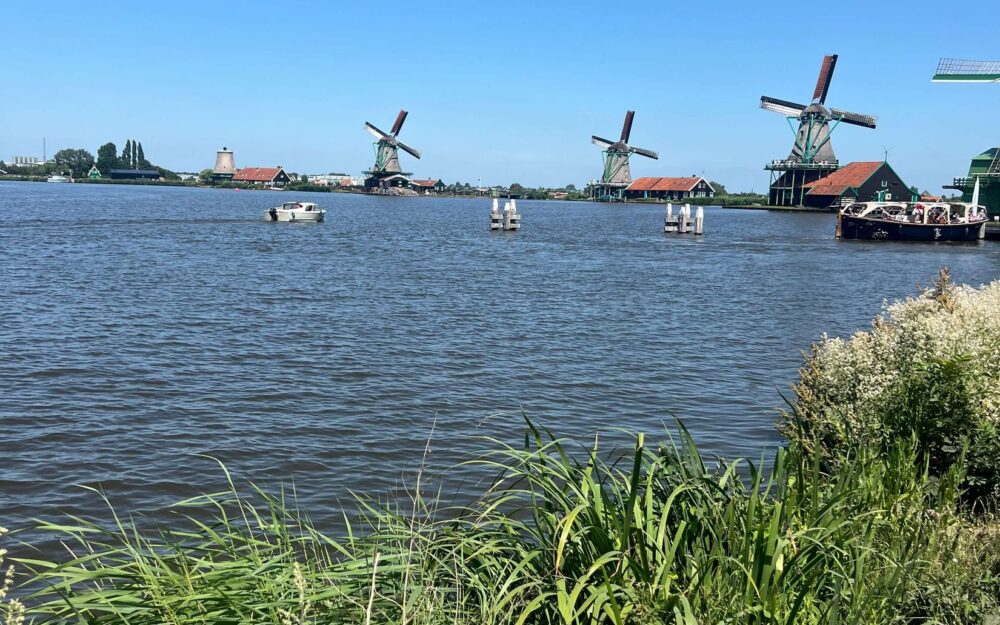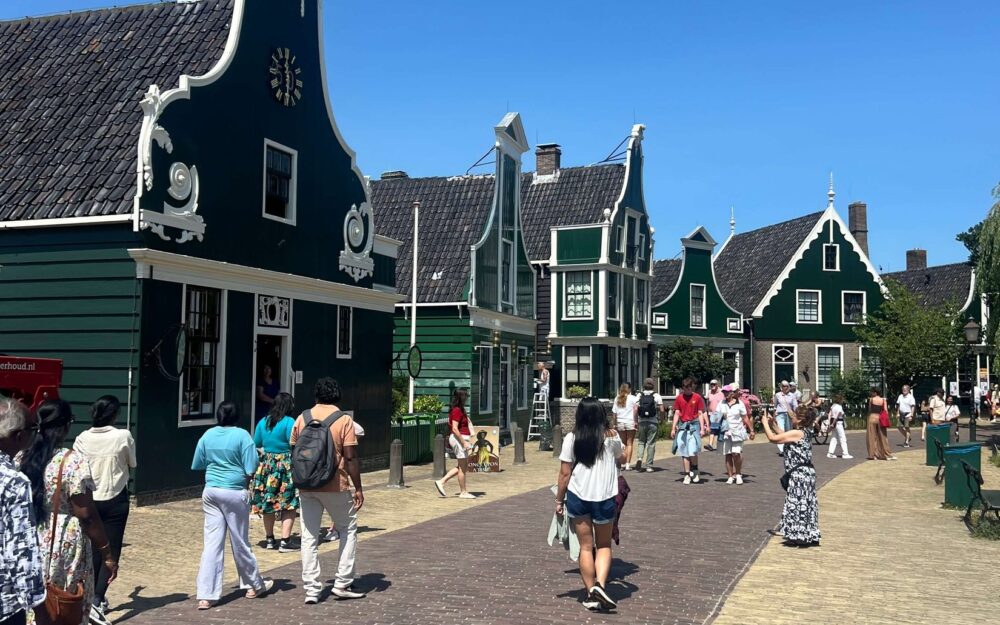

Getting from Amsterdam to Zaanse Schans is straightforward, but online comparisons often make one basic mistake: they compare only the minutes spent inside a train or car. They ignore the walk to the station, parking queues, the route from Zaandijk station, Amsterdam traffic and the fact that the arrival itself can be one of the best parts of the visit.
I live in Zaanstad and have made the journey by train, car and bicycle. There is no single best option for everyone. The train is efficient and gives you the historic Zaandijk approach. A car provides flexibility when travelling with my son or continuing toward the coast. Cycling turns the Zaan landscape into part of the day. This guide compares complete journeys rather than choosing one winner from a timetable.
Amsterdam to Zaanse Schans Transport Comparison
| Option | Best for | Main advantage | Main drawback |
|---|---|---|---|
| Train | Solo travellers, couples and central-Amsterdam stays | Fast, frequent planning and a scenic final walk | Station-to-site walk and possible crowding |
| Bus | Visitors starting near the correct departure corridor | Can reduce walking and offer a direct road route | Traffic and route changes |
| Car | Families, groups and multi-stop North Holland days | Door-to-door flexibility and storage | Parking cost, traffic and local restrictions |
| Bicycle | Confident cyclists who want a full outdoor experience | The route and landscape become part of the day | Weather, distance and cycling confidence |
| Organised tour | Visitors wanting transport plus explanation | No timetable planning and easy combinations | Fixed pace and less control over arrival time |
For drivers, use the official visitor parking area and the parking operator’s current terms. A parking charge is separate from attraction admission. Do not direct readers to residential streets on the assumption that parking is free or permitted there. Visitors with limited mobility should check the distance from their arrival point to the attractions they specifically want to enter, since historic interiors have separate access restrictions.
A direct bus can be practical for visitors whose accommodation is near its departure point or who prefer fewer walking transfers. Compare the actual stop location, frequency and the return journey on your own date; do not assume that a route number, fare or last departure shown in an old travel article is still current. With young children, a bus that stops near the museum may save a final walk; for visitors who enjoy historic streets, the train approach through Zaandijk may be part of the appeal.
For a train journey, the practical sequence is: reach Amsterdam Centraal or another suitable departure station, board a service stopping at Zaandijk Zaanse Schans, leave the station, walk through Zaandijk and cross the Julianabrug into the heritage area. Official visitor information places the station walk at about fifteen minutes, but that estimate does not include pauses for photographs, mobility needs or navigating the station. Check the live platform and train route through NS, and check combined bus-and-train journeys with 9292.
Calculate the Whole Journey, Not Just the Train Ride
Amsterdam to Zaanse Schans by Train
The train is my default recommendation for most visitors based in central Amsterdam. Search for a journey from Amsterdam Centraal to Zaandijk Zaanse Schans. The rail portion is short, but budget additional time to reach Amsterdam Centraal, find the platform and walk from Zaandijk station to the village.
Use the official NS journey planner on the day of travel. Engineering work, platform changes and service patterns can alter what an old article describes. Contactless payment may be convenient for individual journeys, but every traveller must follow the current check-in and check-out rules.
The walk from Zaandijk Zaanse Schans station
The final walk is not an inconvenience to eliminate. It takes you through Zaandijk, past local streets and toward the Julianabrug. From the bridge, the River Zaan and windmill line open in front of you. Visitors arriving at the official car park do not receive this exact sequence.
Follow current signs and a map rather than simply following the largest group. The station name makes the destination sound as if it sits outside the gate, but you still need a meaningful walk. Travellers with reduced mobility, very heavy luggage or a child who has already spent the morning walking should include that in the decision.
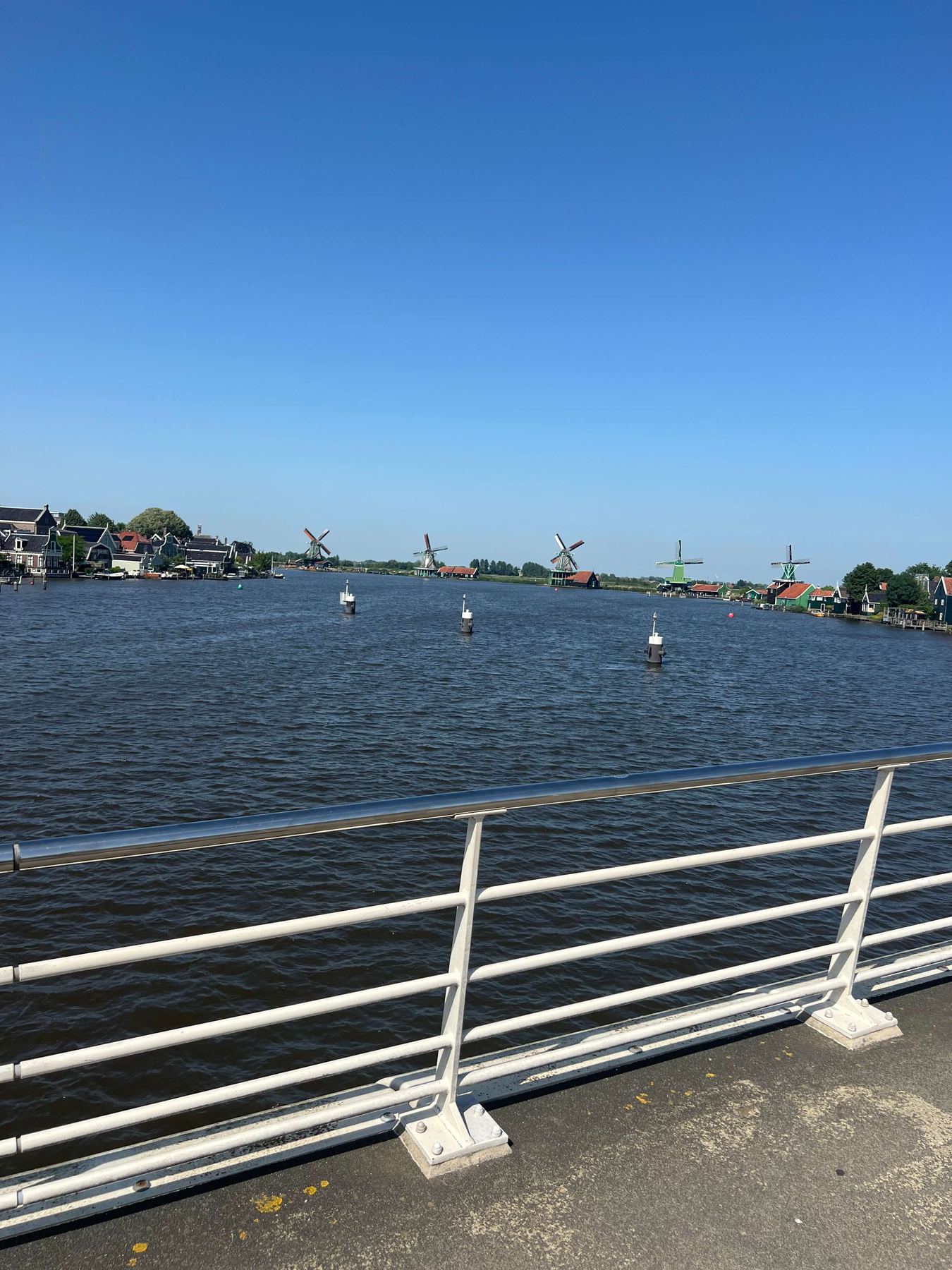
The Julianabrug view is why I consider the station walk part of the visit rather than wasted transfer time.
Amsterdam to Zaanse Schans train price
Do not hard-code an old return fare into your budget. Search the live journey in NS for the current adult fare and check whether discounts, children’s products or group arrangements apply to you. Compare the total for every traveller against official parking, fuel and any rental-car costs.
For one traveller, the train is often the obvious financial choice. For a family or group already using a car, the calculation can change. Convenience also has value: avoiding Amsterdam road traffic may matter more than a small difference in euros.
Who should not automatically choose the train?
- Visitors with mobility needs that make the station walk unsuitable
- Families carrying extensive child equipment
- Groups already renting a car for several regional stops
- Travellers starting far from a useful Amsterdam station
- Anyone visiting very early or late when a live journey planner shows a poor connection
Amsterdam to Zaanse Schans by Bus
A regional bus can be convenient, particularly when your Amsterdam accommodation is close to the relevant departure point. Visitors frequently search for bus 391 or an express connection, but route numbers, stopping patterns and departure locations can change. Use 9292 or the current regional operator’s planner rather than relying on a screenshot from an older guide.
The bus advantage is the potential to arrive closer to the main visitor area with less walking. The disadvantage is road traffic. A timetable time is not a guarantee during a busy Amsterdam morning or a congested summer weekend.
Train or bus?
Choose by your actual starting point. If you are already near Amsterdam Centraal and comfortable walking, the train is usually simple. If reaching the train requires a long detour but a suitable bus stops near your hotel, the bus may win. Search the entire door-to-door journey, not only Amsterdam Centraal to Zaanse Schans.
For the return, save the current stop location and route before exploring. Historic areas are not the moment to discover that the bus leaves from the opposite side of a road or a temporary stop.
Driving from Amsterdam to Zaanse Schans
Driving makes sense when Zaanse Schans is part of a larger North Holland day, when several people share the vehicle or when you need the storage and flexibility a car provides. It can also be easier with a young child, although that depends on Amsterdam parking at your starting accommodation.
The official visitor parking area is the safest default because its purpose and access are clear. Check the official Zaanse Schans site for the current address, rate and any vehicle-specific conditions. Prices and access models can change, especially as the destination manages large visitor numbers.
Do not plan around residential “free parking”
Older travel articles—including earlier versions of this guide—sometimes recommended streets in Zaandijk as a dependable free-parking solution. That advice is too broad. Parking zones, blue-disc rules, local restrictions and enforcement can change, and sending large numbers of tourists into residential streets is not responsible local guidance.
If you park outside the official area, verify every sign and current municipal rule at the exact space. Never treat “it was free on my last visit” as permission. The official lot costs more but removes much of that uncertainty.
Amsterdam traffic and total journey time
A car can look fast on an empty map. In practice, leaving central Amsterdam, reaching the main road, encountering tunnel or ring-road traffic and parking at the destination add uncertainty. If you are renting a car only for Zaanse Schans, the train is usually less stressful.
If you already have a car and plan Volendam, Marken, Edam, the coast or another regional destination afterwards, the flexibility becomes more valuable. Build margin into the day rather than scheduling an attraction entry immediately after the estimated driving time.
Cycling from Amsterdam to Zaanse Schans
Cycling is the most immersive option. Instead of treating Zaanse Schans as an isolated attraction, you experience the changing urban and industrial landscape between Amsterdam and the Zaan region. For a confident cyclist in good weather, that can be the best version of the trip.
It is not the best choice merely because the Netherlands is famous for bicycles. Distance, wind, rain, unfamiliar intersections and returning after several hours of walking all matter. Check the exact route, bicycle condition, battery range for an e-bike and secure parking at your destination.
Who should cycle?
- Regular cyclists comfortable with shared Dutch cycle traffic
- Visitors who enjoy the journey as much as the attraction
- Travellers with enough time and a flexible weather plan
- E-bike users who understand the rental’s range and return conditions
Do not attempt a long unfamiliar ride with a child simply because the destination is family-friendly. Family cycling equipment, seats, trailers and traffic confidence need to be appropriate for the full route.
Arriving on an Organised Tour
A tour removes the transport decision and may combine Zaanse Schans with Volendam, Marken, Edam, Keukenhof or Giethoorn. That convenience is valuable when regional logistics would consume your limited holiday time.
The cost is control. Tours arrive on fixed schedules and may offer much less time at Zaanse Schans than the total product duration suggests. Check group size, time on site, included attraction entries and whether “visit a windmill” means entering or only photographing it. Our Zaanse Schans tour comparison explains the trade-offs.
Best Option for Families
For a family staying near Amsterdam Centraal with children who walk comfortably, the train remains an excellent choice. The journey is short, there is no parking search and the bridge approach adds interest. A stroller or tired preschooler makes the station walk more relevant, not automatically impossible.
A car becomes more practical for families who need spare clothing or want to combine Zaanse Schans with other places in North Holland. For a focused visit starting near central Amsterdam, compare that flexibility with the cost of parking, traffic and the walking distance after arrival. See the family guide for a realistic visit plan.
Best Option for a Group
Three or four adults should compare the live total rather than assuming the train or car is cheaper. Add:
- All rail or bus fares
- Parking and fuel
- Rental and insurance if relevant
- Time spent collecting or returning a rental car
- Whether the vehicle enables another destination
A car already in your possession can be efficient. Renting one specifically for an easily accessible half-day attraction often is not.
Getting from Schiphol to Zaanse Schans
From Schiphol Airport, public transport normally involves rail travel with a change rather than one simple tourist shuttle. Search the complete live journey in NS or 9292 using your arrival time. Leave a generous margin after a flight: passport control, baggage and delays make a tightly booked attraction or tour risky.
A taxi or pre-booked transfer becomes more competitive for a group with luggage, but Zaanse Schans is not an ideal place to drag suitcases through historic paths. If possible, leave luggage at your accommodation or a suitable storage service before visiting.
Return Journey to Amsterdam
Check the return before you lose mobile signal, battery or concentration. Save the train station name exactly: Zaandijk Zaanse Schans. If using the bus, confirm the return stop. If cycling, preserve enough daylight and energy.
The walk back to the station can feel longer after several hours inside mills and museums. Families should not spend every last reserve of energy at the far end of the windmill line.
Frequently Asked Questions
What is the nearest train station to Zaanse Schans?
Zaandijk Zaanse Schans is the usual station for visitors. It is not directly at the entrance, so include the signed walk through Zaandijk and across the bridge.
How long is the train from Amsterdam to Zaanse Schans?
The rail portion is short, but exact journeys vary. Use NS for your date and add time for reaching Amsterdam Centraal, waiting and walking from the station.
Can I take bus 391?
Route numbers and departure patterns can change. Search your live journey in 9292 and confirm the current operator, stop and service rather than relying on the number alone.
Is parking at Zaanse Schans free?
Do not assume so. Check the official visitor parking price. Any alternative street space must be verified from current signs and municipal rules.
Can I cycle from Amsterdam?
Yes, if you are comfortable with the distance, route, traffic and weather. It is a rewarding journey but a larger commitment than a short leisure ride inside a park.
My Recommended Choice
Take the train when Zaanse Schans is your only destination and you are starting near central Amsterdam. Use a car when several people are travelling together and the windmills are part of a broader North Holland route. Choose the bus only after comparing your actual door-to-door connection. Cycle because you want the ride, not because someone said every Dutch trip should involve a bicycle.
Whichever method you choose, protect the arrival. Coming through Zaandijk and seeing the windmills appear from the Julianabrug is one of the best transitions in the region. Transport is not merely the problem before the visit; planned well, it becomes its opening chapter.
Check Live Travel Information
Trains and current fares: NS
Door-to-door public transport: 9292
Official parking and visitor information: Zaanse Schans
Plan what to do after arrival: complete Zaanse Schans travel guide
Sources: NS · 9292 · official Zaanse Schans visitor information · Municipality of Zaanstad parking information · Personal local travel experience. Verify live routes, fares and restrictions before departure.