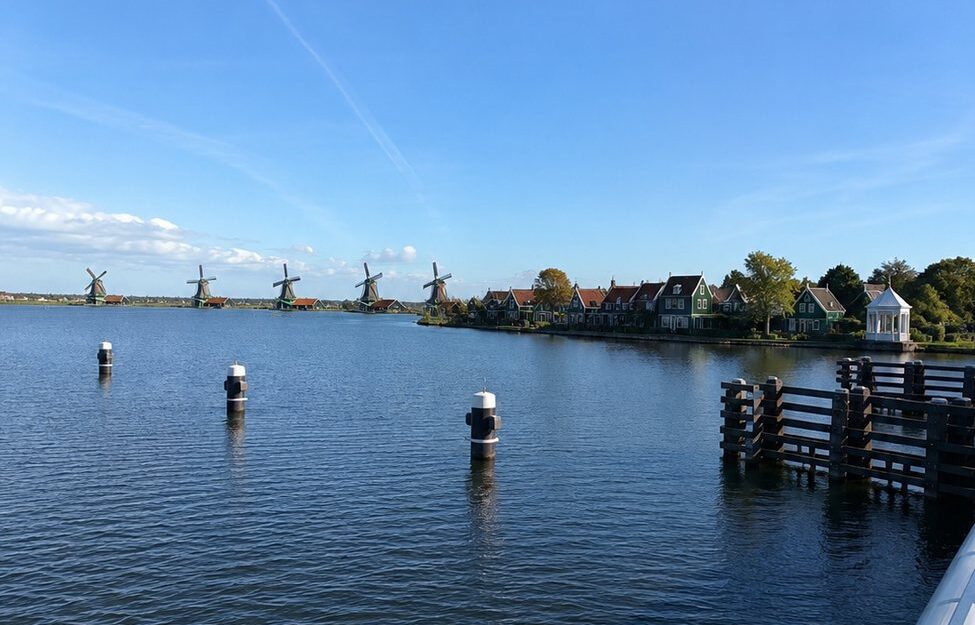

The Wadden Sea is one of the largest unbroken tidal flat systems in the world — a shallow, wind-swept body of water between the Dutch, German and Danish coasts that supports one of the most significant concentrations of migratory birds and marine life in Europe. The five Dutch islands that run along its southern edge are not beach resorts, though they have beaches. They are not theme parks, though Texel in summer can feel like one. They are islands — with the particular quality of remoteness, simplicity and elemental weather that the word implies.
Standing on the North Sea dike of Schiermonnikoog in autumn with the wind coming horizontal off the water, or cycling across Terschelling through pine forest to a beach where no one else is swimming, or watching the tide drain the Wadden Sea flats until they become a vast, mirror-flat landscape stretching to the horizon — these are experiences that belong to no other part of the Netherlands and no other country in quite the same way.
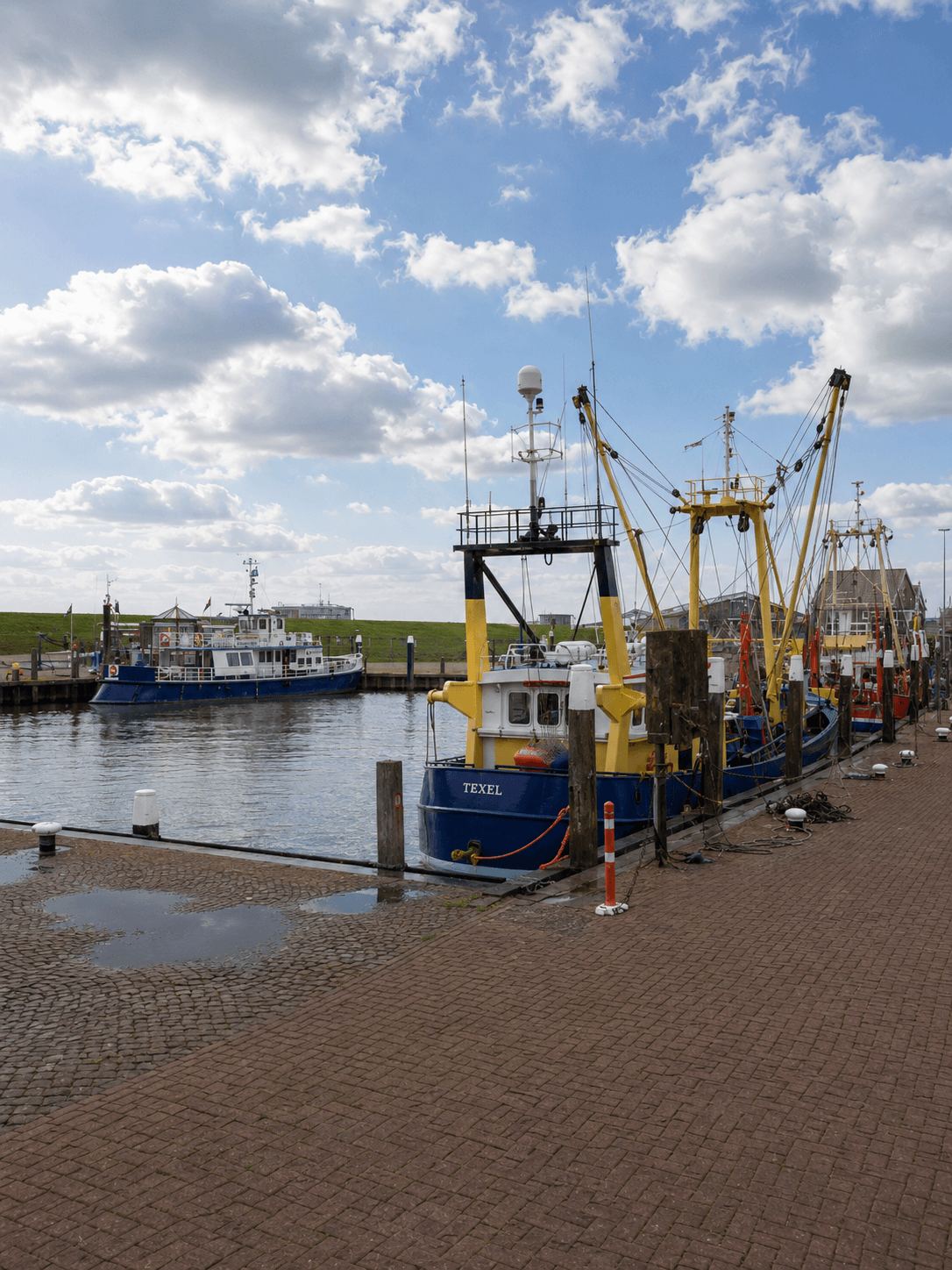
A working fishing trawler moored in a Wadden Sea harbour on Texel.
The Five Islands: Quick Comparison
| Island | Ferry From | Crossing Time | Cars Allowed? | Best For |
|---|---|---|---|---|
| Texel | Den Helder | 20 min | Yes | Day trips, families, seals, cycling, beaches |
| Vlieland | Harlingen | 90 min | No (residents only) | Silence, dunes, the most remote feel of the five |
| Terschelling | Harlingen | 90 min (fast: 45 min) | Yes (limited) | Cycling, Oerol festival, varied landscape, nightlife |
| Ameland | Holwerd | 45 min | Yes | Families, lighthouse, horse-drawn carriage rescue tradition |
| Schiermonnikoog | Lauwersoog | 45 min | No (residents only) | Wilderness, silence, the widest beach in the Netherlands |
How to Get to the Wadden Islands
All five islands are reached by ferry from the mainland. The ferry companies vary by island, and the crossings vary considerably in length and character. Booking ahead is essential in summer — particularly if you are bringing a car, where space is limited and sells out weeks in advance.
- Texel: TESO ferry from Den Helder harbor (Pontweg 1, Den Helder). Crossing: 20 minutes. Frequent departures throughout the day. Check current passenger and vehicle fares on the TESO website before travelling. Den Helder is 75 minutes from Amsterdam Centraal by direct Intercity train.
- Vlieland and Terschelling: Rederij Doeksen from Harlingen harbor. Harlingen is approximately 2 hours from Amsterdam by train (via Leeuwarden). Vlieland crossing: 90 minutes. Terschelling crossing: 90 minutes (fast catamaran: 45 minutes). Book at rederijdoeksen.nl.
- Ameland: Wagenborg Passagiers from Holwerd. Holwerd is reached by regional bus from Leeuwarden (30 minutes by train from the main line). Crossing: 45 minutes. Book at wpd.nl.
- Schiermonnikoog: Wagenborg Passagiers from Lauwersoog. Lauwersoog is reached by regional bus from Groningen or Leeuwarden. Crossing: 45 minutes. No private cars on the island. Book at wpd.nl.
Texel: The Largest and Most Accessible Island
Texel is the obvious first Wadden Island for most visitors from Amsterdam or the rest of Noord-Holland — 20 minutes by ferry from Den Helder, reachable in under two hours from the capital, and large enough (25 kilometers long, 9 kilometers wide) to offer a genuinely varied day without feeling compressed.
What Makes Texel Different
Seven distinct villages, each with its own character. The Ecomare seal rescue center — where injured and orphaned harbor and grey seals are rehabilitated and released — is the most visited attraction on the island and consistently delivers for families and non-families alike: the public feeding sessions at 11:00 AM and 3:30 PM draw crowds, but the quality of close-range contact with the animals is genuinely exceptional.
De Slufter nature reserve is the island’s most dramatic landscape — a gap in the dunes where the North Sea floods the valley freely during high tide, creating a salt marsh covered in sea lavender that turns the reserve a pale purple in late summer. Walk up the viewing steps and look out across the tidal creeks winding through the sand.
The Texel lighthouse (Vuurtoren Texel) at De Cocksdorp marks the northernmost tip of the island, where the North Sea meets the Wadden Sea. The wide beach surrounding it is one of the most dramatically positioned stretches of sand in the Netherlands. On a clear day you can see the neighboring island of Vlieland across the water.
Getting Around Texel
The most enjoyable way to see the island is by e-bike. Texel has an excellent network of dedicated cycling paths that cover the full length and width of the island, including routes through the dune landscape that are inaccessible by car. Bike rental is available at the ferry harbor (‘t Horntje) and in Den Burg, the island’s main town. A full north-south loop covers approximately 40 kilometers and takes a comfortable day.
If you are bringing a car, note that the Texelhopper on-demand bus service connects the villages but requires advance booking via the app at least 30 minutes before travel — it does not operate as a conventional bus route.

Sunset over the grassy dunes on Texel, one of the Dutch Wadden Islands.
Where to Eat on Texel
In Oudeschild harbor, Het Vispaleis serves fresh kibbeling (deep-fried white fish in garlic sauce) and traditional raw herring from the Wadden Sea catch — as close to eating at the source as this part of the Netherlands offers. For a proper lunch or dinner, the beach pavilions at De Koog — walk onto the sand and find a pavilion terrace, order a bowl of fish soup — are one of the most unself-conscious pleasures on the island.
The island-brewed Texels Skuumkoppe — a top-fermented dark wheat beer made with local barley — is worth seeking out at any café in Den Burg or De Koog. It has a rich, creamy, slightly sweet profile that improves after a day of North Sea cycling.
Vlieland: The Quietest Island
Vlieland is the smallest of the inhabited Dutch Wadden Islands and the most deliberately remote. Private cars are banned entirely — only residents may bring vehicles across. The single village, Oost-Vlieland, is compact, almost entirely white-painted, and arranged along one main street backed by dunes. The population of approximately 1,100 people lives in a place that receives tens of thousands of visitors every summer and manages, against the odds, to retain its particular quality of stillness.
What Vlieland offers that the other islands do not is the sensation of genuine removal. There are no traffic sounds. No car parks. No roundabouts. The soundscape is almost entirely natural — wind, birds, the distant North Sea — with the occasional bicycle bell as punctuation.
The Vliehors: Vlieland’s Military Landscape
The western tip of Vlieland — the Vliehors — is a former military firing range, now decommissioned and partially accessible to the public. It is an extraordinary landscape: a wide, flat spit of sand and low dune vegetation extending several kilometers into the sea, with the rusted remains of military infrastructure visible in the distance and the kind of emptiness that most of the Netherlands has long since lost. Access is restricted to certain hours and areas; check the current regulations at the Vlieland tourist office before cycling out there.
Vlieland is the island you go to when you want to hear nothing for a day. Standing on the beach at the northern tip in October, with the grey-green North Sea stretching to Denmark and not another person visible in either direction, is one of the more completely solitary experiences available in Western Europe without leaving the Netherlands.

A wide sandy beach and dune-side holiday park on Texel; the other Wadden Islands have their own distinct landscapes.
Terschelling: The Island With Everything
Terschelling is the longest of the Dutch Wadden Islands — approximately 30 kilometers from west to east — and the most varied in character. It has dense pine forests in the center, wide North Sea beaches on the north coast, tidal mudflats on the south, heather moorland in the east, and the most developed tourism infrastructure of any of the five islands without having lost the quality that makes island life different from the mainland.
The Oerol Festival
Every June, Terschelling hosts Oerol — one of the most unusual theater and arts festivals in Europe. For ten days, the entire island becomes the stage: performances take place in the dunes, on the beaches, in the pine forests, in the fields and on the water. International theater companies, dance groups, musicians and artists take over the landscape. Audiences cycle between locations, sometimes sitting on the sand, sometimes standing in a forest clearing, sometimes watching from a boat on the Wadden Sea.
Oerol is not simply a festival held on a beautiful island. It is a festival that makes the island itself the primary artistic medium. The relationship between performance and landscape is the point — a piece of theatre performed in a pine forest at dusk, with the wind moving through the trees behind the performers, is a fundamentally different experience from the same piece in a city theater. Book accommodation months in advance if you plan to attend; the island fills completely during festival week.
Cycling Terschelling
Terschelling has approximately 100 kilometers of marked cycling routes across its varied terrain — from the flat dike paths along the Wadden Sea coast to the forested central ridge, the heathland of de Hoge Berg in the east, and the dune valleys on the North Sea side. The complete east-west route from West-Terschelling to Hoorn takes approximately five hours by bike at a relaxed pace and covers more landscape variety per kilometer than almost any comparable cycle route in the Netherlands.
Ameland: The Family Island
Ameland is the most straightforwardly pleasant of the five islands — varied enough to justify several days, accessible enough for families with younger children, and genuine enough in its island character to feel categorically different from the mainland. Four villages. A lighthouse you can climb. A horse-drawn rescue carriage tradition that is genuinely unique in Europe.
The Hollum Lighthouse
The Ameland Lighthouse in Hollum was built in 1879 and is one of the tallest on the Dutch coast at 57 meters. Climbing to the top gives you the most complete visual understanding of the island’s geography available from any fixed point — the North Sea dunes on one side, the Wadden Sea tidal flats on the other, the four villages strung along the island’s spine, and on a clear day the outlines of Terschelling to the west and Schiermonnikoog to the east. The lighthouse is open for climbing during the day; check the current hours at vuurtoren-ameland.nl.
The Horse-Drawn Rescue Carriage
The reddingsbrigade (rescue brigade) tradition of Ameland is the most distinctive cultural heritage on any of the five islands. Before motorized rescue services, the shallow Wadden Sea made conventional boats impractical for reaching ships in distress — so the island’s rescue teams used horse-drawn carriages to pull rescue apparatus across the mudflats and into the sea. The tradition is maintained and demonstrated at the Reddingsmuseum in Hollum, with live rescue demonstrations using horses and historical equipment on select dates throughout the summer.
Mudflat Walking on Ameland
Wadlopen — mudflat walking — is one of the most distinctive outdoor activities the Wadden region offers, and Ameland is one of the best bases for it. At low tide, the Wadden Sea retreats to expose kilometers of flat, firm mudflat that can be walked across to the island from the mainland — a crossing of approximately 8 kilometers taking two to three hours, led by a licensed guide. The landscape during the crossing is unlike anything else in the Netherlands: a completely flat, horizonless expanse of grey-brown mud with the sky taking up most of the visual field and the island gradually resolving from a smudge into a distinct landmass as you approach.
Guided wadlopen crossings to Ameland depart from Holwerd and several other mainland points. Book through a licensed operator — the crossing involves tidal timing that is not safely improvised. Wear shoes you are willing to ruin.
Schiermonnikoog: The Most Remote Dutch Island
Schiermonnikoog is the smallest municipality in the Netherlands by area — 4 kilometers wide, 16 kilometers long, with a population of approximately 950 people and a single village that shares the island’s name. No private cars. No chain hotels. No fast food. The island’s name means “grey monk island” in Old Frisian, referring to the Cistercian monks who settled here in the 13th century.
What Schiermonnikoog offers that no other Dutch island quite matches is the combination of genuine wilderness and complete logistical simplicity. The widest beach in the Netherlands — up to 2 kilometers wide at low tide on the North Sea side — is the most dramatic physical feature of the island. Walking west along the beach from the village toward the Westerplas nature reserve, with the dunes rising on your left and the North Sea breaking on your right, takes you progressively further from anything that resembles infrastructure until the beach seems to go on indefinitely in both directions and the last visible sign of human presence is behind you.
Schiermonnikoog in September — after the summer crowds have gone and before the autumn storms arrive — is the best single week I have spent in the Netherlands. The island is quiet in a way that is not merely the absence of noise but a positive quality of stillness. The light on the Wadden mudflats in the evening is extraordinary. The bike paths are empty. The café in the village serves the same thing it has served for decades. It does not try to be anything other than what it is.
Cycling Schiermonnikoog
Because there are no private cars, the cycling experience on Schiermonnikoog is fundamentally different from the other islands. The paths are shared only with cyclists and pedestrians. The pace is set by the landscape rather than by traffic. The island is small enough to cycle completely in a day at a comfortable pace — the full perimeter route covers approximately 30 kilometers and takes in the North Sea beach, the Westerplas lake (an old Wadden Sea inlet now completely separated from the tidal system), the eastern salt marshes, and the Wadden Sea dike path back to the village.
Wadlopen: Walking Across the Mudflats
Wadlopen — guided mudflat walking across the exposed Wadden Sea bed at low tide — is one of the most physically distinctive experiences the region offers and genuinely unlike any other outdoor activity in the Netherlands. The crossings run from various mainland departure points to the islands, typically taking two to four hours and covering 8 to 15 kilometers of exposed mudflat.
What to Expect
- The terrain: Firm enough to walk on safely when led by an experienced guide, but not firm enough to feel like ground. The surface is mud, sand, and shell — it absorbs weight differently in different places and requires attention underfoot.
- The conditions: The crossing is always conducted at low tide and timed precisely to the tidal cycle. Guides are licensed and trained; never attempt a crossing without a qualified leader.
- What to wear: Old shoes or waterproof sandals that can be washed. Expect to walk through water to above the knee at several points. Shorts in warm weather; waterproof trousers in cold. Bring water and a snack.
- The experience: The Wadden Sea at low tide is one of the flattest, most spacious and most elemental landscapes in Europe. The horizon is unbroken in every direction. The sounds are wind, water, and birds. It is one of the few places in the densely populated Netherlands where the sense of being genuinely in nature — rather than in a managed version of it — is complete.
When to Visit the Wadden Islands
| Season | Weather | Crowds | Best For |
|---|---|---|---|
| May–June | Mild, variable, long days | Low–Medium | Cycling, Oerol festival (June, Terschelling), bird migration |
| July–August | Warm, sunny peak | Very High | Beach, swimming, seal watching — but book everything weeks ahead |
| September | Mild, less wind, excellent light | Low | Best overall window — quieter, cheaper, outstanding photography |
| October–November | Cool, windy, dramatic | Very Low | Storm watching, empty beaches, wildlife, Schiermonnikoog in particular |
| December–March | Cold, often stormy | Minimal | True solitude — most facilities reduced hours or closed |
The best single month to visit the Wadden Islands is September. The summer crowds have gone. The weather is mild enough for cycling and walking comfortably. The light on the Wadden mudflats and across the dune landscapes is extraordinary — lower, warmer, and less harsh than in summer. Accommodation prices drop significantly. And the islands revert to something closer to their actual character: quiet, elemental, genuinely apart from the mainland.
Wildlife: What You Can See and When
The Wadden Sea is one of the most important wildlife areas in Europe, and the islands are among the best places in the Netherlands to observe it at close range.
- Harbour and grey seals: Present year-round on sandbanks throughout the Wadden Sea. Best observed without disturbance from a boat or from the mudflat edge at low tide. Ecomare on Texel provides the closest legal contact. Wild seal-watching boat tours run from Oudeschild (Texel) and from the mainland harbors at Den Oever and Harlingen.
- Migratory birds: The Wadden Sea is one of the most critical stopover points on the East Atlantic Flyway — the migration route used by hundreds of millions of birds moving between Arctic breeding grounds and African wintering areas. Peak migration periods are April–May and August–October. The Boschplaat nature reserve on Terschelling and the salt marshes on Schiermonnikoog are among the best watching spots.
- Spoonbills: The Wadden Islands hold one of the largest European spoonbill breeding populations. Look for them on Texel and Terschelling from April through August.
- Porpoises: Harbour porpoises are regularly seen in the Wadden Sea and around the North Sea side of all five islands, particularly in spring and early summer.
Which Wadden Island Should You Choose?
| If you want… | Choose | Why |
|---|---|---|
| A day trip from Amsterdam | Texel | 20-minute ferry from Den Helder, easily reached in under 2 hours from Amsterdam |
| Complete silence and no cars | Vlieland | The smallest, most remote, entirely car-free |
| Best cycling and most varied landscape | Terschelling | 100km of routes through dunes, pine forest, heathland and beach |
| Families with children | Ameland | Accessible, varied, lighthouse to climb, horse-drawn rescue tradition |
| The widest beach and wildest nature | Schiermonnikoog | No cars, most remote feel, the widest beach in the Netherlands |
| Festivals and nightlife | Terschelling | Oerol festival in June, best island nightlife |
| Seal watching | Texel | Ecomare rescue center, boat tours from Oudeschild harbor |
| Mudflat walking | Ameland or Schiermonnikoog | Best licensed crossing routes from Holwerd and Lauwersoog |
🛑 The Biggest Mistakes to Avoid on the Wadden Islands
- Not booking ferries in advance. In July and August, car spaces on all ferry routes sell out weeks ahead. Pedestrian tickets are more flexible but also limited in peak season. Always book at teso.nl, rederijdoeksen.nl or wpd.nl as soon as you know your dates.
- Underestimating travel time from Amsterdam. Texel is 2 hours door-to-door from Amsterdam. Terschelling or Vlieland is 3 to 3.5 hours. Ameland and Schiermonnikoog are 3 to 4 hours. Plan accordingly — a day trip to Terschelling from Amsterdam leaves very little time on the island.
- Bringing a car when you don’t need one. Vlieland and Schiermonnikoog don’t allow private cars at all. On the other islands, e-bikes cover the landscape more effectively, park anywhere, and connect you to paths the car can’t reach.
- Visiting Texel on a summer weekend without a plan. Texel in July and August on a Saturday is extremely busy — the ferry queues alone can consume an hour. Visit on a Tuesday or Wednesday, or in May, June, or September.
- Missing the Wadden Sea itself. Most visitors focus on the North Sea beaches and miss the tidal landscape on the south side of the islands. The Wadden mudflats at low tide — the landscape that UNESCO recognized — are the most distinctive and irreplaceable thing about these islands. Find a dike path, walk to the water’s edge, and watch the tide come in or go out. It takes two hours and costs nothing.
How to Choose an Island Without Losing a Day to Transfers
Start with your point of departure rather than the most photogenic beach photograph. Texel’s ferry leaves from Den Helder, Vlieland and Terschelling are approached through Harlingen, Ameland through Holwert, and Schiermonnikoog through Lauwersoog. These are different mainland gateways, not stops on one convenient island-hopping route. If you are staying in Amsterdam, a ferry crossing that looks short on the operator’s website may still require a substantial train, bus or car journey before you even reach the quay. Add the return journey, time to collect a rental bicycle and your accommodation check-in before choosing a destination.
For a single day, build the visit around one island and one area of it. A visitor arriving on Texel on foot can decide between a manageable bicycle circuit and a bus-supported walk, rather than trying to reach both the lighthouse and the southern nature reserves before an evening ferry. On a shorter island break, choose a village base with access to food and transport; on a wildlife-focused trip, reserve time for walking at the right pace instead of counting every attraction as a compulsory stop. The ferry timetable should set the outer boundary of your itinerary, especially when connections back to the mainland are limited.
Understanding the World Heritage Landscape
The UNESCO World Heritage designation relates to the Wadden Sea, the tidal ecosystem alongside the islands; it does not mean every island village and every beach is separately listed as a World Heritage property. A North Sea beach walk and a Wadden-side tidal-flat walk are also different experiences. On the sheltered side you may see exposed mudflats, channels and bird-feeding areas at low water. Keep to marked public routes where required, respect seasonal closures and view wildlife from a distance. Never step onto tidal flats for a long crossing independently: conditions and water levels can change, and guided walks use routes and departure times chosen for the tides.
Before setting off, check the specific ferry operator’s current timetable, the travel conditions for bicycles and cars, and whether advance booking applies to your chosen route and vehicle type. A ticketing rule for one operator does not automatically apply to all five islands. For a detailed Texel-only itinerary, see Texel in a day; for the mainland-to-island connection, see the Texel ferry guide.
Planning check: TESO, Rederij Doeksen and WPD for route-specific arrangements. Information in this guide can change; check official schedules and admission details for your travel date.
Practical Questions Before You Go
Which Wadden Island is best to visit?
Depends on what you want. Texel for a day trip from Amsterdam, cycling, seals and beaches. Terschelling for the best cycling routes and the Oerol festival. Ameland for families and the lighthouse. Vlieland for silence and no cars. Schiermonnikoog for wilderness, the widest beach in the Netherlands and complete car-free quiet. All five are genuinely worth visiting — the islands are not interchangeable.
How do I get to the Wadden Islands from Amsterdam?
For Texel: direct Intercity train from Amsterdam Centraal to Den Helder (75 min), then bus to the TESO ferry terminal (10 min), then 20-minute crossing to ‘t Horntje. For Terschelling and Vlieland: train to Harlingen (±2 hours via Leeuwarden), then Rederij Doeksen ferry (90 min or 45 min fast catamaran). For Ameland: train to Leeuwarden, then bus to Holwerd, then 45-minute crossing. For Schiermonnikoog: train to Groningen or Leeuwarden, then bus to Lauwersoog, then 45-minute crossing.
Are the Wadden Islands worth visiting in September?
September is the best month to visit. Crowds are significantly lower than summer, prices drop, the weather is mild and the light is exceptional. The islands return to something closer to their actual character — quiet, elemental, unhurried. The only thing you lose compared to summer is the guarantee of warm swimming weather.
What is wadlopen?
Wadlopen is guided mudflat walking across the exposed Wadden Sea bed at low tide — crossings of 8 to 15 kilometers from the mainland to one of the islands, taking 2 to 4 hours. It must be done with a licensed guide who times the crossing to the tidal cycle. Book through Dijkstra’s Wadlooptochten (dijkstras.nl) or Stichting Wadloopcentrum Pieterburen (wadlopen.net). Bring shoes you’re willing to ruin.
Is Texel worth a day trip?
Yes — it is the best day trip from Amsterdam in Noord-Holland, and the 20-minute ferry crossing makes it genuinely accessible. Plan for De Slufter nature reserve, the seal center at Ecomare, fresh kibbeling at Het Vispaleis in Oudeschild, and a beach pavilion lunch at De Koog. If the weather is good, rent an e-bike at the ferry harbor and cycle north toward the lighthouse at De Cocksdorp. Avoid summer weekends; visit on a weekday in May, June, or September.
What is the Oerol festival on Terschelling?
Oerol is an annual ten-day theater and arts festival held on Terschelling every June, in which the entire island becomes the performance space — dunes, beaches, forests, fields and water. International theater, dance and music companies perform in the landscape rather than in conventional venues. Tickets at oerol.nl. Book accommodation on the island months in advance — the island fills completely during festival week.
Can you see seals on the Wadden Islands?
Yes. Harbour and grey seals are present year-round on sandbanks throughout the Wadden Sea. Ecomare on Texel cares for seals and offers visitor information; check its current visit programme directly rather than relying on historical feeding times. Wild seal-watching boat tours depart from Oudeschild harbor on Texel and from mainland harbors at Den Oever and Harlingen throughout the year.
Are the Wadden Islands car-free?
Vlieland and Schiermonnikoog are entirely car-free — private vehicles are not permitted at all. Texel, Terschelling and Ameland allow private cars on the ferry, but on all three islands cycling is significantly more practical and enjoyable for covering the island’s most interesting terrain. E-bike rental is available at the ferry harbors on all five islands.
Before You Leave: Planning Your Wadden Islands Visit
Day trip to Texel from Amsterdam:
7:30 AM — Train from Amsterdam Centraal to Den Helder (75 min direct Intercity).
8:50 AM — Bus or taxi from Den Helder station to TESO ferry terminal (10 min).
9:00 AM — TESO ferry to ‘t Horntje, Texel (20 min). Pick up pre-booked e-bike at the harbor.
9:30 AM — Cycle the eastern dike path to Oudeschild harbor. Kibbeling at Het Vispaleis.
11:00 AM — Ecomare seal center. Morning feeding session. Walk the Texel dune landscape.
12:30 PM — Cycle northwest toward De Slufter nature reserve. Walk the viewing path over the dunes.
1:45 PM — Beach pavilion lunch at De Koog. Find a terrace with feet near the sand.
3:15 PM — Cycle north on the Duinpad path to the Texel lighthouse at De Cocksdorp.
4:30 PM — Den Burg: Texels Skuumkoppe beer at a local café. Return bike.
6:30 PM — TESO ferry back to Den Helder. Train back to Amsterdam Centraal (arr. ±8:30 PM).
Book Your Wadden Islands Visit
⛴️ Texel ferry (TESO): teso.nl
⛴️ Vlieland & Terschelling ferry (Doeksen): rederijdoeksen.nl
⛴️ Ameland & Schiermonnikoog ferry (Wagenborg): wpd.nl
🦭 Ecomare seal center Texel: ecomare.nl
🎭 Oerol festival Terschelling: oerol.nl
🥾 Wadlopen guided crossings: dijkstras.nl or wadlopen.net
🚂 Train to Den Helder / Harlingen / Leeuwarden: ns.nl
🏨 Accommodation on the islands: Booking.com
🗺️ Day tours to the Wadden Islands: Viator or GetYourGuide
Sources: teso.nl | rederijdoeksen.nl | wpd.nl | ecomare.nl | oerol.nl | dijkstras.nl | ns.nl | UNESCO World Heritage Wadden Sea (whc.unesco.org) | Personal observation — Wadden Islands, Netherlands