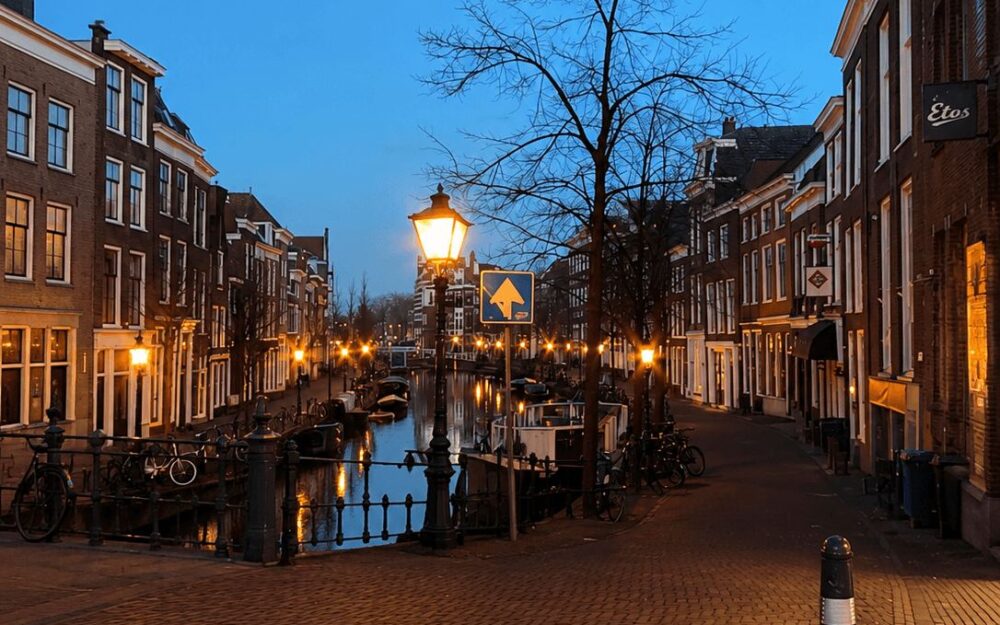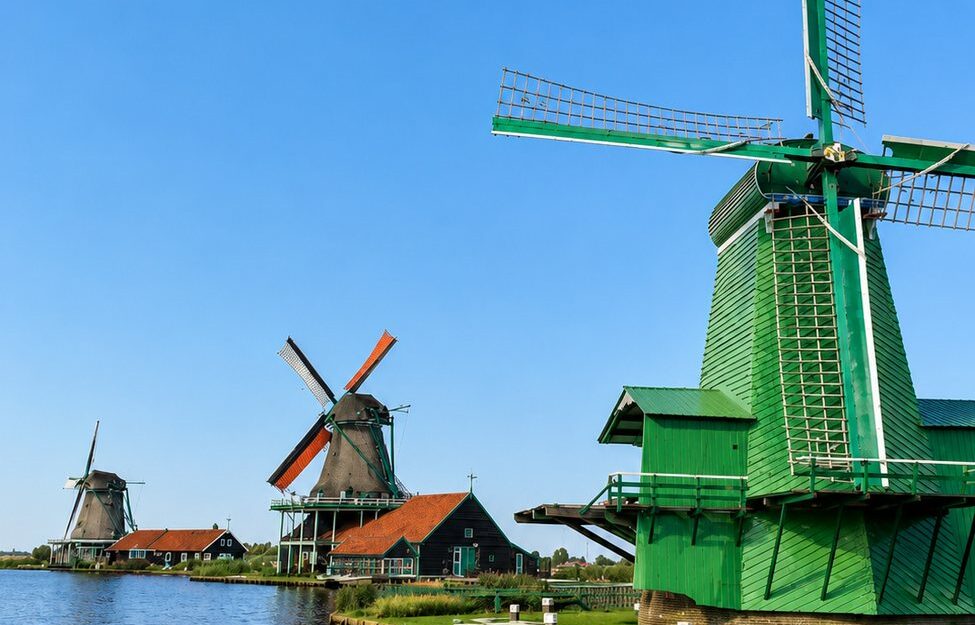

Both sit within comfortable day-trip distance of Amsterdam, but serve different interests.
Here’s how they actually compare.
Quick Comparison
| Factor | Leiden | Delft |
|---|---|---|
| Distance from Amsterdam | ≈ 35 min | ≈ 60–65 min |
| Known for | University, Pilgrims, Naturalis, archaeology museum | Delft Blue pottery, Vermeer, Royal family connections |
| Atmosphere | Lively university town | Quieter, more tourist-focused centre |
| Best museums | Naturalis, Rijksmuseum van Oudheden | Prinsenhof Museum, Vermeer Centre |
Leiden: University Energy and Museum Depth
Leiden’s energy comes from its university — it feels like an active, living city rather than primarily a tourist destination. The canals are beautiful, the museums are genuinely world-class (Naturalis in particular), and the Pilgrims’ History gives it a distinctive international connection that most visitors don’t expect.
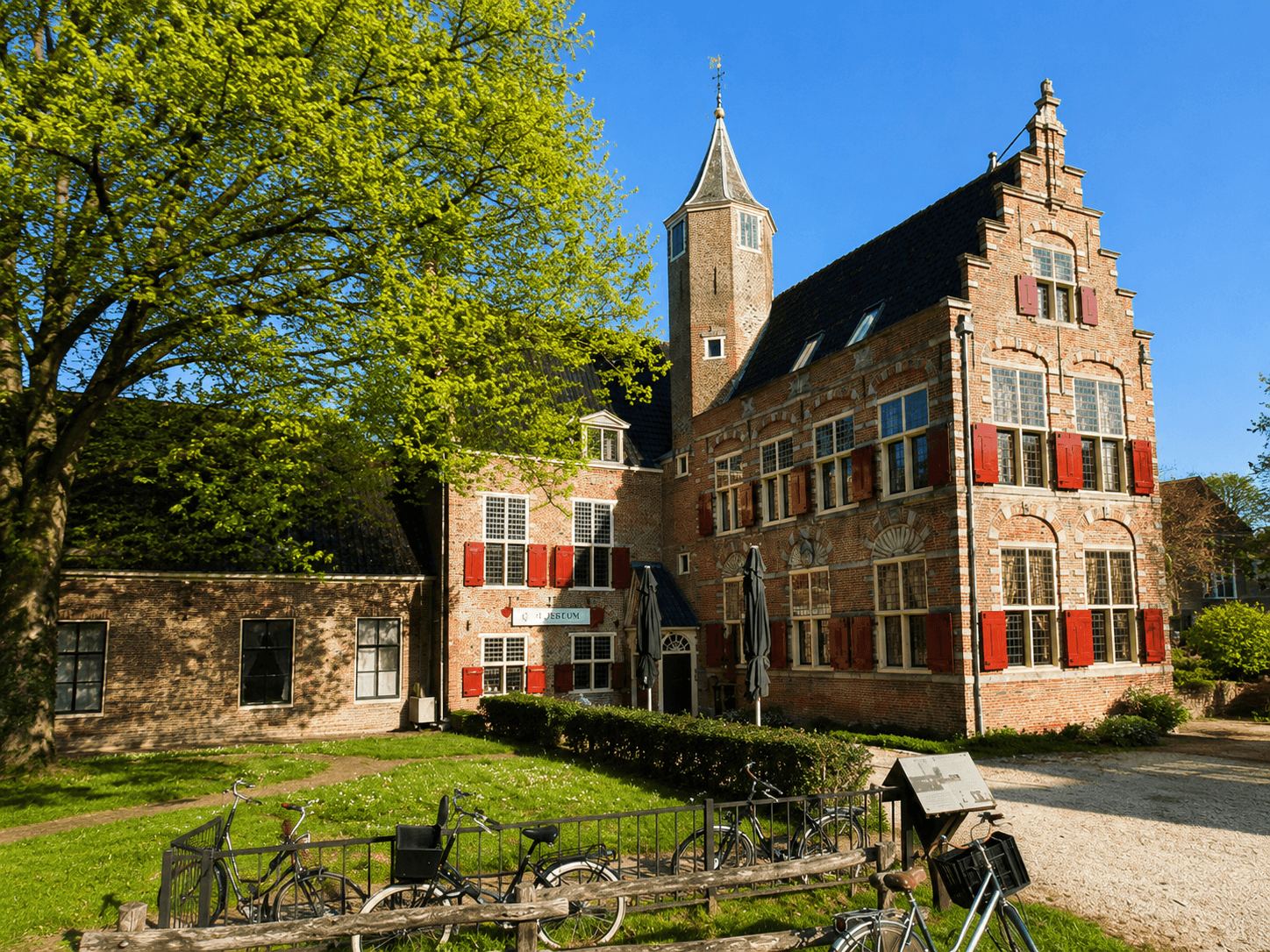
One of the historic manor houses on the outskirts of the Leiden area.
Delft: Pottery, Vermeer and Royal History
Delft is smaller and more immediately focused on its specific identity — the blue-and-white Delft Blue pottery tradition, the painter Johannes Vermeer (who was born and died here), and the Nieuwe Kerk where many Dutch royals are buried. It’s a more self-contained, focused experience than Leiden’s broader energy.

The same café street, empty before the morning rush.
Which Should You Choose?
Closer to Amsterdam, stronger museums: Leiden.
Specifically interested in Delft Blue or Vermeer: Delft.
Combining with Keukenhof: Leiden (closer).
Combining with The Hague: Delft (20 min from The Hague by tram).
Don’t have a specific preference: Leiden, for the simpler logistics and broader options.
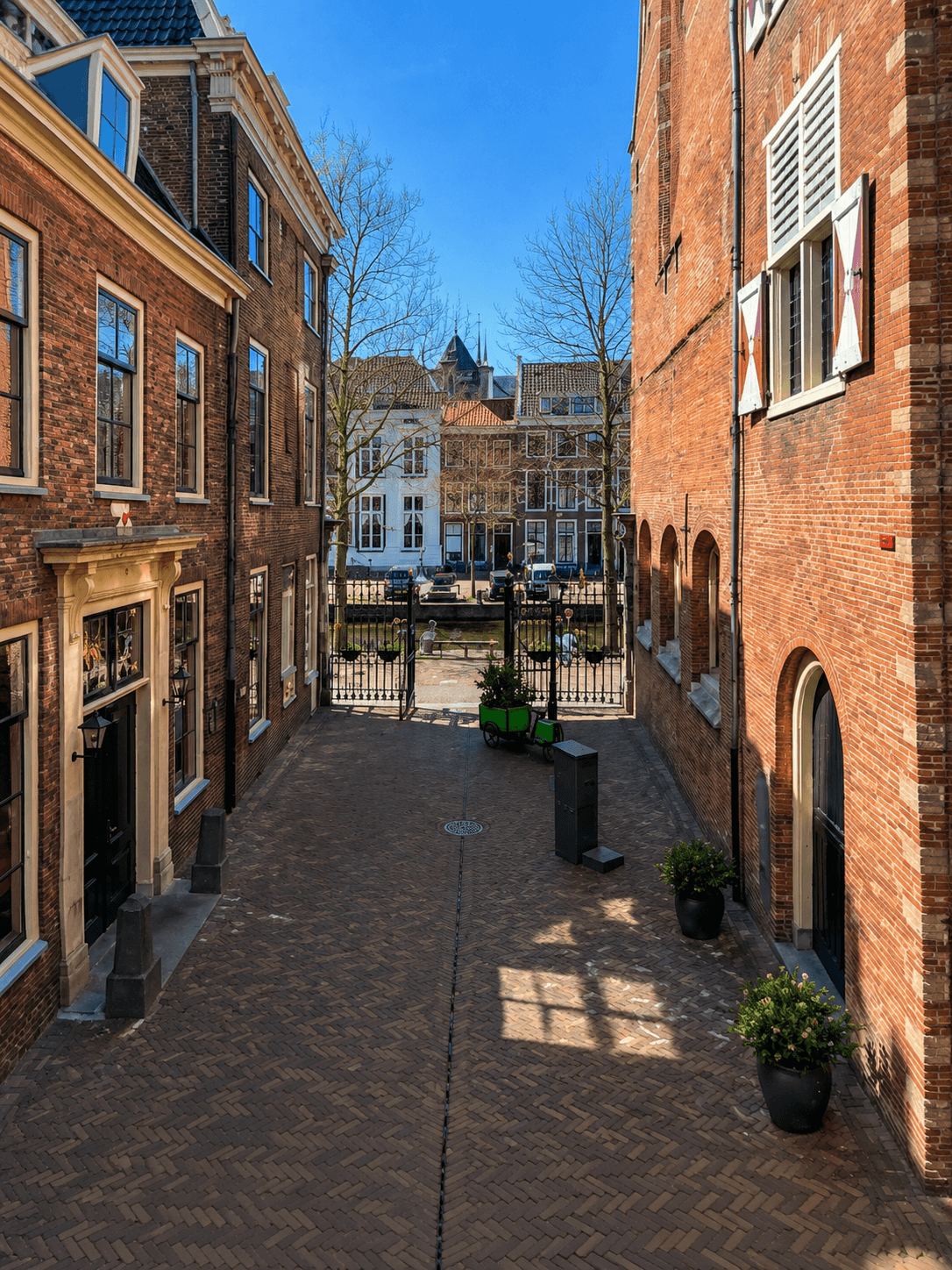
A narrow side alley, easy to miss, leading straight to the water.
Start with the kind of day you actually want
Leiden and Delft are both walkable historic university towns, but they do not provide an interchangeable visitor experience. Choose Leiden when you want a combination of canals, academic history, a botanical garden or museums with distinct collections. Choose Delft when the prospect of pottery heritage, the market square, historic churches and the story of the House of Orange is what first attracted you. This is a question of subject matter rather than a claim that one town is objectively prettier. If museums are your priority, pick a specific collection before buying train tickets. If you want a low-pressure day of cafés and wandering, look at the walking distances between the station, central streets and your chosen lunch stop. A smaller number of well-matched stops gives you more time to notice the place than an itinerary that races to tick off every landmark.
A Leiden route that keeps the day manageable
From Leiden Centraal, head towards the old centre and choose the Rapenburg canal as a natural starting point. Pause at the water, then decide whether you are more interested in the Hortus botanicus, a museum or the university quarter; opening days and the entrances vary, so check the official site of the venue you actually intend to enter. Later, walk towards the Burcht and allow time to explore the streets around it, returning by a different route through the centre. Leiden rewards a meandering walk because the canals are not merely scenery: they connect the town’s university buildings, old residential streets, bridges and cultural institutions. A visitor with limited mobility should check the accessibility of the Burcht and older museum buildings instead of assuming every viewpoint has step-free access. The itinerary works without a boat tour, though a tour can be a different way to see the waterways.
A Delft route built around the market square
In Delft, use the station-to-centre walk to get your bearings before committing to a museum. The Markt makes an easy base for visiting the old streets, admiring the town hall and considering whether an interior visit to a church or a ceramics-related stop fits your interests. Royal Delft is not a random souvenir shop in the middle of that square; check its location and travel time separately if a factory visit is central to your plans. Delft’s association with Johannes Vermeer can shape a cultural day, but distinguish a visitor centre from a museum exhibiting original paintings. A short day is better spent understanding one or two sites rather than relying on broad claims about what any ticket includes. In summer, leave room for a terrace stop; in winter, pay more attention to exhibition opening hours and daylight.
Can you combine the two cities?
It is possible to travel between Leiden and Delft by train, but that does not make an unhurried two-city day automatic. Account for walking to and from stations, waiting time, lunch, queues and the fact that a late museum arrival can be disappointing. A practical combination is a half-day outside visit in one city and a short evening stroll in the other, not two complete museum programmes. If you have only one day, choose the city with the site you most want to enter and save the other for a future trip. When travelling from Amsterdam, check current NS routes and whether engineering work affects connections. Visitors based in The Hague or Rotterdam may find the geographic balance different. No fixed travel time in this guide should replace the live journey planner for your particular date.
Where each city is strongest for different travellers
Families who need breaks may prefer the place where their chosen child-friendly stop is easiest to reach from the station, rather than deciding from a photograph. Photography-minded travellers can find canal scenes in Leiden and architectural frames around Delft’s central square. Museum visitors should inspect temporary exhibition programmes; an interesting special exhibition can outweigh any general comparison. Food-focused visitors can plan a relaxed lunch and market visit without assuming that a particular market is held daily. For travellers using a wheelchair, research the exact museums and churches involved, since historic buildings vary significantly in access. The decision is personal: compare what you can do on your chosen day, at your pace and within your budget, then leave at least one unscheduled hour for walking the streets.
A useful pair of follow-up guides
If Leiden is the better fit for your museum interests, our Leiden in one day article gives the next level of detail; for a broader day-trip decision, read the Haarlem versus Leiden comparison. These guides are complements rather than substitutes: one helps structure the route, while the other considers where a visitor based in Amsterdam should spend limited time. Once you have chosen your destination, confirm opening hours directly, decide whether you want to reserve a timed exhibition ticket and select an affordable return journey. A successful day needs neither an exhaustive attractions list nor a forced overall winner. It needs a clear reason to visit and enough time to explore that reason properly.
A decision checklist for a single free day
Before choosing, write down the museum or historical subject you would most regret missing. Compare the actual opening hours and ticket cost for that one stop, then see which city leaves you more time for a relaxed walk and a meal. When travelling with friends, ask everyone whether they prefer galleries, architecture, cafés or photography; a shared reason to visit matters more than an internet popularity vote. For a rainy forecast, a town with an available exhibition that genuinely interests you can be a better use of a travel day than a picturesque route you cannot comfortably walk. If both cities still appeal equally, pick the one that creates the simpler transport connection from your accommodation and save the other for another day. That choice keeps the itinerary practical without pretending the towns are interchangeable.
🙋 Frequently Asked Questions (FAQ)
Is Leiden or Delft better for a day trip?
Leiden is closer to Amsterdam and has stronger museums, including Naturalis. Delft is specifically famous for its Delft Blue pottery, the Vermeer Centre, and a slightly more touristically polished canal setting.
How far is Delft from Amsterdam?
About 60-65 minutes by direct intercity train from Amsterdam Centraal.
Can you visit Leiden and Delft on the same day?
Yes, since Delft is about 20 minutes south of Leiden by train, combining both in a single long day is possible, though it means a fairly compressed visit to each.
Is Delft worth visiting from Amsterdam?
Yes, particularly if you have a specific interest in Dutch pottery, Vermeer, or Royal Dutch history. For general sightseeing, the extra travel time compared to Leiden or Haarlem should factor into whether it fits your schedule.
Final Recommendation
For more on Leiden specifically, see our Leiden in one day guide.
Plan Your Visit
🏺 Delft pottery info: delft.com
🚂 Train & transit tickets: ns.nl
🏨 Compare accommodation prices: Booking.com
🗺️ Organised day trips & tours: GetYourGuide
🌍 Spanish-language tours & activities: Civitatis
Sources: leiden.nl | delft.com | ns.nl | Details can change; check the linked official sources before booking