Volendam’s food scene is a genuine reflection of its fishing village history. My father grew up near the Markermeer and his standard instruction whenever we passed through the area was: “eat the paling” (eel). This is still good advice — and it pairs naturally with the Volendam and Marken in one day route if you’re trying to fit both stops into a single visit.
The smoked eel sold from the smaller stall near the northern end of the harbor — not the tourist-facing ones at the main entrance — was the best I’ve had in the region. The owner cuts it to order, pulls the skin back with a quick practiced motion, and asks if you want it with or without lemon. With. Always with.
Must-Try Foods
| Dish | Where | Approx. Price |
|---|---|---|
| Fresh herring | Harbor-side stalls | Low, a few euros |
| Smoked eel | Specialty fish shops | Moderate |
| Seafood platter | Harbor restaurants | Higher, sit-down meal |
| Fries (frites) | Snack stands throughout | Low |
Fresh Herring: The Local Essential
Served the traditional Dutch way — raw, lightly cured, with chopped onion and pickles — fresh herring from a harbor stall is one of the most honest food experiences in the region. The technique for eating it: tip the head back, lower the fish by the tail, bite. Locals eat it this way. Tourists with bread rolls are also entirely acceptable.
On a hot July afternoon I watched a German tourist attempt the traditional method and immediately hand the herring to his wife to finish. She ate it without hesitation. He bought a stroopwafel instead. Both decisions were correct for different people. It’s eaten standing up, often by hand or with a small fork, and locals consider it a quintessential taste of this part of the Netherlands.
One Restaurant Worth Naming
I’m generally reluctant to name specific restaurants because they change, but the restaurant directly at the harbor’s south curve — with the green awning and the handwritten chalkboard specials — has been consistently good on four visits over three years. The owner recognises returning customers and will tell you what came in that morning if you ask. The mosselen (mussels) in white wine were the best I’ve had outside Zeeland.

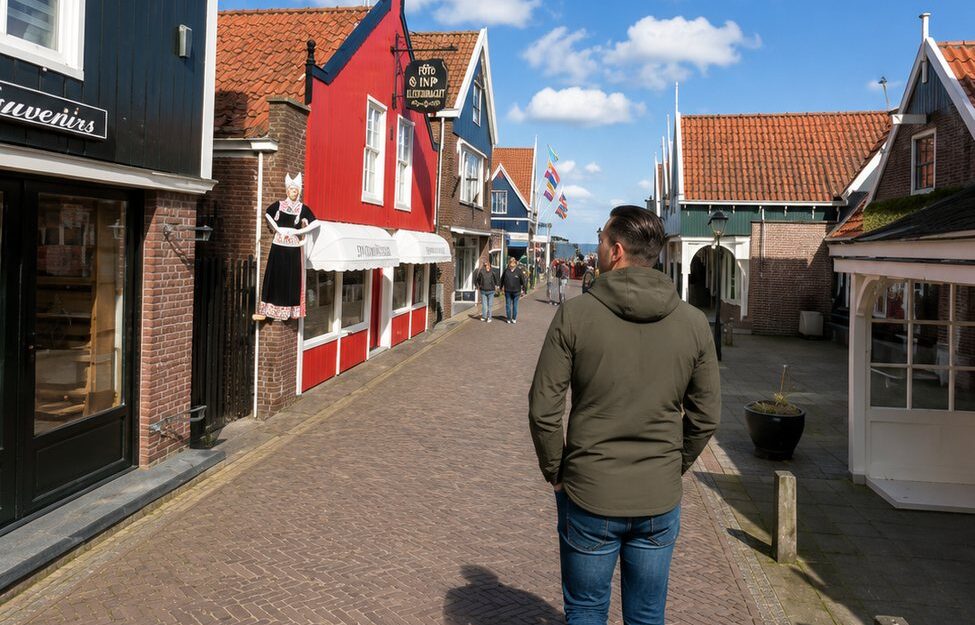
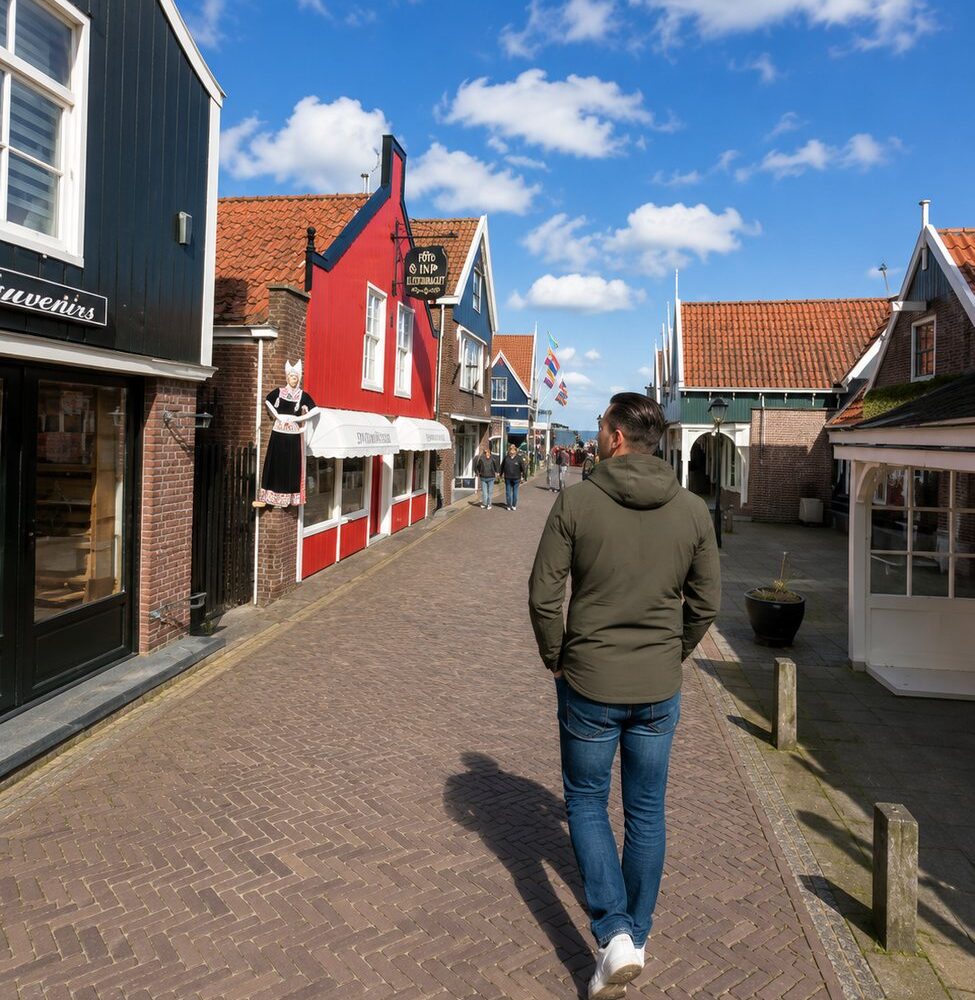
The Volendam harbourfront on an ordinary weekday afternoon.
Seafood Restaurants: Worth the Splurge?
The harbor-front restaurants offer the best views, unsurprisingly at the highest prices. The quality is generally solid, but you’re paying a location premium. Restaurants set back one or two streets from the water frequently serve comparable quality at a noticeably lower price.
Budget-Friendly Options
- Herring stalls near the north end of the harbor — the further from the main tourist entrance, the better the value and the more local the clientele — the cheapest genuine local specialty.
- Fries stands — a reliable, inexpensive option, especially with kids.
- Bakery items — a quick, affordable snack stop between activities.
How to eat by the harbour without buying everything at once
A useful food visit starts with one small snack, a walk, and a proper meal only if you are still hungry. The busiest stretch of the harbour combines counters selling takeaway fish, casual cafés and sit-down restaurants. Their menus, portion sizes and service styles differ, so the price of a fish snack cannot be compared directly with a plated seafood meal. Look at the displayed menu before sitting down and check whether sauces, bread or side dishes are included. If you are travelling with children or people with food allergies, ask about the preparation and ingredients instead of guessing from the product name. A simple route is to browse the harbour first, compare two or three menus and return to the place that suits your group. This avoids settling for the first tempting shop and then discovering that everyone wanted something different.
Herring, kibbeling and other fish: know what you are ordering
Herring is usually served as a chilled prepared fish, sometimes with chopped onion and pickles. Ask the vendor how it is served and whether it is appropriate for anyone in your party who needs to avoid raw or lightly cured fish. Kibbeling is battered, fried fish, normally eaten hot; if the species of fish, batter ingredients or frying-oil cross-contact matter to you, ask the seller directly. Smoked eel may appear on regional menus but availability and price can vary considerably. Neither a harbour location nor a traditional product name guarantees that every ingredient was caught locally that morning. If provenance matters to you, ask the business what fish is used, where it comes from and whether it is sourced seasonally. That makes a better conversation than assuming every fishing-town snack has the same origin story.
Choose a meal for the kind of visit you are making
For a quick stop between Amsterdam and Marken, a takeaway portion eaten at a safe, permitted seating area may fit better than a long table-service lunch. If the village itself is your main destination, allow time for a seated meal and explore streets beyond the most conspicuous waterfront façades. Guests who do not eat fish can look for other menu options before boarding the bus; a place known for seafood may have limited vegetarian dishes. When dining with a stroller or wheelchair, check whether the entrance, tables and toilet actually meet your needs. Busy terraces can have narrow spaces even when a venue looks accessible in an online photograph. If your day includes a ferry, calculate the meal around the next sailing only after checking the operator’s live timetable.
Food safety and freshness: what a visitor can check
Choose vendors that handle ready-to-eat food hygienically and keep cold dishes appropriately chilled. Fried fish should be served hot, and chilled preparations should not be left standing in the sun while you continue sightseeing. If the counter is busy, look for clear menus, allergen information and staff who can answer basic questions. Food allergies, pregnancy and other dietary circumstances may change which dishes are suitable; do not rely on a blog to clear a particular product for everyone. Ask how a sauce is prepared if it may contain eggs, dairy or other allergens. For a picnic, keep perishable foods cool and eat them promptly rather than carrying them around an unshaded harbour all afternoon. An attractive food photograph can help you decide what looks appetising, but it cannot verify safe storage or the ingredients of a particular portion.
Build a small food-focused itinerary
Arrive with time to walk the harbour before lunch, try one regional snack if it interests you and then explore the side streets to see a different side of the town. Return for a meal only after checking the menu and your onward departure. If you have little time, skip the idea of sampling every Dutch specialty in a single afternoon. Our Dutch foods guide explains the broader range of dishes, and the Volendam visiting guide helps you decide how long to spend here. For travellers joining a two-village itinerary, carry a small snack and leave the main meal flexible: the atmosphere you prefer may be in Volendam, Marken or back in Amsterdam. Restaurants change owners and menus, so a recommendation should never depend on an unverified promise that one named establishment will serve the same dish every day.
🙋 Frequently Asked Questions (FAQ)
What food is Volendam known for?
Volendam is best known for fresh herring, smoked eel, and seafood platters sold from harbor-side stalls and restaurants, reflecting its history as a fishing village.
Is seafood in Volendam expensive?
Harbor-front restaurants charge a premium for the view and location. Walking a street or two back, or buying from a herring stall rather than a sit-down restaurant, generally costs noticeably less.
Can you buy fresh herring directly from a stall in Volendam?
Yes, several harbor-side stalls sell fresh herring served the traditional Dutch way, typically with chopped onion and pickles, and this is generally cheaper than a restaurant sit-down meal.
Is Volendam food good for kids?
Yes, alongside the seafood specialties, fries and simpler dishes are widely available, making it easy to find something for less adventurous young eaters.
Final Recommendation
For the full visit context, see our guide on whether Volendam is worth visiting.
Plan Your Visit
🍽️ Restaurant info: volendam.nl
🚌 Bus schedules: 9292.nl
🚂 Train & transit tickets: ns.nl
🏨 Compare accommodation prices: Booking.com
🗺️ Organised day trips & tours: GetYourGuide
🌍 Spanish-language tours & activities: Civitatis
Sources: volendam.nl | Personal observation — Noord-Holland | Details can change; check the linked official sources before booking