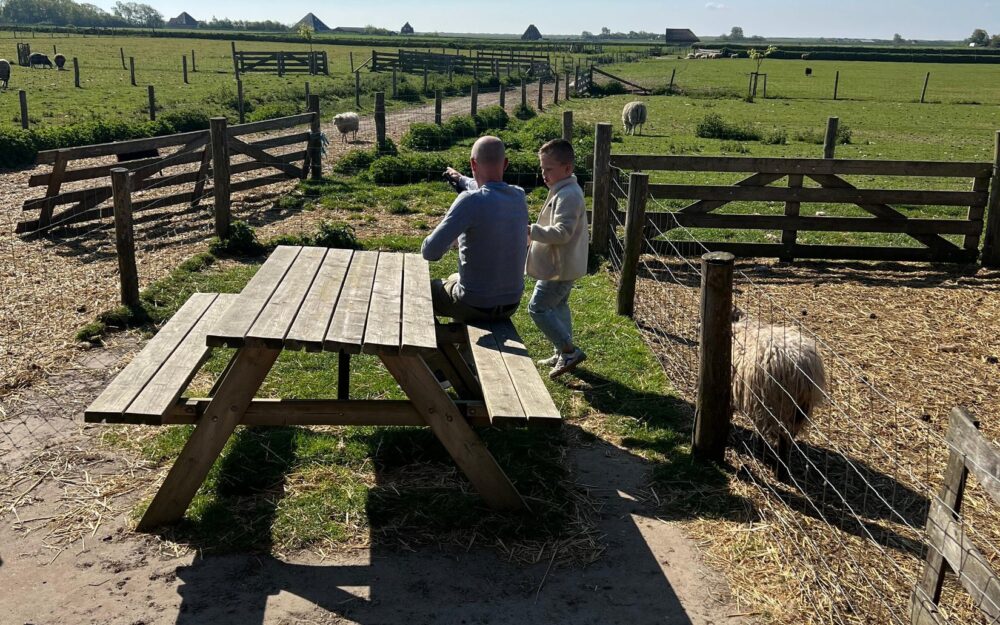

Texel is the largest of the Dutch Wadden Islands — a landscape of high sand dunes, dense pine forests, heather fields, and wide white-sand beaches. While many visitors come here for a week-long vacation, executing a Texel day trip from Amsterdam or North Holland is entirely achievable if you know exactly how to manage your itinerary.
The danger of an island day trip is trying to see all seven unique villages in a single afternoon. If you don’t plan your logistics before boarding the boat, you will spend your day waiting around for regional transit or pedaling against severe North Sea headwinds.
To help you maximize your time, here is a realistic, structured blueprint to conquering Texel in a single day.

A wide Texel beach and dune landscape, seen from above.
Is Texel Worth a Day Trip?
If you only have one day to spare during your Netherlands itinerary, Texel is one of the easiest and most rewarding Dutch islands to visit. The ferry crossing from the mainland takes just 20 minutes, the cycling infrastructure is exceptionally well-maintained, and the island’s compact geography means you can transition from dramatic beaches and wildlife reserves to local food spots and historic villages in a matter of minutes. It offers a complete change of pace from the crowded canals of Amsterdam without requiring an exhausting travel schedule.
Quick-Facts: Texel Transport Matrix
Choosing how you move around the island the moment you step off the ferry is your most important logistical decision.
Note: Prices vary dynamically by season and operator; use these figures as baseline estimates.
| Transport Option | Indicative Cost | Flexibility | Best For | Island Travel Time |
|---|---|---|---|---|
| Bringing a Car | Check the current TESO return fare for your vehicle and travel date. | Maximum | Families with young children or rainy weather forecasts | 20–25 min south to north |
| Renting an E-Bike | Medium (approx. €20–€25 per day) | High | Active travelers and clear days. Highly recommended for the local bike paths. | 50–60 min south to north |
| The Texelhopper Bus | Check current Texelhopper ticket and booking rules for your journey. | Moderate | Check whether your specific connection uses a fixed route or advance booking. | Dependent on shared bus routing |
Choose One Texel Day Trip Instead of Trying to Cover the Whole Island
Texel is an island, not a single compact attraction. A day that combines Oudeschild, a sheep farm, De Slufter, De Koog, the northern lighthouse and Den Burg may look possible on a map, but it leaves little space for cycling, headwinds, ferry waiting times, eating or actually enjoying each stop. In particular, the lighthouse and the southern ferry terminal are far apart for a relaxed bicycle outing. Choose a route that matches your transport rather than assuming a rental bike and a car can follow the same schedule.
Route A: a manageable day with a rented bicycle
Collect a bicycle near the ferry terminal and choose a southern or central-island circuit. You could cycle towards Den Hoorn and the nearby dunes, continue to Den Burg for a meal and return to the ferry with ample margin. Alternatively, head toward Oudeschild and its working harbour, then add one nearby village or countryside stop before returning. Choose one principal area and let an unplanned beach pause replace a second attraction. Check wind conditions and the rental company’s closing time before setting out, and allow more time if children or inexperienced cyclists are joining.
Route B: a north-and-west itinerary by car
Driving makes it more practical to reach De Slufter, take a short walk at a designated access point, continue to De Koog or another west-coast beach and then choose whether to add the northern lighthouse. Even by car, do not plan a timed activity at every stop: parking, dune walks, lunch and the ferry return all consume time. If you include the lighthouse, omit an unrelated stop elsewhere on the island rather than trying to do everything in sequence.
Route C: a slower day without a car or bicycle
Use the published bus service or a suitable on-demand connection for one main destination, then explore it on foot. Check the latest route, booking conditions and return service before departing; Texel’s public transport does not necessarily work like frequent city buses. For a traveller who wants a quiet seaside day, choosing one beach village and a short dune walk may be more satisfying than spending most of the visit changing vehicles.
Whichever route you choose, the official TESO timetable should determine the end of your day, not the other way round. For travel around the island, see our Texel transport guide and ferry guide.
The Morning Logistics: Getting from Den Helder to Texel
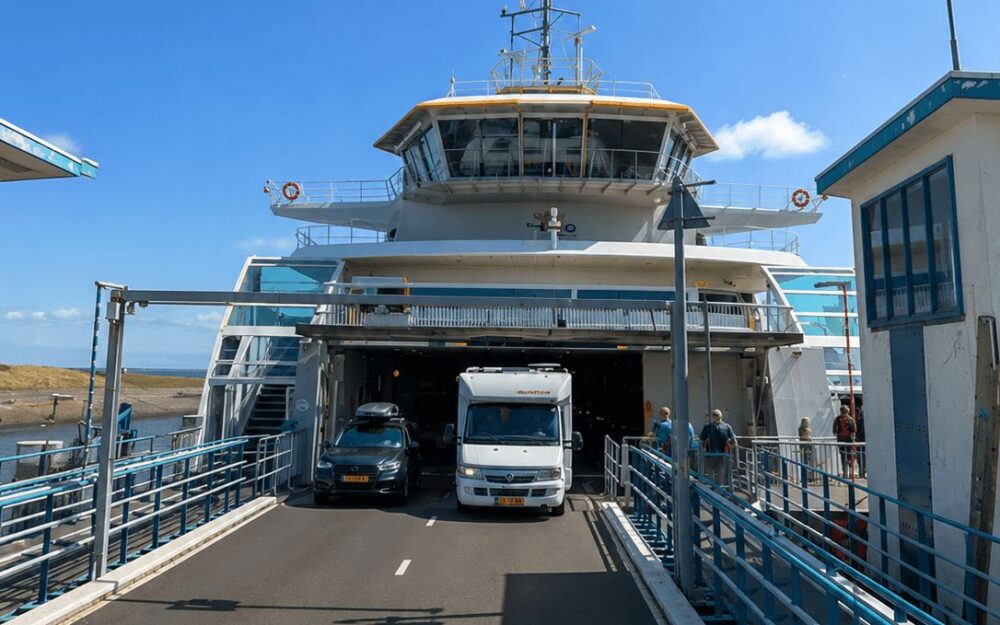
The TESO crossing connects Den Helder with the ferry terminal at ’t Horntje. Allow time for boarding and onward transport on Texel rather than planning every activity around an exact arrival minute. The live sailing timetable is the reliable reference.
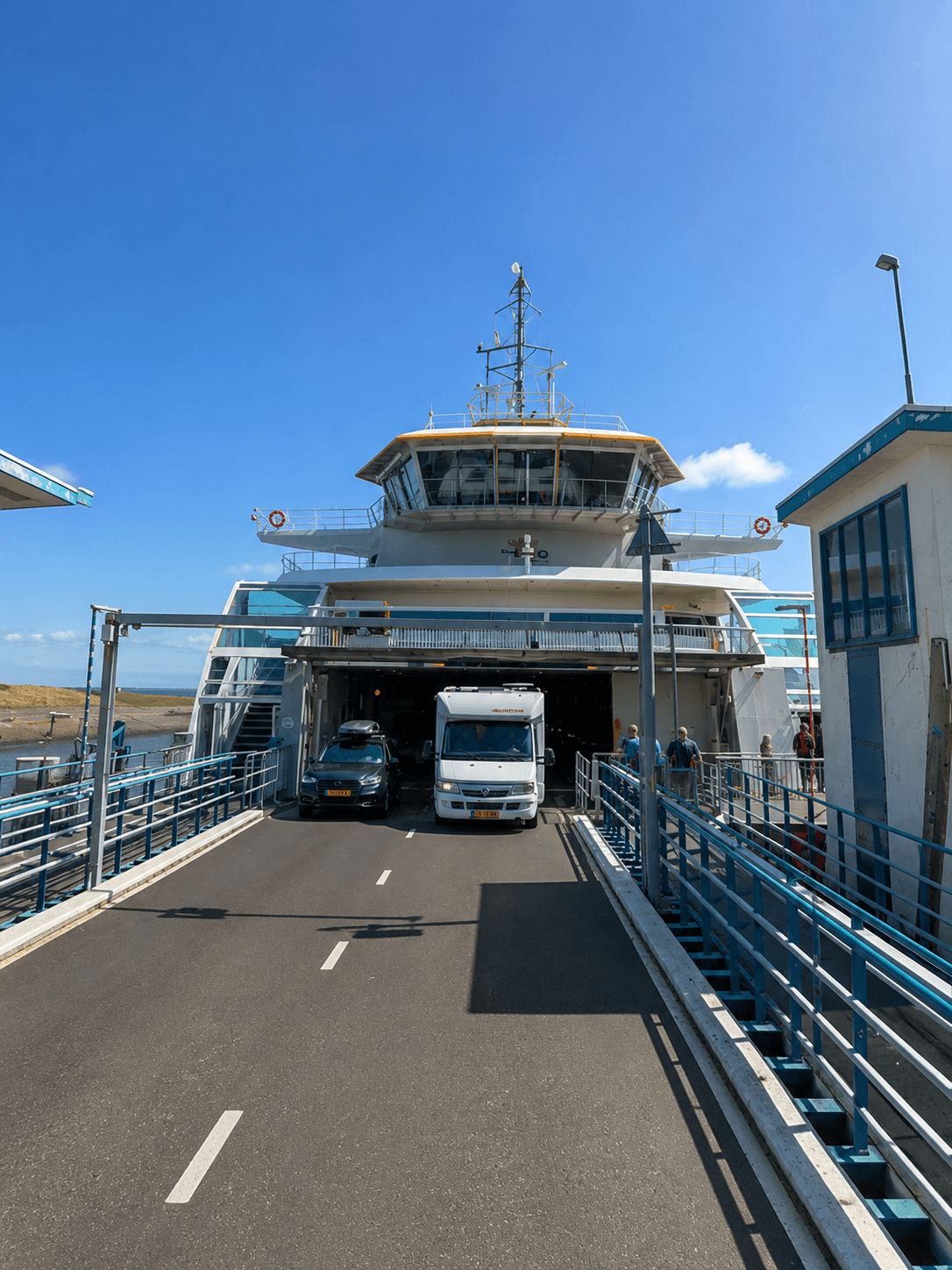
Cars and a campervan boarding the TESO ferry at the terminal.
Build Your Day Around the Ferry Timetable
An earlier sailing gives more usable time on Texel, but choose a departure you can actually reach from your starting point. Allow time to get from Den Helder railway station to the ferry terminal and from the Texel terminal to the bicycle rental or bus stop. Confirm the current sailing schedule with TESO instead of relying on a fixed departure quoted in this article.
Local Insider Tip: If you are bringing a car, buy your TESO ferry ticket online in advance. The license plate recognition cameras will automatically open the gates, skipping the ticket booth queues entirely. Best of all, the ferry ticket is always a round-trip fare — nobody checks your ticket when you leave the island.
How to Spend Your Time at Each Stop
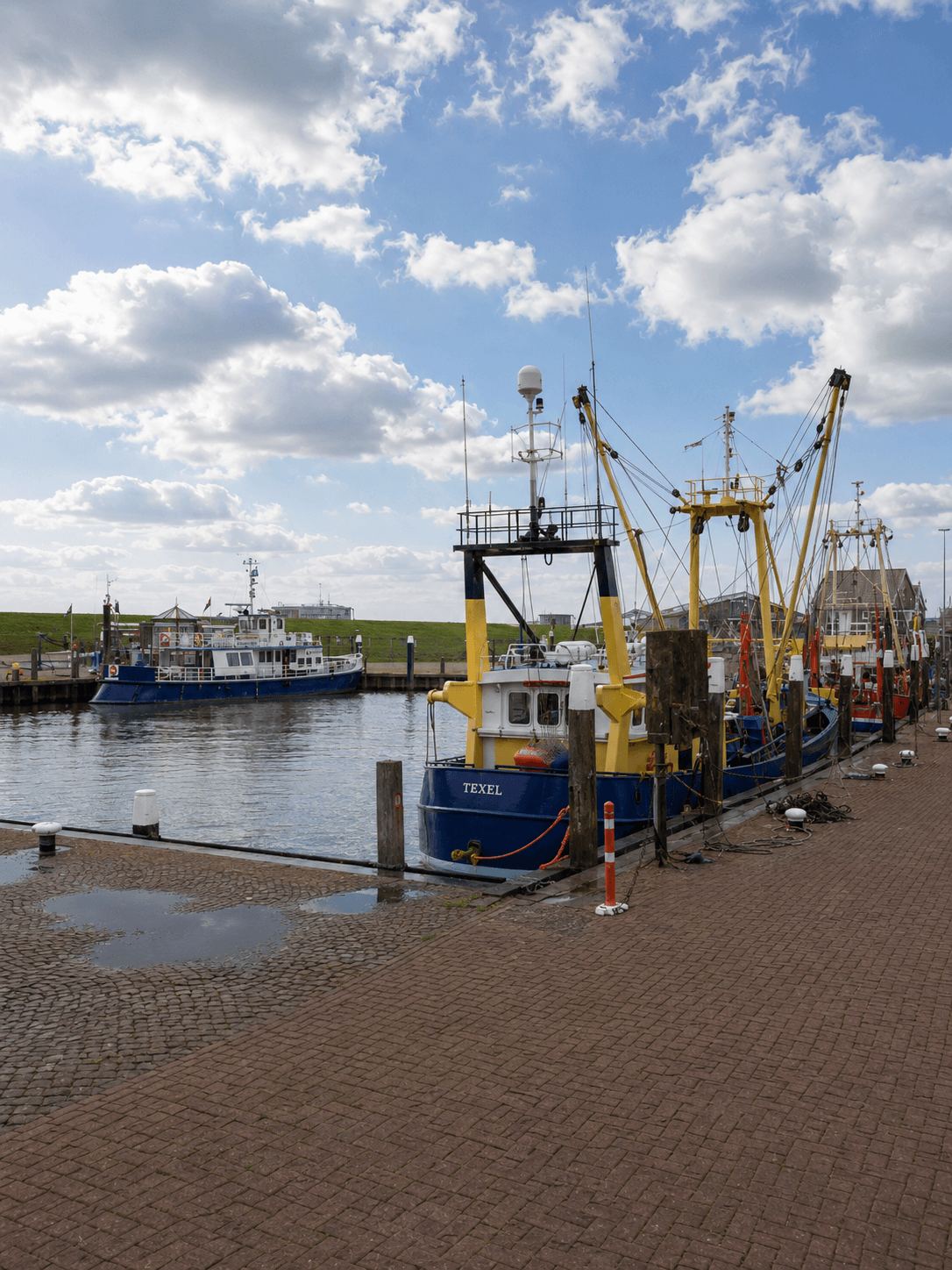
Oudeschild: allow time for the harbour
If you choose the eastern island route, the fishing harbour is a logical main stop. Watch the working waterfront from a public viewpoint, have lunch if a restaurant is open, and use the nearby area as your turning point rather than forcing in distant attractions. The harbour is not beside the northern lighthouse, so combining both by bicycle adds a substantial journey.
De Slufter: plan around the landscape, not a minute-by-minute timetable
The tidal landscape rewards a slow walk and attention to the paths. Check the conditions on the day and follow local conservation signage; parts of natural areas may be wet, exposed or seasonally restricted. From the main viewing point, a short stop can be worthwhile without committing to a lengthy walk that would make the ferry return difficult.

De Koog, Den Burg or the lighthouse: pick one extra
De Koog is useful if the purpose of your day is a west-coast beach and lunch; Den Burg works for a village stroll and shopping; the lighthouse is a destination in its own right toward the north. Which stop fits depends on whether you are driving, cycling or using public transport. Do not put all three after a Slufter walk just because they appear in a longer holiday itinerary. Keep the final part of the day uncomplicated so the trip back to the ferry remains enjoyable.
Traveling to Texel with Kids: A Tactile Family Routine
Families often find that attempting a 40-kilometer bike loop against the intense island wind can lead to a travel meltdown. For a successful family day trip, it is highly recommended to bring your car across on the ferry or rent a family cargo e-bike (bakfiets), focusing your afternoon on interactive, hands-on stops.
The Ecomare Seal Rescue Center
A mandatory stop for families is Ecomare, located right in the heart of the Texel Dunes National Park. Ecomare is a dedicated wildlife rescue center that rehabilitates injured, sick, or orphaned harbor and grey seals found along the Wadden Sea coast.
Children are universally fascinated by watching the rescued seals during their public feeding times (usually at 11:00 AM and 3:30 PM). The keepers feed them fish right out of buckets, explaining the individual rescue stories of each seal in an educational, engaging environment.
Running Down the Slufter Dunes
Right after Ecomare, head to De Slufter. While adults appreciate the unique ecosystem of the salt marshes, children often treat this area like one massive, natural sandbox. They can run down the steep sandy slopes of the surrounding dunes and splash around in the shallow, muddy tidal creeks. Bring a change of clothes and a small towel in your daypack — they will get dirty, but the pure outdoor joy is worth it.
🛑 The Worst Mistakes to Avoid on a Texel Day Trip
- Do not assume island buses operate as frequently as an urban network. Some journeys may need booking while others use fixed routes. Check the current service details and departure times with the operator before relying on a late return connection.
- Renting a Standard Pedal Bike on a Windy Day: The wind coming off the North Sea is notoriously brutal. A gentle breeze on the mainland translates to a heavy gale on the island dikes. Spend the extra money on an e-bike; your knees will thank you.
- Trying to Visit All 7 Villages: Stick to a simple route (e.g., the West Coast Dunes and the Northern Lighthouse). If you try to cross back and forth between too many spots in 8 hours, you will see plenty of asphalt but very little island beauty.
If you want the shortest lines at the ferry port, the most predictable weather, and a perfectly balanced itinerary, the ultimate strategy is to plan your Texel day trip for a Tuesday, Wednesday, or Thursday in May, June, or September. Catch the TESO ferry out of Den Helder no later than 8:30 AM, and secure an e-bike rental in advance to beat the mid-morning rush completely.
🙋 Frequently Asked Questions (FAQ)
Is one day enough to visit Texel?
Yes, a single day is enough to see the major natural highlights of the island. While you won’t have time to tour every museum or visit every village, a well-planned 8-hour window lets you explore the major sand dunes, visit the lighthouse, see the seals at Ecomare, and enjoy a relaxed local meal.
How much does it cost to take the ferry to Texel?
TESO offers different return fares for people travelling on foot, with a bicycle or with a vehicle. Check the current ticket price for your transport category directly with TESO; older article estimates should not be used for budgeting. A ticket purchased at Den Helder already covers the return crossing, and TESO does not sell individual reservations for particular departure times.
Do I need to book the ferry tickets in advance?
It is not mandatory, but it is highly recommended if you are driving. Booking online ahead of time allows you to use the automated license plate recognition lanes at the Den Helder port, saving you valuable time during peak summer mornings.
Can you see wild seals on Texel?
Yes. While you are guaranteed to see seals up close at the Ecomare rescue center, you can also see wild seals resting on the sandbanks off the coast. The best way to view them safely without disturbing them is to book a 1-hour seal-watching boat cruise departing from the harbor of Oudeschild.
What is the best way to get to Den Helder from Amsterdam?
You can take a direct Intercity train from Amsterdam Centraal straight to the Den Helder station (roughly 1 hour and 15 minutes). From the Den Helder station, a dedicated connecting bus runs directly to the TESO ferry terminal gates in under 10 minutes.
What happens if it rains during my day trip?
If the weather turns poor, pivot your itinerary toward Texel’s indoor highlights. Spend your morning exploring the interactive factory floors at Ecomare, visit the Museum Kaap Skil in Oudeschild to see maritime history, and warm up with a local meal inside a cozy village cafe in Den Burg.
Final Recommendation: Coordinating Your Island Escape
By Car: If you want total freedom to travel across the entire island from north to south regardless of the weather, taking a rental car directly across the water is your most practical option.
By train and ferry: Plan the rail journey to Den Helder, the local transfer to the terminal, ferry boarding and your onward journey on Texel as separate stages. Allow a generous full-day travel window rather than relying on an optimistic door-to-door estimate.
By Tour: If you prefer a completely hands-off travel day where you don’t have to worry about regional train timetables, driving, or coordinating separate entry tickets for the family, booking a specialized day tour from Amsterdam handles all your transfers smoothly.
Plan Your Visit
⛴️ Ferry timetables & tickets: teso.nl
🚂 Train to Den Helder: ns.nl
🦭 Ecomare seal center: ecomare.nl
🚌 Texelhopper bus bookings: texelhopper.nl
🏨 Overnight stays on Texel: Booking.com
🗺️ Day tours from Amsterdam: Viator or GetYourGuide
Pack a windbreaker, aim for an early morning ferry departure, and enjoy an unforgettable day discovering the beautiful Wadden heritage of the Netherlands!
Sources: teso.nl (TESO Ferry) | ecomare.nl (Ecomare Seal Center) | texelhopper.nl (Texelhopper Bus) | Personal local observation